
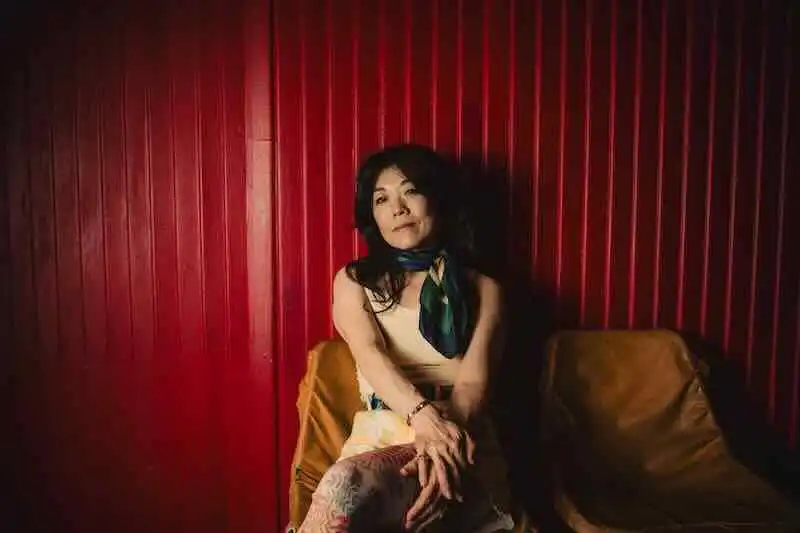
Many people who look into the vibrant Austin music scene find themselves captivated by a voice that stands out not only for its purity but also for its emotional strength. That voice belongs to BettySoo, an artist whose vocal prowess has been hailed as some of the most gorgeous in Texas and possibly in all contemporary folk music. When you hear her sing, you’ll notice a world-class instrument marked by deft phrasing and a remarkable ability to balance restraint with powerful expression. BettySoo’s voice is a journey into the roots of American music, emanating from a small figure—a Korean-American with an approachable, girl-next-door presence.
As you experience her live performances, you’ll quickly realize the performance itself is equally compelling. BettySoo has mastered the art of connecting with her audience, using sharp, often self-deprecating humor to transition between songs that explore themes of heartbreak and longing. Her ability to weave stories and emotions seamlessly makes attending one of her shows a rich, unforgettable experience. If you’re lucky, you might catch her playing guitar with exceptional skill, an element that ties together her evocative lyrics and captivating voice.
When you start paying attention to BettySoo’s songwriting, you discover a body of work that critics often describe as beautiful and heart-wrenching, yet edgy and unwavering. You will find her songs exceptionally well-written and confidently arranged, earning her a prominent place amidst Austin’s thriving musical community—often called the live music capital of the world. Since she burst onto the Austin scene over a decade ago, BettySoo has steadily carved out a unique and enviable niche among the city’s best songwriters.
If you want to understand where that artistry comes from, you should know that BettySoo is as Texan as they come. Raised just outside Houston by first-generation Korean immigrant parents and educated at the University of Texas, she grew up immersed in the Great American Songbook and country radio. Her introduction to singer/songwriters came through her older sisters, while nights at iconic venues like The Cactus Café and Hole In The Wall connected her with Texas’s deep musical legacy. Over the years, her solo albums—starting with 2007’s Little Tiny Secrets and continuing through 2014’s When We’re Gone—have gained significant regional airplay and critical acclaim, helped along by collaborations with established producers and musicians.
By now, you may have already encountered her work on multiple national and international stages, from South by Southwest to the Calgary Folk Music Festival, and heard her voice on popular shows such as Riverdale and Girl Boss. Her songs also shaped the emotional landscape of the 2017 play A Girl Named Sue, praised for adding moving commentary to the scenes they accompany.
Looking ahead, BettySoo’s future remains bright. Before the pandemic, the Nobody’s Girl project was touring extensively, earning fans with intelligent lyrics and beautifully layered harmonies. Their full-length album includes contributions from notable musicians like Charlie Sexton and David Grissom. You might also catch her supporting songwriting legends such as James McMurtry and Chris Smither or lending harmonies onstage with artists including Eliza Gilkyson and Kim Richey. Even during the challenges of COVID-19, BettySoo’s weekly streamed residency, Nobody’s Happy Hour, created a meaningful, intimate virtual space that brought listeners together with compassion and authenticity.
More Read

As BettySoo herself has noted, Asian-American songwriters aren’t common in Texas, but your discovery of her music will reveal that songwriting and singing of this caliber are rare anywhere. Whether you’re new to her work or returning as a longtime fan, BettySoo’s voice and songs invite you to experience a unique blend of talent, heart, and genuine connection
What led you to become a music artist, and what advice can you give to others aspiring to make a hit?
I grew up in a large musical family, but I never imagined I’d do this for a career. Deep down I probably wanted it, but I couldn’t acknowledge it because it was too impossible, too distant, and too risky. My older sisters were so much more accomplished and talented – and not just perceived by me to be so because they were older – so I don’t think I allowed myself to even consider becoming a professional musician as an adult despite working my first paid studio sessions when I was still in elementary school.
I didn’t write a song ‘til I was in my late 20’s. I wasn’t a student of the craft even though I was an English major in college with a focus on creative writing. Writing and editing are writing and editing, but songwriting is a completely unique beast, just as novels are not short stories, and essays are not poems.
I have no advice for achieving a certified hit. If I knew how to write and pull off a hit song, I guess I’d have had one by now. Relatedly, I have no advice for those who long to become famous or to “compete” in an endless field of musicians. If I knew the key to any of that, I guess I wouldn’t still be an “emerging artist” after over twenty years of working full-time as a performing songwriter.
My advice is to do what you love and find whatever practical tools you can to make it work for as long as you still enjoy doing it. And if you stop enjoying it, don’t be afraid to move on to whatever you want to do next.
What does your music say about you?
I’m a depressive person who finds romantic relationships to be an apt metaphor for almost everything.
What is the best advice you’ve been given?
As an artist, it is not your job to be loved. It is your job to be remembered.
– James McMurtry
Are you creative in other disciplines?
I love to draw, paint, sew, print, make jewelry, cook, and dance. I do some of these things pretty well and others quite poorly.
Do you enjoy recording and production?
I love working in the studio. I love having an idea and trying it right away. I love hearing how everyone’s choices impact the total sound and influence how everyone else plays and sings. I love hearing how small mix adjustments change the feel and mood of a song. The recording studio is one of my happiest places.
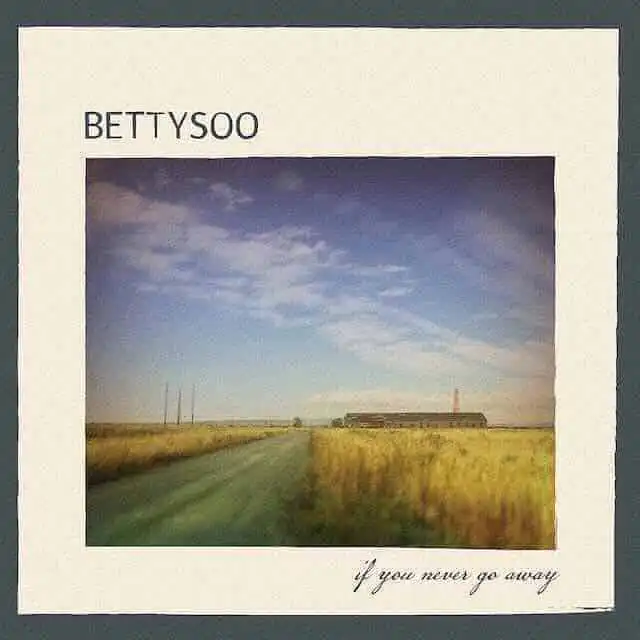
Where was your current project recorded?
We recorded the bulk of If You Never Go Away at Matt Ross-Spang’s Southern Grooves in Memphis, TN. A few of the songs include recordings Will Sexton (who produced the album) and I recorded a dozen or so years earlier in Austin, TX, at Cedar Creek Studio, recorded by Fred Remmert.
Would you rather be the one in a movie who gets the hero/heroine or the baddie with all the good lines?
The baddie with good lines, no question.
If you could ask your future self one question, what would it be?
Are you okay?
What do you think the greatest invention has been?
This is a bit of a lateral answer, but I recently came across an article in which an industrial historian was discussing misconceptions about invention and human ingenuity. I loved her criticism of the phrase “reinventing the wheel.” Her point was that many of the greatest achievements in industrial efficiency have come by way of our willingness to continually reinvent the wheel. Since reading that, I have loved thinking about how most improvements to our way of life have come by way of our ability to adjust things that already exist. It reminds me that our work on ourselves is not so different. We will each, in some sense, always be who we are, but if we are willing to imagine and lean into who we want to be and how we want to live, there is infinite potential to reinvent pieces of ourselves and to improve life for ourselves and others.
What’s your favorite children’s story?
I don’t really have a favorite anything – I’m not wired that way. No favorite color, no favorite ice cream flavor, no favorite song, no favorite shirt. Still, one of my favorite children’s books is Where the Sidewalk Ends, the Shel Silverstein collection of poems.
His blend of absurdity, kindness, rebellion, tenderness, shock factor, and humor might be matched by some, but it’s surpassed by none.
If you were talking to a younger version of you, what advice would you give yourself?
Stop worrying, and stop being so afraid to shine.
Stop being who you think others want or need you to be.
You’ll be okay; just be you.
TOUR DATES:
* signifies dates with James McMurtry
| Jun 27 | Fort Collins, CO | Aggie Theater * |
| Jun 28 | Denver, CO | Bluebird Theater * |
| Jun 29 | Wichita, KS | WAVE * |
| Jul 11 | Okemah, OK | Woody Guthrie Folk Festival 2025 |
| Aug 22 | Easthampton, MA | Arcadia Folk Festival 2025 |
| Sep 4 | Oxford, MS | Proud Larry’s |
| Sep 5 | Birmingham, AL | Saturn |
| Sep 6 | Evanston, IL | Dawes Park (Evanston Folk Fest) |
| Sep 11 | Knoxville, TN | Bijou Theatre |
| Sep 12 | Cincinnati, OH | Woodward Theater |
| Sep 13 | Columbus, OH | The Athenaeum Theatre |
| Sep 14 | Ferndale, MI | Magic Bag |
| Sep 16 | Toronto, ON | Horseshoe Tavern |
| Sep 18 | Alexandria, VA | Birchmere |
| Sep 19 | Philadelphia, PA | World Cafe Live |
| Sep 20 | New York, NY | Le Poisson Rouge |
| Sep 23 | Charleston Heights, SC | Charleston Pour House |
| Sep 24 | Macon, GA | Capitol Theatre |
| Sep 27 | New Orleans, LA | Chickie Wah Wah |
| Oct 2 | Austin, TX | 04 Center |
https://instagram.com/bettysoo
https://facebook.com/bettysoomusic