

There you find, coming from the Land of Venice—Italy, where huge industrial sites stand beside an important artistic and cultural milieu, Alice Taylor and Nick SoLow forming in 2021 the #darkwave #synthpop #eIectro #meIanchonicpop #coIdwave duo called Krimea.
There you hear clear hints from the eighties as Krimea gives voice to feelings such as resignation, love, hate, and rage, and you meet lyrics that acknowledge today’s human behaviors with short verses and allegories while the sound aims at your intimate, alternating classic strings and synthetic patterns.
There you learn that Krimea’s first album, ARE YOU HUMAN, coming out between the end of 2025 and the first months of 2026, will be anticipated by some excerpts, affected by the long segregation period suffered during the pandemic and the following reemergence, from which the darkest and most deviated sides of the human spirit arose, and it acknowledges and affirms the radical social change taking place today.
There you find songs like Ghost Town or Are You Human, conceived from the unsolved echo coming from abandoned places, where thriving relationships give space to suspicion and closure; the work consists of “happier” tracks too, leaving you free to adapt your feelings to the mood of the moment, to your past life, or to your sensibility.
There you discover who they are: Krimea is also the keyboardist and singer of PERMANENT, the #Joy Division Tribute band, officially recognized by Sir Peter Hook in person with a written message in 2019, active in Europe since 2016. There you meet the members: Nick SoLow—vocals, bass, synth, born 1978—has founded several new wave and post-punk cover and tribute bands, including the Permanent Joy Division Passion Band, which is officially recognized by Peter Hook; Alice Taylor—keyboards, synth, and vocals, born in 1980—has been active in the music scene since 1999 and has studied organ at the Venice Conservatory, and she has also been involved in the Permanent project with Nick SoLow since 2016.

N= Nick A=Alice K=Krimea
More Read

What first got you into music?
N: Since my youngest age, I naturally hid myself into the turntable room, listening to my father’s LPs. When I was 8 he gifted me with a Duran Duran EP, they were my favorite band at that time. In 2011 I accidentally discovered that, when I was 5, my uncle made me listen to Joy Division/post punk music when he was charged to look after me. That opened to me a dark panorama I still love to behold.
A: I was a child, my father had a collection of 45rpm and I loved to put them in my red Penny (portable record player). My favorite were “Flash in the night” (Secret Service) and “Moonlight shadow” (Mike Oldfield). I think listening to that kind of music suggested me playing keyboads/synths. And that’s what I’m doing since I was 6, firstly playing a “Bontempi” organ, then piano and antique organ and finally keyboards.
Have you always been interested in music? Was there a particular song/performance that made you say “Woah! I want to do that!”?
N: I was stuck by the way Simon Gallup played the bass lines of “Fascination Street” the first time I saw The Cure playing live in Florence in 2000. I went to that beautiful concert without knowing almost any of their songs, so that was very impressive. I went out at the end of the concert determined to learn those bass lines and dedicate myself to dark pop – new wave for good.
A: I’m more than interested in music, I’m really obsessed, I can’t imagine my life without it. I reckon it wasn’t a particular song of performance, probably it was a continuous process since I was a child.
What is your creative process like?
N: There’s not one only way. Are you human? was almost entirely written, in its early versions, during a period of forced pause from my job. It was very easy and quick, almost every day I had new ideas, lyrics and song structures came out all of a sudden with no effort at all. Later on, I just grab what I feel passing in the air, a feeble signal I try to record first in my mobile phone and then on a computer. There are periods where I experience many many ideas coming out from nowhere, and periods when I feel completely out of them. The latter is quite frightening for me!
A: Different ways, sometimes during the night, I dream a tune or every single part of every instrument in a song. Usually I wake up and write everything down in a score that I have near the bed. Sometimes I record the first idea in my mobile and then I work on it, recording it on my computer. Often it happens I’m just in the right mood to compose and I switch on my computer and keyboards, I trying to turn my inspiration into music.
If you could go open a show for any artist, who would it be?
N: I think The Cure have been “talking” to me for so long that I kinda owe them something. Dreaming on, I’ve always longed for taking part to the Live Aid in London in 1985.
A: It’s not so clear for me. In the past I could immediately say Depeche Mode, now I think there are also many interesting new bands and others from the past back on stage that it’s hard to choose.
Are you finding the isolation of the pandemic conducive to your writing or is it hindering the experiences about which you can write?
N: I partially answered above. That “unique” experience was the starting point for writing. During the hardest pandemic period I never stopped working, so I had the chance to experiment by myself directly how the social behaviors were changing, how the extremization of individualism was swallowing everyone
A: Personally in that moment I had more time to play and create at the piano and jot down new ideas.
Have you got a ritual of sorts when writing and thinking about your music?
N: Not really. The first approach to a new piece is often trying to catch it when notes/tunes/melodies are just passing in the air, not to forget them when they’re sufficiently clear in my mind. So the only “ritual” in taking my phone and push the “rec” button.
What is the best advice you have been given?
K: To follow our producer’s advice to shape songs. That was given by an italodisco artist, called Johnson Righeira after our question about the demo version of “Vamos a la playa” which is slightly different from the official one and which we love even more than the original. The studio version, produced by La Bionda, was a real hit. The other advice which is connected is “less is more”, referred to the number of notes and tracks you want to record. A minimal/basic idea works often better than a complex musical structure.
Has your musical journey had a deliberate direction, or did it simply gradually evolve in whatever direction it found?
K: Good question. This is one of the most worrying issues for us in this journey. This first album has almost sprung out all alone as said above, so the direction was just “in itself” and the coherence amongst the tracks was guaranteed by the contemporaneity of their conception. We’re quite aware the next albums will need other approaches. It’s not excluded a “work in progress” approach as a means to compose more freely. We’ll see.
Who are your top two favorite artists of all time? Why those artists?
N: Kraftwerk, for their ability of repeating many times beats, sounds, melodies without boring. Joy Division for their simplicity in making a great and moving music.
A: “Queen”, I fell in love with them when I was a teen. Every album is different and they experimented a variety of genres. The other band is the “Icehouse” for their tunes, chords, the atmosphere they create in each song , they’re great musicians and Iva Davies has a perfect voice.
What would you do if you were the only survivor of a plane crash?
N: I’d consider myself very lucky and go on at any cost, I guess. Actually, I’m really scared about it every time I fly!
A: Probably I could not believe it and I would visit the place were it happened, to feel sensations. You have to be very lucky, something would change for sure in your life.
What two nonessential items would you want if you were shipwrecked on a deserted island?
N: If we assume “nonessential” for something you don’t need for a strict survival (food, water etc.), I’d love having a device to listen to music and, of course, good music to listen to.
A: First thing to survive is music…then a notebook with a pen. What would you do if you had to work but didn’t need the money?
What would you do if you had to work but didn’t need the money?
N: I think I’d go on with my actual job, but with much less concern about problems. If I were a millionaire I’d try and forget about all that money, using it just couple of times a year to do something different, to fulfil a dream, like driving a Ferrari or going to Australia. I think I’d give some money to poor people too.
A: For sure you could work better, ’cause you didn’t need money to survive. I could take some risks to increase the quality of my job and opportunities. So I could finally realize some dreams with the money I save like going to Australia and seeing koalas, visiting more often Scotland and Iceland, buying concert tickets.
If you had a time machine, would you travel to the future or back to the past?
N: Back to the past, since the future is to be built by present actions.
A: Back to the past, no doubts.
Which fictional character do you wish was real?
K: Ghostbusters’ Slimer, especially the cartoon version from the 80s. We can imagine him flying above our heads, a sort of mascot for our band and a good support during the saddest moments.
What makes you nostalgic?
N: The snow falling down heavily. It takes me back to my origins and to a magic world of gladness.
A: Summer in general. And it’s one of the reasons I love that season. It reminds me of sensations from the past like driving my old car during the night in a solitary road with my favorite music on tape, sleeping with the window half open listening to sounds and noises from the street while my walkman was playing continuously the first two “Talk Talk” albums, long holiday with my family on the beach or in the mountain, open air discotheques packed of people in the 90s. All of those things recalling me that everything was funny and full of joy…especially in the summertime.
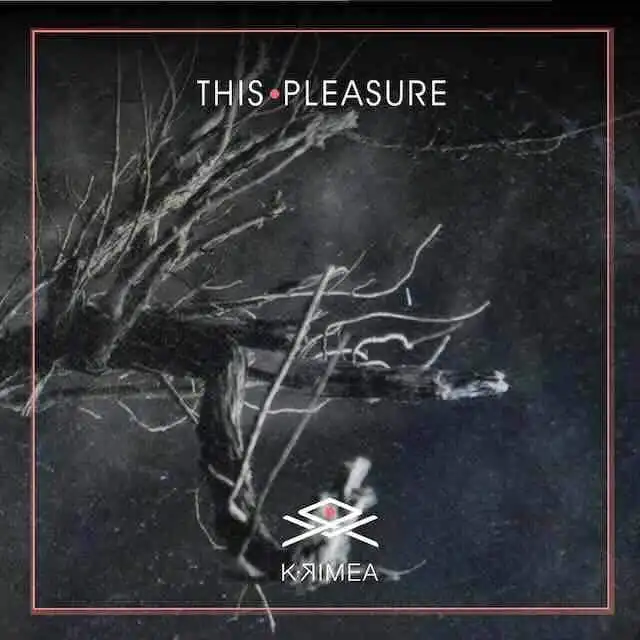
Opening act of the very first album called “Are You Human?” (2025), this song has got a clear synthpop
connotation, heading straight for your ears and your heart, with a hammering rhythmic and a powerful melody.
Nick SoLow’s baritone voice introduces immediately one of the main concepts of the whole album, i.e. the typical
contrast of feelings experimented during the pandemic (that stroke very hard in Italy), where individualism took its
apex on the social medias thus describing a decadent society, forced in the narrow rooms of a new collective
illness.
The song, produced in Miami (USA), has got a strong rhythmic and is particularly appreciated for the balanced
alternance between stanzas and choruses, never falling into a common scheme. A brilliant mastering characterizes
a successful track, very danceable and well characterized with originality and deepness of message.
SoLow says:
“I wrote these lyrics in 2021, during a forced long pause of my job, when I often spent solitary hours home and I felt the need to re-elaborate that particular period of my life, I had to confront with a sensation of inner
conflict and a growing unease towards the society in general, that I felt as self-closed and very individualistic;
however, all of this was somehow combined with a certain sense of sympathy with people, a general sense of
trust I received by the exceptional effort I made with my own job for helping people cope with the pandemic (I
worked in the public sector), granting them some basic goods and services to avoid the fatal infection. The
verse “I still love the ones who hurt each other” represents exactly that and may be linked to the following “I
still love the ones who join this pleasure – pain”, which contains the oxymoron of what I said above and of
entire song too.