

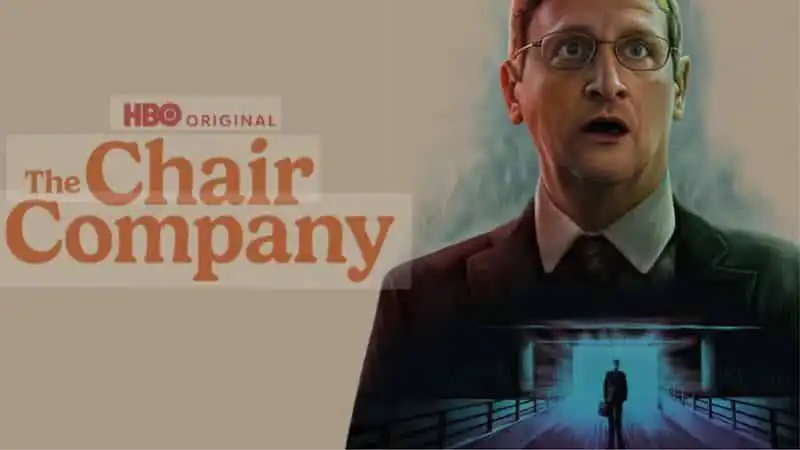
I’ve been thinking about the upcoming HBO series The Chair Company (premiering October 12, 2025), and honestly, it feels like more than “just another comedy.” This one has the potential to expose all the messy, awkward truths about work, including identity, power, HR, reputation, and culture. So let’s dig in: what we know, what it might mean, and how it stacks up against older workplace comedies.
What we know (so far)
- Premise: Tim Robinson plays William Ronald Trosper, who, after an embarrassing workplace incident, starts investigating a supposed far-reaching conspiracy at “The Chair Company.”
- Format: Half-hour comedy, created by Robinson and Zach Kanin, with Adam McKay (yes, Succession and The Big Short Adam McKay) producing.
- Tone: Equal parts cringe comedy and existential paranoia. The trailer drops lines like, “There’s so much badness in this world … we have no protection at all.”
So it’s not just slapstick. It’s absurdism aimed squarely at our shared corporate anxieties: humiliation, hierarchy, hidden power, and the fact that everyone’s one bad email away from HR purgatory.
What absurdity reveals: identity, power & culture
Plenty of workplace comedies milk awkwardness (The Office, Parks & Recreation,…). But The Chair Company seems to crank the dial past “cringe” into “oh god, that’s too real.”
When something goes wrong in a firm, a presentation flops, or a viral slip-up, you don’t just see personal embarrassment. You see the organization itself scramble: who’s going to take the blame, who’s protected, and who gets thrown under the bus. And absurdism is perfect for exposing those fault lines.

Embarrassment & Reputation Risk
One person’s shameful moment can become the company’s PR headache: cue the frantic containment, blame-shifting, and “we’ll investigate internally” statements. The show’s absurdity will underscore how fragile reputations can be.
And then there’s the question: who gets to complain, and who has to eat it? If Trosper’s low in the food chain, his humiliation might be the perfect case study in power imbalance.
Hierarchy & Power Structures
The whole “conspiracy” angle feels like a metaphor for what work already is: decisions made in smoky backrooms (or Slack channels you’re not invited to), unspoken rules, and invisible hierarchies. Comedy works best when it exaggerates truths, and in corporate life, the truth is that the chain of command is both arbitrary and terrifying.
Psychological Safety, Surveillance & Fear
Anyone who’s seen a colleague get humiliated knows the ripple effect: suddenly, everyone’s careful, nobody wants to be next. Add paranoia, gossip, maybe some literal surveillance, and you’ve got a workplace where “safety” is just a line in HR’s handbook.
Identity & Representation
Here’s the test: whose embarrassment counts as the show’s central story? Who gets sidelined? The cast has range (Lake Bell, Sophia Lillis, and more), but if everything revolves around Trosper’s shame spiral, does that sideline women or people of color? In real life, marginalized individuals often bear the brunt of consequences when mistakes occur. If the show wants teeth, it’ll highlight that unevenness.
Business Costs: Hidden vs. Shown
Humiliation may seem personal, but the real price tag falls on the company: HR investigations, turnover, lawsuits, and damage to its brand. And let’s be honest, organizations often spend more on optics, PR, and legal counsel, as well as glossy “we take this seriously” memos, than on actually fixing their culture. If the conspiracy subplot doubles as a metaphor for those hidden costs, it’s a sharp choice.
What’s new in 2025 vs. older workplace comedies
Let’s play the comparison game:
- The Office: funny, but the absurdity is contained. You know the rules. Michael Scott embarrasses himself; the world doesn’t implode.
- Parks & Recreation: bureaucracy, but with heart. Even red tape looks charming.
- Veep / Succession: darker, but more elite. The stakes are national, not quarterly sales.
- I Think You Should Leave (Robinson’s baby): unrelenting sketches about humiliation, but not set in the sustained ecosystem of a workplace.
What’s new with The Chair Company?
- Systemic absurdity: not just one bad boss, but a whole conspiracy under the surface.
- Public shame + viral risk: in 2025, mistakes quickly hit TikTok before HR drafts a memo.
- Identity: workplaces are hyper-aware of equity importance. Thus, who gets heard (or silenced) matters more than ever.
- HR under fire: no longer the savior, but often the optics machine. Tokenism, performative fixes, and complaint processes that backfire are all ripe for satire.
Predictions: what to watch for
- Does the company scapegoat Trosper or try to smother the story?
- Do coworkers back him up or sharpen their knives?
- Does HR help or spin?
- Is power asymmetry blatant, with senior folks immune while junior staff burn?
- Does identity shape fallout (and it should, if the show’s honest)?
- Do we see the real costs, turnover, burnout, or just PR gymnastics?
- Is the conspiracy grandiose or hilariously banal (bad spreadsheets, useless reporting)? Honestly, the banal would hit hardest.
Why this matters
Because absurd workplace satire, when done right, makes the invisible visible: shame, fear, inequity, and the way small mistakes metastasize when culture is brittle. And it shows that the real “reputation management” isn’t external at all; it’s how power circulates, how safety is distributed, and how dignity is protected (or not).
The absurd helps us see the patterns: the bosses who dodge, the juniors who suffer, and the HR departments obsessed with optics over solutions.
The Chair Company feels like the absurdist satire we actually need in 2025. Not comfy cringe about “the world’s worst boss,” but a paranoid, conspiracy-tinged takedown of what happens when shame collides with hierarchy in the always-watched, always-viral workplace. If it sticks the landing, it won’t just make us laugh; it’ll make us wince, squirm, and maybe rethink how fragile (and absurd) our own office safety nets really are.
Looking for your next weekend binge? We’ve got you covered… Here!