
Is your patio not living up to its fullest potential? Or are you in the middle of building your home and want to make sure that the outdoor space is well-designed? You’re in the right place. Below, we explore seven common mistakes that homeowners make when designing their patios and how you can do better. After reading this blog, you’ll know how to create a truly stunning and perfectly functional outdoor space.
Ignoring the Limitations of Their Local Climate
Our first common mistake is designing a patio that you love without regard for your local climate. Yes, we know you might love an open-air space with dainty umbrellas for porch lounging, but is that going to hold up to windstorms in your area? Likewise, you might want to cover your garden beds in delicate plant life, but can it stand up to your area’s soaring temperatures and UV index?
And, of course, consider the deck! You might really want a wooden deck, but it’s not the most practical choice if you live in a rainy region. It will rot if you don’t stay on top of regular cleaning and sealing.
So here’s the takeaway: keep your local climate in mind with every patio-design decision you make. You will be very grateful you did.
Not Having a Long-Term Vision
A lot of homeowners design their patios around current trends or make ad hoc choices without considering how their needs might evolve over time. Maybe right now, you’re envisioning a cozy area for a few quiet evenings. But as your family grows or you begin to entertain more guests, you might find your patio becoming cramped and impractical.
Planning for future flexibility is key. Think about how the space can adapt as your lifestyle changes or how integrating modular furniture can serve both intimate family dinners and larger gatherings. Try imagining your patio as a multifunctional hub, perhaps even creating an outdoor dining room that can transition seamlessly into a comfortable lounge area. We promise—a long-term vision will save you time, money, and frustration down the line.
More Read

Designing a Space That Doesn’t Flow
A patio should feel like a natural extension of your home. Unfortunately, many end up feeling disconnected from the rest of the property due to poor planning.
Every successful patio is backed by an understanding of how people will move in, out, and around the space. Consider the pathways leading to and from the patio. Are they clear and easy to traverse? Is there a logical flow between the seating area, cooking station, and any other zones you’ve created? Without a good flow, even the most visually stunning patios can feel awkward or inconvenient to use.
Functionality doesn’t stop at pathways; it extends to how you space the furniture. For example, avoid cramming oversized couches into a small area or placing chairs so far apart that conversations become shouting matches. Arranging your patio with thoughtful placement encourages comfort, inclusivity, and natural movement throughout the space.
Buying Low-Quality Furniture and Materials
Another major pitfall is selecting patio materials solely for their looks without factoring in durability or maintenance. Sure, that light-colored sandstone might look fantastic in design catalogs, but how will it hold up to muddy foot traffic or spills from your evening BBQs? Similarly, while that white modern furniture might look magazine-worthy, it will probably start showing wear after just one rainy season if it’s not built to withstand outdoor conditions.
Don’t have these regrets. Instead, make sure all the space’s materials are both practical and visually appealing. Look into weather-resistant furniture, nonslip flooring, and finishes that stand up to the local climate. High-quality materials cost more at the register, but you’ll save more in the long run on repairs and replacements.
Forgetting About Lighting
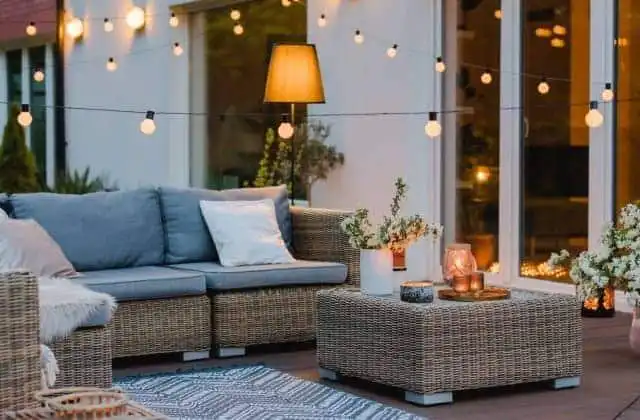
Many homeowners design their patios with daytime use in mind, ignoring evening needs. But who doesn’t love an outdoor hangout on a breezy summer evening? Make sure your patio caters to this activity with plenty of warm ambient and safety lighting.
Start with oh-so-loved string lights. You can hang these along your home’s eaves, the patio’s fencing, or your yard’s landscaping (such as in the trees). For any pathways connected to your patio, line them with solar lights so you and guests can mind your footing.
Then, introduce accent lighting where you see fit. Maybe you want a lantern above the grill or a tiki lamp next to the conversation circle. Once softly illuminated, your patio will be the perfect place to chill both day and night.
Including Only Sparse Greenery and Landscaping
Your patio is already outside and next to a lawn, so that’s enough greenery, right? Wrong.
Though grass does make a space feel fresher, you should still incorporate thoughtful landscaping around and on the patio. Here are the best ways to do this:
- Edge the patio with potted plants (make them herbs for a practical bonus).
- Hang flower baskets on the exterior frame of patio-facing windows.
- Grow a climbing plant on a trellis and lean it against your home’s exterior.
- Fill out your garden with colorful local plants, making sure something will always be in bloom (or at least green).
Overcomplicating the Design
While it’s tempting to pack your patio with every trendy feature under the sun, too much can quickly become overwhelming. A pizza oven might seem like a fun addition now, but if you already have grills, tables, and a bar crammed into one small space, you might compromise usability.
Focus instead on making thoughtful, intentional design choices that align with your primary goals. If casual entertaining is your priority, emphasize plenty of comfortable seating and a well-designed dining area. If relaxation is key, invest in cozy loungers and ambient lighting. Simple designs can still be incredibly sophisticated if you execute them properly.
Designing a patio is one of the most exciting home improvement projects, but it’s also one where details matter more than you’d think. By avoiding these common mistakes that other homeowners make, you can create a space that is equal parts practical, beautiful, and comfortable. Best of luck!