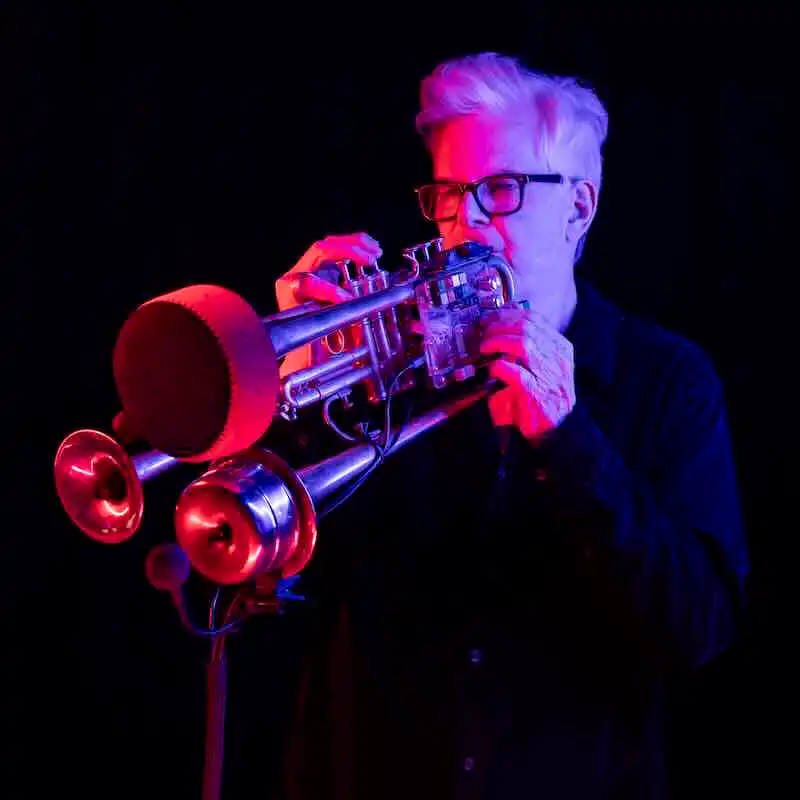

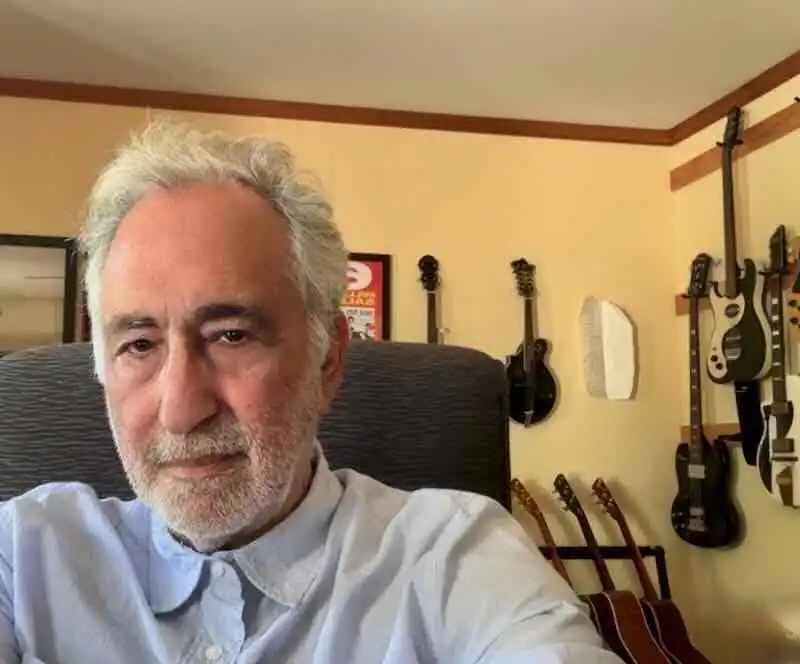
Stepping out from behind the studio glass and into the spotlight, acclaimed Canadian songwriter, producer, and performer Eddie Schwartz is finally claiming center stage with his forthcoming full-length studio release, Film School.
Best known for penning Pat Benatar’s smash hit “Hit Me With Your Best Shot” and classics recorded by the likes of Carly Simon, Joe Cocker, Donna Summer, Rascal Flatts, and The Doobie Brothers, Schwartz has long been the quiet force behind some of pop and rock’s most enduring anthems. Now, after years of writing for others—and weathering an extended creative drought—he returns with a deeply personal body of work shaped by political turmoil, emotional exhaustion, and a hard-won sense of hope.
What do you love most about being an artist?
For most of my life I’ve recorded “demos” of songs, usually with full arrangements, and then artists, incredible ones who I owe a great deal to, have taken the demos and recorded the songs. So my own recordings of the songs have only been heard by a small group in the industry. It’s wonderful for me to release my versions of my songs for people to hear and have that direct relationship with people.
What first drew you into the world of music?
I grew up in a pretty dysfunctional family and didn’t fit in with the other kids in my neighborhood, and I was pretty openly ostracized by them. Toronto was not the diverse place it became in later years, and I was an olive-skinned kid who had a “foreign” last name in a still somewhat parochial Canadian city with a very white, British population. Perhaps for that reason I didn’t get into playing sports with the other kids and shied away from social interactions in general. From my early teenage years music was my salvation and my refuge.

Who inspired you most when you were just starting out?
I had a cousin in New York City, Edith, who had a tremendous influence on me. She had an apartment on St. Marks Place in the East (Greenwich) Village, was studying social work at Hunter College, and was inspirational in every way, especially to a kid from Toronto in the early 1960s. “A Complete Unknown,” the recent movie about Dylan’s early years in the village, really captures the feel of the place at that incredible time.
Starting when I was around 12 years old, I would catch the red-eye bus from Toronto to New York and spend school breaks sleeping on Edith’s floor and taking it all in, listening to “The Free Wheelin” Bob Dylan album over and over and over again. I was completely blown away and profoundly influenced. I would come back to Toronto and play the “Free Wheelin’” album for the few friends I had, and they thought I had lost my mind. I remember one saying Dylan sounded like a “singing prune.”
Is there a live show that stands out as truly unforgettable for you?
Sometime in the late 1960s I saw Pete Seeger at Toronto’s venerable Massey Hall and was mesmerized. I had grown up listening to his records since both my parents were from working-class leftist backgrounds, and the Weavers, Paul Robson, early Harry Belafonte, and Seeger’s solo records were on the turntable all the time in our suburban Toronto bungalow.
The defining moment for me was when Pete sang “Turn Turn Turn” a cappella. I knew and loved the Byrds’ version, but this was on an entirely different level. It crystalised the power of a lyric for me and how the simplest of deliveries could also be the most effective. I’m still working on that …
What’s the most challenging gig you’ve ever played, and what did you learn from it?
I did a ‘writers in the round’ gig in LA sometime in the mid-1990s. Joni Mitchell was in the audience, and I was so nervous performing in front of her that I considered throwing myself in front of a truck on Santa Monica Blvd and getting it all over with before the show. After a minute or two of my first song, I settled down and somehow survived. She left at some point during the round, so I didn’t actually meet her, but I did spend time with her years later in Toronto at an awards show we both attended.
Can you share a funny or surprising moment that’s happened during a performance?
I did a ‘writers in the round’ at Nashville’s Bluebird Café with Randy Bachman of The Guess Who and BTO in the late 90’s, and when I played my songs, Randy knew and played many of the guitar parts. Not just “Hit Me” but other songs as well. Unrehearsed and totally unexpected—I was very grateful because he’s a rock star and a great player, and I was blown away that he knew the songs and the guitar parts.
How do you handle stage nerves—has your approach changed over time?
My approach hasn’t changed; near panic is the norm for me, so yeah, stage fright is an issue. I very much need to find a solution that does not involve throwing myself in front of heavy traffic.
Can you walk us through your creative process when writing or producing music?
There are two main ways that usually get me going. One is picking up a guitar and jamming with myself and seeing what comes along that inspires me to start singing. Singing leads to musical phrases and melodies, and often, nonsense lyrics or syllables that begin to point the way towards something that may be meaningful lyrically.
Very often, the leap from nonsense lyrics to actual meaningful words is the most difficult part of the process and where I spend a lot of time. A pretty significant percentage of song ideas that get that far never go any further. I may circle back to them over time and see if an “aha” moment comes my way, which is what happened with “We Win,” the single from my current “Film School” EP, but my guess is less than 10% of the ideas that start that way find a path to a completed song.
The other route is to start with an idea for a lyric—something I know I want to say and sing about. “Waters Rise,” also on “Film School,” is an example. It’s harder at first because finding the music that fits a lyrical idea can be a real challenge for me. I may have fragments of music that I like that I try and bring together with the lyric and see if they work, or I may just start singing the lyric a cappella and see where that takes me musically.
In both cases, I don’t want the lyric to let the music down, or the music to fail to faithfully support the lyric. If I can get those two pieces of the puzzle right and then really mate them together, I just might have something worth a listen.
Just FYI, “Hit Me With Your Best Shot” started with that lyric line and took maybe three years to write.
I should mention that there is a third way I have written a song or two, and that is what might be called “spontaneous combustion”—the sky opens up, and in the time it takes to sing a song, I have one. “Look What’s Showing Through,” a song recorded by Rodney Frankin https://www.youtube.com/watch?v=Xmvymh3i9qk) and the band “Toronto” (https://www.youtube.com/watch?v=dSb8ppBp8FM) is one of those rare birds that have nested on my grateful little head.
What’s the core message you hope fans take away from your music?
Songs can matter, songs can be relevant to the world we live in now, and they can help us feel connected and empowered in a world that can feel overwhelming. Songs call us and rally us and unite us. I saw the power that music had in the civil rights movement and the anti-war movement of the 1960s and ‘70s, and I believe deeply in the relevance of music to our lives and think we need music in that important role now as much as ever. Maybe more.
If you weren’t making music, what path do you think you’d be on?
I’m not sure I’d be here. Music, and later, the love of my wife and kids has kept me alive.
What’s one piece of advice you’d give to someone breaking into the industry today?
Don’t get hooked on AI! Learn an instrument, write your own lyrics, and make them count. Technology can help, but it’s only useful if it helps you on the journey to find yourself and your own creativity. It’s a tool, a useful vehicle. It’s not the destination, and too many people confuse the two.
Are there musicians you particularly admire or look up to right now?
Chappelle Roan. Meaningful songs, great production, and great voice and delivery. Very impressive. And Jesse Welles, he’s great.
What’s the best advice you’ve ever received about your music or career?
An old-school music publisher said that to me very early on in my career: that above all else, you have to have a vision for what you want to achieve and the direction you want to go. And then find the lawyers, the managers, publishers, labels, et al. who support that vision and who don’t try to change you. That’s key. If they try to discourage you from pursuing what you believe is right for you, then look elsewhere. The people who can really help you achieve what you know is right for you are out there, but they should work for you, not the other way around. Take the time to find them; it may be the most important thing you do, beside creating the music.
If you could change one thing about the music industry, what would it be?
We desperately need to rebalance things between the record side and the song side of the revenue flows in the music business. Right now, the ratio between the artist/label and the songwriter/publisher side is around 10 to 1. The exception is syncs. When a song and record are used in a movie or TV show, the split is 50/50. We desperately need to move closer to that for music streaming and most other uses of music.
Of all your own songs, do you have a favorite? What’s the story behind it?
“We Win,” “Special Girl,” “Outbound Train,” and “Don’t Shed a Tear” are all contenders, I guess, but right now “We Win” has special meaning for me because after years of not being able to finish a song, “Win” was a breakthrough for me. And once it opened the door, I could go back to other ideas I had kicking around and complete them—most of the songs on “Film School” are those songs.
And the message of “We Win” also helped me at a difficult time and still does.
What are your musical goals or plans for the coming year?
Write more songs and start performing live!
What does your studio setup look like these days?
I have a very basic setup: a Macbook Pro, a pair of small and a pair of midsize monitor speakers, and a Universal Audio Apollo Twin interface. I have a couple of good mics as well. Logic Pro is the DAW I use, since it comes with the Mac and gets the job done, and the Logic sound library and effects are very good right out of the box.
What’s your take on garden gnomes—love them or leave them?
I’m more of a trees and flowers kind of guy.
You’re stranded on a deserted island—what two nonessential items are you bringing?
A guitar and a Kindle with a lot of books downloaded, including every Stephen King.
If money were no object, what job would you choose to do anyway?
Songwriting, although I wouldn’t exactly call it a job. It has never been about the money and still isn’t. I’m still processing the fact I make a living doing it.
Who would play you in the movie version of your life?
Al Pacino as he was in the first Godfather movie.
Are you more of a cat person, dog person, or both?
I’m going to go with both. We always had cats growing up at my parents’ home, and my girlfriend in my teenage years introduced me to dogs. We’re still together and have had many dogs over the years. Our last cat, Silver, lived to 17.
If your life had a theme song, what would it be?
I can’t run away from “Hit Me With Your Best Shot” both figuratively and literally, so I guess that’s it. I’ve heard it in a cab in Paris, at the foot of Mount Fuji, and in more than a few Home Depots in between. But more to the point, I suppose, the song is about being the defiant underdog, but in a kind of playful way. It’s entirely possible that sums me up pretty well.
Which historical figure would you love to see living in today’s world?
I think a lot about Abraham Lincoln and how he would handle today’s world. Seems to me we could use a healthy dose of his wisdom, graciousness in victory, eloquence and gravitas right now.
As a kid, did you ever worry about monsters under the bed?
Yes, and I’m pretty sure they are still there, but I figure I can talk them out of whatever funny business they may want to try.