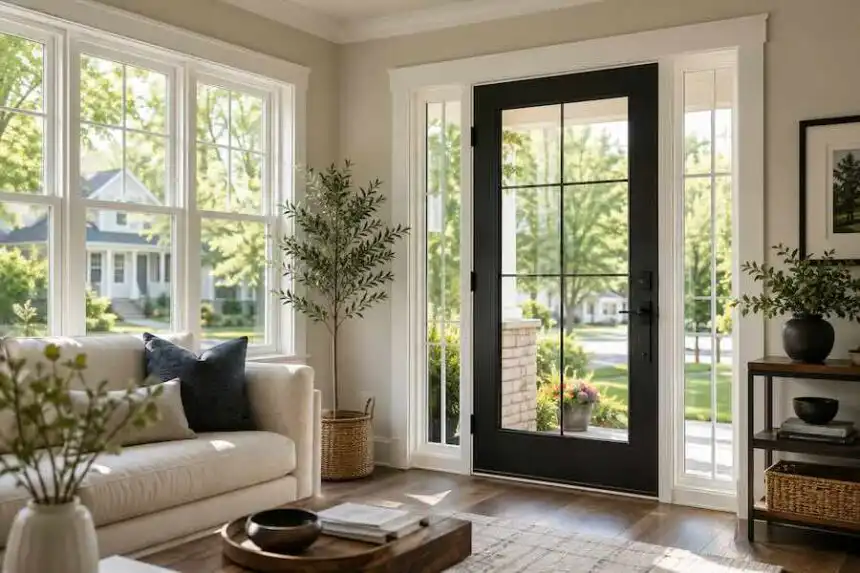
Replacing windows and doors can feel like a major home project, but the process becomes far easier when you know what to inspect before buying. For homeowners considering windows and doors Hamilton replacement, the key decisions come down to the condition of the existing units, accurate measurements, energy performance, materials, installation method, and a realistic budget.
- A Practical Buying Guide for Replacement Windows and Doors Hamilton
- Signs Your Windows May Need Replacing
- Higher Heating and Cooling Costs
- Persistent Drafts
- Condensation Between Glass Panes
- Windows Are Difficult to Open or Close
- What to Consider Before Buying Replacement Windows
- Get Accurate Measurements
- Decide What You Need Before Shopping
- Set a Realistic Project Budget
- Choose the Right Frame Material
- Do Not Ignore Energy Performance
- The Practical Takeaway
- Conclusion
- FAQ: Windows and Doors Hamilton Replacement
A Practical Buying Guide for Replacement Windows and Doors Hamilton
Window replacement does not always mean removing everything down to the rough opening. With a pocket or insert replacement, the existing frame can remain in place while the sash and other components are replaced. This approach can reduce disruption, but the original frame needs to be structurally sound and properly sized for the replacement unit.
A full-frame replacement goes further by removing the existing window and frame. The right approach depends on the condition of your home, the existing installation, and what you want to achieve. When shopping for windows and doors Hamilton, consider frame materials, glazing, dimensions, style, installation requirements, maintenance, and total project cost rather than comparing products by price alone.
Signs Your Windows May Need Replacing
Age can provide useful context, but it should not be the only reason to replace a window. Condition matters more. Warped frames, damaged glass, failed seals, persistent drafts, water intrusion, and windows that no longer operate correctly can all indicate that repair or replacement deserves consideration.
Higher Heating and Cooling Costs
If energy use has increased without an obvious explanation, inefficient windows or doors may be contributing to heat loss or heat gain. Older single-pane glazing generally provides less insulation than modern insulated glazing, while damaged weatherstripping, deteriorated frames, and failed seals can also affect performance.
Look at the entire building envelope before assuming windows are solely responsible. ENERGY STAR Canada provides guidance that can help homeowners understand energy-efficient products and performance when planning upgrades.
Persistent Drafts
Cold Hamilton winters have a way of exposing weak points. If you regularly feel air moving around a closed window or exterior door, worn weatherstripping, gaps, installation problems, or deterioration around the frame may be responsible.
Some air leaks can be repaired without replacing the entire unit. Persistent problems, particularly when accompanied by frame damage or poor operation, can make replacement the more practical long-term option.
Condensation Between Glass Panes
Not all condensation means a window has failed. Moisture on the room-facing surface can be related to indoor humidity and outdoor temperature. Moisture or fogging trapped between the panes of an insulated glass unit, however, can indicate that its seal has failed.
Depending on the window, replacing the insulated glass unit may be possible without replacing the complete frame. A professional assessment can help determine which repair makes financial sense.
Windows Are Difficult to Open or Close
A window that sticks, jams, refuses to lock, or will not remain open is more than an everyday irritation. Swollen timber, corrosion, damaged hardware, distorted frames, or structural movement can interfere with normal operation.
Function becomes especially important for windows intended to provide emergency egress. If a window no longer works as designed, determine whether the hardware can be repaired or whether replacement is the safer option.
What to Consider Before Buying Replacement Windows
Once replacement makes sense, slow the buying process down. A window is not simply a pane of glass in a frame. Its dimensions, glazing package, frame construction, installation quality, warranty, and suitability for Hamilton’s climate all affect how well it performs after installation.
Get Accurate Measurements
Measurements are critical when an insert window needs to fit an existing opening. Width and height should be checked carefully, and the opening should also be inspected for squareness, deterioration, and hidden moisture damage.
For professionally installed windows, having the installer complete the final measurements can also clarify responsibility if the manufactured unit does not fit correctly.
Decide What You Need Before Shopping
Walk into the buying process with a clear brief. Do you want easier maintenance? Better insulation? More ventilation? A different architectural style? Improved sound control? Larger glass areas?
Knowing the priorities makes it easier to compare products on meaningful specifications rather than being distracted by features that add cost without solving the problems you actually have.
Set a Realistic Project Budget
Your budget should account for more than the sticker price of the window or door. Installation labour, removal of old units, trim work, finishing, repairs around damaged openings, upgraded glazing, hardware, and other options can change the final cost.
Very low prices deserve scrutiny, but a higher price does not automatically guarantee better performance. Compare specifications, warranties, installer experience, and the complete quoted scope before making a decision.
Choose the Right Frame Material
Vinyl, wood, fiberglass, aluminum, and composite frames each offer a different balance of insulation, appearance, maintenance, durability, and price. There is no single material that is automatically right for every Hamilton home.
Wood offers natural warmth and architectural character but generally requires more maintenance. Vinyl is popular for its relatively low maintenance requirements, while fiberglass can offer durability and dimensional stability. The best choice depends on the property, exposure, design, budget, and level of upkeep you are comfortable with.
Do Not Ignore Energy Performance
For a Southern Ontario home, glazing deserves close attention. Instead of simply assuming that more panes automatically mean a better window, compare the complete unit’s performance. Glass coatings, insulating gas fills, spacers, frame construction, and installation can all influence efficiency.
Canadian homeowners can consult Natural Resources Canada guidance on windows, doors and skylights when comparing energy-performance considerations.
The Practical Takeaway
Start with the problem rather than the product. Inspect how your current windows and doors operate, look for drafts and moisture, identify damaged components, and decide what you want the replacement to improve. Then obtain accurate measurements and compare complete quotes with equivalent specifications.
That method turns windows and doors Hamilton replacement from an intimidating purchase into a controlled home-improvement decision. You know what needs fixing, what performance you are paying for, and where the budget is going before installation begins.
Conclusion
Replacing windows and doors is an opportunity to address comfort, operation, appearance, and energy performance at the same time. The strongest purchase is not necessarily the cheapest or most expensive option. It is the one correctly sized for your home, suited to Hamilton’s climate, professionally installed, and matched to the way you actually live.
FAQ: Windows and Doors Hamilton Replacement
Should I replace the entire window or just the insert?
If the existing frame is structurally sound and appropriately sized, an insert replacement may be possible. Significant deterioration, water damage, or problems with the existing frame can make full-frame replacement more appropriate.
Does condensation mean I need new windows?
Not necessarily. Interior condensation can be associated with humidity, while moisture trapped between panes can indicate a failed insulated-glass seal. Have the cause identified before replacing the complete window.
Are triple-pane windows always better?
Triple glazing can provide stronger thermal performance in suitable configurations, but pane count is only one factor. Compare the complete window’s performance, construction, installation, cost, and suitability for your home.
What should I compare when getting window quotes?
Compare equivalent frame materials, glazing specifications, energy-performance information, warranties, installation scope, disposal, finishing work, hardware, and total price. A detailed quote makes competing offers much easier to assess.