
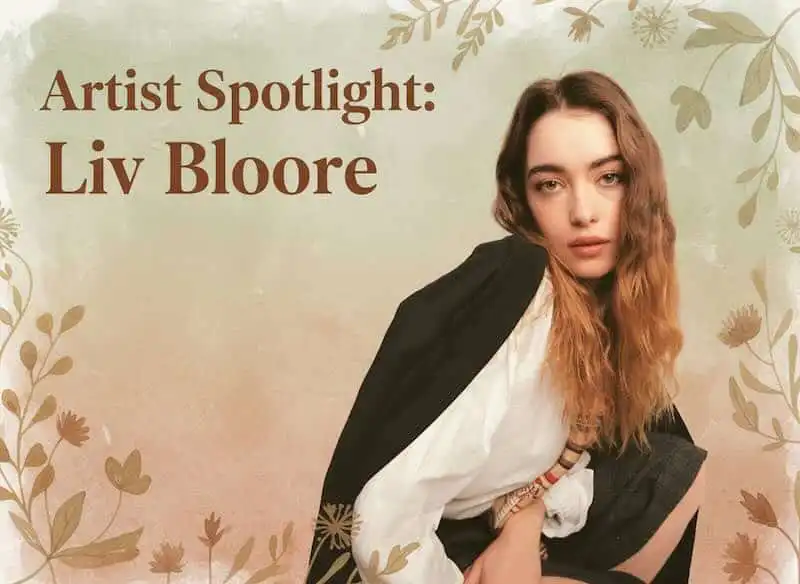
Emerging singer-songwriter and producer Liv Bloore (she/they) makes a striking entrance into the indie-folk scene with their mesmerizing debut single, The Darling Song. This evocative track unfolds as a slow-burning confession of love from afar, weaving a tapestry of dreamy melodies and heartfelt emotion that resonates deeply with listeners.
Released through APOLLO Distribution, The Darling Song showcases Liv’s honeyed vocals delicately layered over acoustic textures and stirring strings, creating an intimate soundscape where fantasy and reality intertwine. The song lingers long after the final note, held together by a tender balance of vulnerability and emotional clarity.
Liv describes the inspiration behind the song: “The Darling Song is about falling in love from a distance. It begins as innocent admiration and blossoms into vivid fantasies of a shared life. But ultimately, it’s the yearning for that one moment—to be called ‘darling,’ even if just once.”
Drawing creative influence from artists like Phoebe Bridgers, Ethel Cain, and Florence + The Machine, Liv Bloore’s music feels both ethereal and grounded. Their sound is expansive yet intimate, echoing the emotional sweep of choral music while rooted firmly in the honest storytelling tradition of folk. As a classically trained musician, songwriter, and producer, Liv’s meticulous craftsmanship shines through every layer of this debut, marking The Darling Song as a fully realized artistic statement.
Accompanying the release is a captivating official music video that deepens the song’s exploration of yearning and imagined futures, inviting viewers into Liv’s hauntingly beautiful world.
Stream The Darling Song: https://apollodistro.lnk.to/LivBloore-TDS
More Read

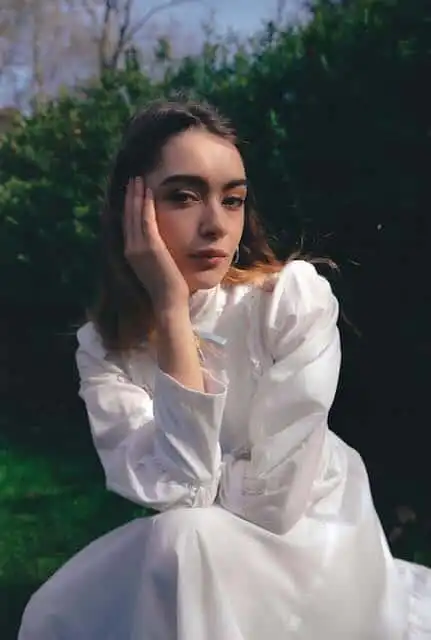
Your debut single, “The Darling Song,” weaves together folk-rock and classical textures. Can you share how the song first came to life and what inspired its sonic world?
The Darling Song was written 3 years ago when I was head over heels for someone who felt very out of reach. The line ‘darling, I wouldn’t ask for much’ came to me when I was thinking that I would do anything to be with that person and call them ‘my darling’. It started off as a folky demo when I was listening to a lot of Bess Atwell and Searows, and my old band mate George played those beautiful cello lines you can hear throughout the track. As I then taught myself to produce, my listening taste branched out to more indie folk-rock artists like boygenius, Ethel Cain and Florence + the Machine. I then added all these shoegazy rocky guitar textures, slide guitar and lots of distortion with the help of my friend Jack. I wanted the song to begin as this gentle wishful folk song, then build to this dramatic rocky outro with layers of harmonies and crashy drums.
You’ve mentioned that the track is about falling in love from afar and the quiet heartache of unrequited love. How did you channel those emotions into both the lyrics and the arrangement?
Lyrics to me are the most important part of each song I write – all my songs begin with the words. I wanted the production to illustrate the lyrics as the song develops. The cello lines and soft plucked guitars at the start illustrate the wishful daydreams of growing old together in the first verse. I wanted a tonal shift at the start of the second verse darling, the going has got tough when the words become more sombre and the crackly distortion of the electric guitar creeps in. Then the outro is really crashy and much more rocky, when my voice is really belting the desperation of all I want is your command before it dwindles down into a gentle folky outro repeating please don’t leave me empty handed again which feels unrequited and unfinished, but also has an air of peaceful defeat and understanding about it.
As a producer with a secret passion for musical theatre, how do your classical training and love for theatricality influence your approach to songwriting and production?
One of the reasons I took the time to make the arrangement more rocky was because I wanted a shouty and dramatic outro in the song, like you often have in musical theatre. I actually shot the music video when it was still a folky demo, and I wanted the arrangement to reflect the chaos of the visuals, running around a ruined abbey in Dunwich in Suffolk where I grew up. My favourite part of producing is adding harmonies, which is really influenced by singing in a chapel choir at university where we sang a lot of polyphony from the 1500s. I try to weave those classical and theatrical influences into each song to really add to the narration of the lyrics.
The official music video for “The Darling Song” was shot on Dunwich beach, paying homage to your Suffolk roots. How does your upbringing in the Suffolk countryside shape your artistry and storytelling?
Growing up in Suffolk was both beautiful and isolating. I think a lot of my imagination comes from spending so much time in the countryside and being alone in nature. I find the Suffolk coast both calming and scary, so I wanted to shoot this music video on Dunwich beach – I’d always been scared of the ghost stories about the haunted town that fell into the sea during a storm in the 13th century. I shot this video with my best friends from high school, who I became friends with through the music department so it was very important to me that they be a part in my debut single, as my musical upbringing I received alongside them is where my passion for music and songwriting began. Fun fact is that Ed Sheeran went to our little high school in Framlingham (shout out Thomas Mills), so that has also always been an inspiration that you can grow up in the middle of nowhere and make it as an artist.
Your music draws inspiration from artists like boygenius, Ethel Cain, and Florence + The Machine. What is it about their sound or storytelling that resonates with you, and how do you make those influences your own?
I love the way that these artists weave together folk and indie rock to create songs which have vulnerable and poetic lyrics and wistful melodies set to gritty and rocky production. The line in The Dog Days Are Over by Florence + The Machine I never wanted anything from you / expect everything you have’ inspired darling I wouldn’t ask for much / just everything you are close enough for me to touch. I love the way she weaves folklore and mythology into her albums, it inspires me to draw on my experience singing in a chapel and to explore those religious and existential themes in my music. Boygenuis have been an inspiration for years, their lyrics are so poetic and sad but listening to their first EP I loved how these gentle and heartbreaking words were against a backdrop of distorted electric guitars, it really captures female rage to me. I used to think that the lyrics and melody were the most important elements of a song, but Preacher’s Daughter by Ethel Cain really changed the trajectory of my artist project and inspired me to teach myself to be a producer. The sonic landscape that Ethel Cain creates in that album weaves this heartwrenching narrative through the songs, and really emphasises every lyric with the added undercurrent of emotion present in the instrumentation.
Isolation during the pandemic was a turning point for your songwriting. How did that period of solitude and self-reflection impact your creative process and the themes you explore in your music?
During the pandemic when the world stopped it was the first time I had to really focus on my songwriting, having just left sixth form in a rush. The isolation of the countryside was really heightened during the lockdown, and I think after lockdown I became less of an introvert, as I suddenly wanted to socialise and be around as many people as possible. I think I then became less anxious to share my rambling inner monologue with people I didn’t know, so it was a catalyst in a way to want to put music out into the world and form a community around that. I feel those feelings of isolation still perpetuate my lyrics though, I am a very nostalgic person and I feel that the past really sticks with me in the words I put into songs.
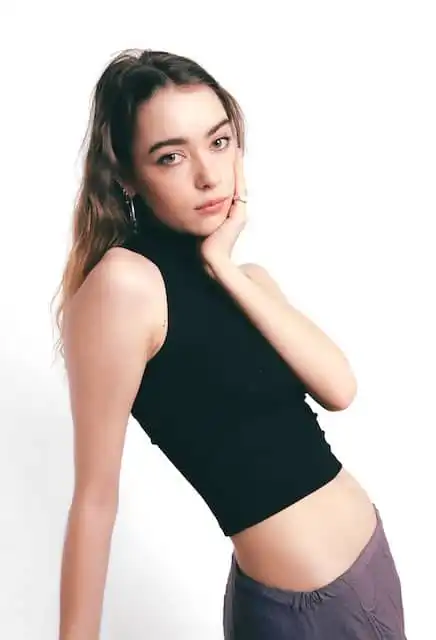
You’re known for blending choral harmonies, string arrangements, and indie-folk melodies. What does your typical songwriting and production process look like, from the first lyric to the final mix?
I always start with the words, usually on a walk and listening to other music that inspires me. I often take words or phrases from other songs and twist them into something of my own. I then sit down at the piano or guitar and write the rest of it in a voice memo. I then often produce as much as I can in my home studio myself, before working with my friend Jack to add drums / guitars, then taking it back to my bedroom to add harmonies / slide guitar / strings etc. I always need to finish off the vocals at home, I am a massive perfectionist and I don’t like the pressure of singing in front of someone else no matter how close we are! Also my amazing mixer Amy Sergeant then patiently perfects every musical line and deals with my millions of picky alterations and makes it sounds beautiful but also keeps the diy feel of the arrangement.
Themes of emotional intimacy, grief, and existential reflection run through your lyrics. How do you approach writing about such personal and sometimes vulnerable subjects?
I find that I write a lot of my inner thoughts onto my notes app as a sort of stream of consciousness. I find that a lot when I am grieving, which is mostly when I am alone. Then I also write my songs on my notes app, so naturally those things conflate and often wind up as poems which I then set to music. When I learnt about creative writing and poetry in school we always analysed the senses, so I always incorporate very tactile imagery into my lyrics – I like to describe grief and feelings of existentialism into metaphors that relate to things you can tangibly feel. In The Darling Song for example I sing I pledge to see the whites of your lies – playing on the idea of seeing someone for who they really are, and relating it to being physically close enough to someone to see the whites of their eyes. Phoebe Bridgers has been one of the biggest influences on my lyrics, as she writes about these vulnerable topics very openly. In The Darling Song, this idea of I hold you but you run through my arms reflects this feeling of someone slipping away from you, which was actually inspired by her song Moon Song where she sings you’re holding me like water in your hands.
Religion appears as both a source of love and existential questioning in your work. How has your relationship with faith influenced your music and your personal journey as an artist?
I grew up going to a tiny Church of England primary school in rural Suffolk, and the local church was basically free daycare so I spent a lot of time there growing up. I’ve always been someone who believes in ghosts and spirits so all religion is always a source of interest to me, and a cultural and historical insight as to what makes us human, the good and the bad. I also sang in a chapel choir at university and the music and the friends I made along the way was the best part of the whole three years there. I always felt incredibly moved by the music, but then always felt conflicted with the actual words of the scripture. I like to explore these contradictions in my lyrics, and how love, queerness and grief interact with faith.
As you prepare to release your debut EP, what do you hope listeners will discover or feel when they step into your sonic world?
I would love my music to create the same euphoric yet thought inducing feeling I have when listening to my favourite artists. I hope that the lyrics stick with people particularly, as these are so personal to me – I would love people to find comfort in the words I’ve written. I’ve enjoyed creating a visual world too with the music video and the film photos, so I am excited to see how that develops and to hear what people visualise when they hear the song so I can incorporate that into the EP as a whole.
What advice would you give to other emerging artists who are navigating the transition from rural beginnings to the creative intensity of city life?
I’d say even though it seems scary, go to as many gigs as you can by yourself. I work full time and I am often exhausted after a day in the office but there is a wonderful community of upcoming independent artists in London particularly who all support each other and are the loveliest people. It sometimes seems overwhelming to know how many people are pursuing the same career path, but everyone’s music is unique so actually you’re not going for the same thing at all! Everyone I’ve met in London has been so encouraging and given such great advice so I’d say go out and meet as many people face to face as you can.
Finally, what’s next for you—are there upcoming projects, collaborations, or live performances you’re especially excited about?
I will be releasing new songs in the new year, leading up to my debut EP which I will be announcing soon. I am so excited for this collection of songs to be out in the world, they are a time capsule of the last few years of my life and weave together my personal experiences of love, grief and my relationship with religion – and also my imaginings and daydreams I’ve had along the way. I am also planning a headline show with a full band in the new year – I was in a great band at university and I really miss playing live and having that community of people to experience the music with. I am a producer or co-producer on every song, so I am really proud of the creative control I’ve had over this project, from shooting the cover art with my partner (my darling!) on an old film camera, to playing harmonica and recording the rain outside my window when producing the song in my bedroom. I am so excited for The Darling Song to be out in the world, and thank you so much for listening to the song, and reading about my influences and the story behind my debut single.