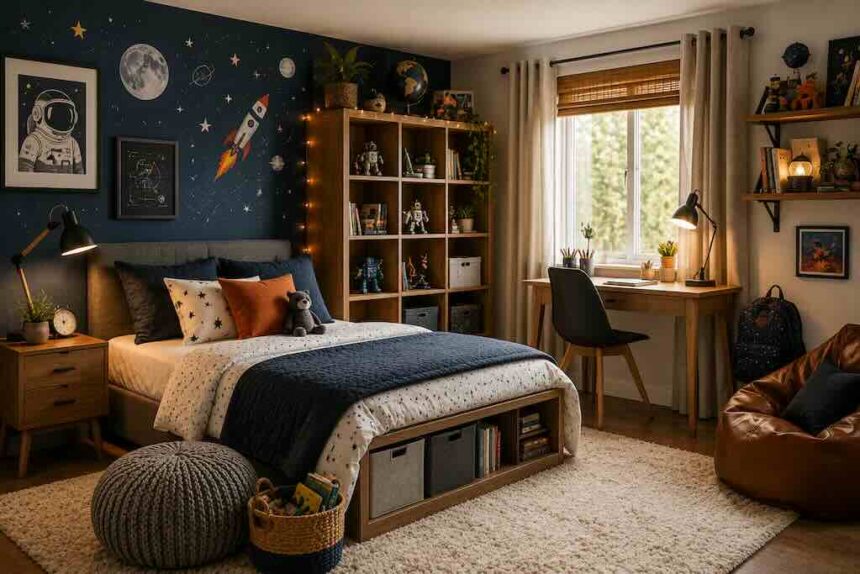
A child’s bedroom has to do several jobs at once. It is somewhere to sleep, read, play, dress, store an expanding collection of objects and occasionally retreat from the rest of the household. A theme can give that space personality, but the most successful rooms leave enough flexibility for the child to change with them.
- Start With the Room, Not the Theme
- 1. Toys and Building Sets
- 2. Space and Astronomy
- 3. A Favorite Sport
- 4. Film and Fantasy
- 5. Nature and Woodland
- 6. Dinosaurs and Natural History
- 7. Books and Reading
- 8. Art and Creativity
- Let Your Child Have a Say
- Design the Expensive Parts to Last
- Keep Sleep in the Design Brief
- A Practical Children’s Bedroom Checklist
- Conclusion
- Frequently Asked Questions
Editor’s note: This article has been updated to remove outdated shopping links, improve the original design advice and shift the focus from heavily branded bedrooms toward flexible themes that can adapt as children’s interests change.
That flexibility matters. Today’s fascination with dinosaurs, football or a particular film may be replaced by something completely different next year. Building the entire room around one character can make every change expensive.
A calmer approach is to establish a practical base first, then bring the theme into elements that are relatively easy to move or replace: bedding, framed artwork, shelves, cushions, lamps and display objects.
Start With the Room, Not the Theme
Before choosing colors or wall decorations, look at how the bedroom actually functions.
The bed needs a comfortable position. Frequently used toys should be accessible. Clothing needs somewhere to live. A school-age child may benefit from a small desk or reading area, while younger children may get more value from open floor space.
Storage is particularly important because visual clutter can quickly overpower even a carefully designed room. Baskets, drawers, shelves and under-bed storage give possessions defined places without turning organization into part of the decoration itself.
Once that framework works, the room is ready for personality.
1. Toys and Building Sets
For a child who loves building sets, dolls, model vehicles or collectible figures, the objects themselves can become the decoration.
Instead of covering every surface with imagery from a particular toy line, create a dedicated display zone. A row of shelves above a desk can hold finished models. Small wall-mounted ledges can display favorite figures. Clear boxes can organize smaller pieces while keeping them visible.
This approach has a practical advantage: when the interest changes, the architecture of the room can stay exactly where it is. Only the objects on display need to change.
For collections containing small parts, consider the child’s age and keep potential choking hazards inaccessible to younger children.
2. Space and Astronomy
A space-themed bedroom can be atmospheric without becoming a miniature theme park.
Deep blue walls, warm wood furniture and a few celestial details can suggest a night sky while remaining relatively timeless. Add framed astronomical photography, a model spacecraft, planet-inspired cushions or a globe-shaped lamp.
For educational artwork and imagery, NASA’s children’s science resources can provide inspiration beyond fictional versions of space.
Avoid placing bright decorative lighting where it will remain illuminated throughout the night. Darkness is an important part of a supportive sleep environment, so stars and planets do not need to glow until morning.
3. A Favorite Sport
Sports themes work particularly well because they offer an immediate visual vocabulary: team colors, equipment, photographs, shirts and memorabilia.
Resist the urge to paint an enormous permanent team logo across the wall unless your child is genuinely committed to it. Framed shirts, removable artwork or a shelf containing trophies and equipment give you considerably more flexibility.
You can also build the room around the sport rather than one team. Football, basketball, tennis, skateboarding or motorsport photography can create a strong identity without tying the bedroom to a single club or athlete.
If your child is still exploring different activities, Divine’s guide to sports worth trying may offer a little inspiration beyond the bedroom.
4. Film and Fantasy
Film-inspired rooms can easily become visually overwhelming. Instead of reproducing an entire fictional world, borrow its atmosphere.
A child fascinated by magical stories might enjoy dark burgundy, forest green, aged brass, books and warm bedside lighting. A superhero fan might prefer graphic primary colors, framed comic-inspired artwork and a few carefully chosen collectibles.
This distinction between inspiration and imitation makes the bedroom easier to live with. It also means the expensive elements, such as furniture and flooring, can remain useful long after the favorite film changes.
5. Nature and Woodland
For children without one dominant interest, nature provides an unusually adaptable starting point.
Soft greens, warm beige, muted blue and natural wood can create a quiet foundation. From there, the room can move toward woodland animals, mountains, insects, oceans or botanical imagery depending on the child’s interests.
Texture can carry much of the design. Think woven baskets, cotton bedding, wooden furniture and a soft rug underfoot. A mural or removable wall decal can introduce scenery without requiring every object in the room to match.
6. Dinosaurs and Natural History
Dinosaurs remain useful bedroom material because the theme can move between playful and educational.
Instead of filling the room with cartoon characters, try fossil illustrations, earth-toned bedding, model dinosaurs and natural-history prints. Older children can transition toward geology and science without requiring the entire room to be redesigned.
The Smithsonian National Museum of Natural History and other major museums can also provide educational inspiration when building a room around curiosity rather than merchandise.
7. Books and Reading
Not every bedroom needs a dramatic visual theme. Sometimes an activity provides enough identity.
A reading-focused room might include low bookshelves, a comfortable chair or floor cushion and a warm adjustable reading light. Display a rotating selection of books with their covers facing outward rather than packing every title tightly onto a shelf.
The result can feel quieter than a character-themed room while still belonging distinctly to the child who uses it.
8. Art and Creativity
If your child constantly draws, paints or builds things, let the bedroom become a small gallery and studio.
A simple desk with organized art supplies creates a practical creative zone. Above it, use frames, clips or a rail system to display work that can be changed regularly.
This gives the walls an evolving identity without constantly purchasing new decorations. It also makes the child’s own work part of the room rather than something temporarily attached to the refrigerator door.
Let Your Child Have a Say
A surprise bedroom makeover can sound irresistible, but children are the people who have to live with the result.
You do not necessarily need to hand over every design decision. Give younger children a controlled choice between two or three colors, bedding sets or pieces of artwork. Older children can take a larger role in planning the room and deciding what deserves display space.
The room may become less perfectly coordinated. It will probably become more personal.
Design the Expensive Parts to Last
Think of the bedroom in layers.
Furniture, flooring and major storage systems are the expensive layer. Keep them adaptable where possible. Paint sits in the middle: relatively easy to change, but still inconvenient enough that you probably do not want to repaint every six months.
Then comes the flexible layer: bedding, artwork, cushions, lampshades, toys and display pieces. This is where strong themes can live.
A neutral wooden bed can survive dinosaurs, superheroes, football and teenage minimalism. A bed shaped like a giant fictional vehicle has a considerably narrower career.
Keep Sleep in the Design Brief
A children’s bedroom can be playful during the day while becoming calmer at night.
The U.S. Centers for Disease Control and Prevention emphasizes the importance of sufficient sleep, while the National Heart, Lung, and Blood Institute recommends keeping bedrooms quiet, cool and dark as part of healthy sleep habits.
That makes blackout curtains, manageable lighting and a comfortable bed more useful than another decorative object. If the room includes screens or gaming equipment, consider how easily those distractions can disappear when bedtime arrives.
A Practical Children’s Bedroom Checklist
- Start with the child’s age, routine and actual interests.
- Plan the bed, storage and usable floor space before decorating.
- Keep expensive furniture adaptable.
- Put stronger themes into replaceable accessories and artwork.
- Provide accessible storage for frequently used toys and books.
- Secure tall or heavy furniture appropriately to reduce tip-over risks.
- Keep small objects and other age-inappropriate hazards away from younger children.
- Use suitable task lighting for reading, homework and creative activities.
- Make it possible for the bedroom to become dark and quiet at bedtime.
- Leave room for the child’s tastes to change.
Conclusion
The best children’s bedroom theme does not need to cover every wall.
A few thoughtful details can establish the entire atmosphere: a shelf of carefully arranged models, framed sports memorabilia, a ceiling scattered with subtle stars or a row of books beside a warm reading lamp.
Build the practical room first. Add imagination second. Most importantly, leave enough empty space for another interest to arrive.
Frequently Asked Questions
What is a good bedroom theme for a child with no specific interest?
Nature, space, color, books and creativity are flexible themes that can develop in several directions as a child’s interests become clearer.
Should I surprise my child with a bedroom makeover?
A small surprise can be fun, but involving the child in major decisions reduces the chance of creating a room they dislike. Give younger children a few curated choices and older children more control.
How can I create a themed bedroom without spending too much?
Keep existing furniture and introduce the theme through bedding, removable artwork, secondhand accessories, toys already owned and inexpensive paint rather than replacing major pieces.
How do I create a bedroom theme that will last?
Keep beds, wardrobes, desks and storage relatively neutral. Put trend-sensitive colors, characters and interests into objects that are easier to replace as the child grows.
What should every child’s bedroom include?
Needs vary by age, but a comfortable sleeping area, appropriate storage, safe furniture placement, suitable lighting and enough usable space for the child’s normal activities provide a strong foundation.