




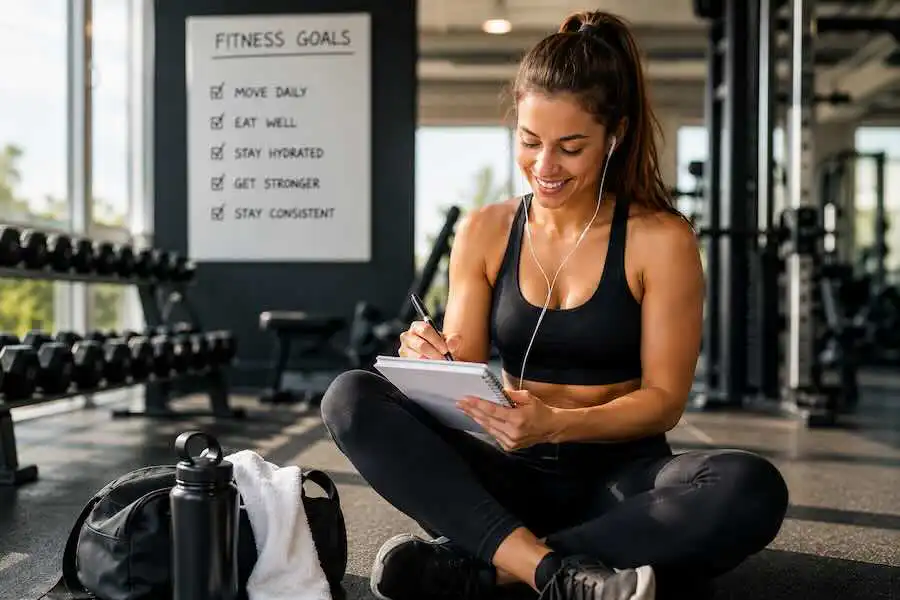
Starting a fitness routine can feel unnecessarily complicated. One person says train before sunrise, another insists you need a gym, and social media can turn a simple workout into a maze of supplements, challenges, trackers, and conflicting rules.
For beginners, the fundamentals are quieter. Move regularly. Build strength gradually. Eat enough nutritious food. Sleep. Recover. Then repeat the process long enough for it to become part of ordinary life. Below, we answer some of the most common beginner fitness questions with practical guidance for 2026.
What Is the Best Way to Stay Fit?
There is no single exercise routine that everyone needs to follow. A useful fitness program combines regular movement with activities that develop cardiovascular fitness, muscular strength, balance, and mobility.
For adults, the World Health Organization’s physical activity guidance recommends at least 150 to 300 minutes of moderate-intensity aerobic activity per week, or 75 to 150 minutes of vigorous activity, alongside muscle-strengthening activities on two or more days.
You do not need to wake up at dawn to achieve that. morning workouts are useful if they suit your schedule; evening workouts are equally valid if that is when you can train consistently. Walking, cycling, swimming, dancing, running, resistance training, recreational sports, and structured classes can all contribute.
The best routine is usually the one you can perform safely, enjoy enough to repeat, and fit into your actual week.
Why Is Fitness Important?
Physical activity reaches far beyond appearance. Regular movement supports cardiovascular health, muscular strength, bone health, mobility, sleep, physical function, and mental well-being. It can also reduce the risk of several chronic diseases.
Fitness is not reserved for young people or athletes. Exercise can be adapted to different ages, abilities, schedules, and starting points. What constitutes an appropriate workout for a healthy 25-year-old runner will look very different from a program designed for an older adult returning to activity after years of inactivity.
Progress is relative. Being able to walk farther without fatigue, carry groceries more comfortably, climb stairs with greater confidence, or add weight to an exercise can all represent meaningful improvements.
Do Beginners Need a Gym?
No. A gym provides useful equipment and can create structure, but neither is essential for becoming more active.
Walking requires almost no infrastructure. At home, bodyweight squats, modified push-ups, lunges, glute bridges, step-ups, and other simple movements can introduce resistance training. Resistance bands or a pair of dumbbells can expand those options without turning a spare room into a fitness studio.
A gym becomes particularly useful when you enjoy the environment, want access to heavier resistance or specialized equipment, prefer classes, or benefit from having a separate place associated with training.
Which Fitness Apps Are Useful?
Fitness apps can make activity easier to measure, but tracking should support the routine rather than become the routine.
Platforms such as Apple Health and Fitbit can bring activity and health information into one place. The original article also referenced Deposit The Work as a workout platform.
Before choosing any fitness app, look beyond rewards and streaks. Consider whether its workouts match your experience level, whether exercise instructions are clear, how personal data is handled, whether subscriptions renew automatically, and whether the program allows appropriate recovery.
A beginner does not need several trackers simultaneously. One simple system for recording workouts, walks, or strength progress is usually enough.
What Should Beginners Eat for Fitness?
A fitness diet does not need to consist exclusively of vegetables, fruit, juice, or restrictive foods. The body requires sufficient energy alongside protein, carbohydrates, fats, vitamins, minerals, fiber, and fluids.
Build most meals around minimally processed foods you enjoy. Vegetables and fruit matter, but so do foods such as whole grains, potatoes, beans, lentils, dairy or suitable alternatives, eggs, fish, meat, nuts, seeds, and other protein sources according to your dietary preferences.
Protein becomes particularly relevant when resistance training because it contributes to muscle maintenance and growth. Carbohydrates are also useful rather than something active people inherently need to avoid; they provide an important source of energy for exercise.
For general nutrition guidance, the Harvard Healthy Eating Plate offers a practical framework for constructing balanced meals.
What Is the Hardest Part of Getting Fit?
For many beginners, consistency is harder than the workout itself. Early motivation can make an ambitious routine feel easy for a week. Maintaining it when work becomes busy, sleep is poor, or progress slows is the real test.
This is why smaller commitments often outperform dramatic plans. Three manageable workouts every week are more useful than planning six and repeatedly completing two.
Remove friction where possible. Put walking shoes near the door. Pack your gym bag the night before. Choose a facility close to home or work. Keep home equipment visible. Schedule training like any other appointment.
Motivation fluctuates. A routine gives you something to follow when motivation is absent.
What Is a Good Fitness Plan for a Busy Person?
You do not need one or two uninterrupted hours every morning. That requirement can actually make exercise harder to sustain for someone with a demanding schedule.
Shorter sessions count. A brisk walk during lunch, 30 minutes of strength training after work, cycling for transportation, or several brief periods of movement across the day can all contribute to weekly activity.
A simple week might contain two or three full-body resistance sessions alongside regular walking and one or two cardiovascular sessions. The exact structure should reflect your current fitness, goals, health, recovery, and available time.
Do not automatically sacrifice sleep to create workout time. Consistently cutting rest to train before dawn can undermine recovery and make the routine harder to maintain.
Should Beginners Expect Muscle Soreness?
Some muscle soreness can occur after unfamiliar exercise, particularly when you begin resistance training or substantially increase workload. It is not, however, proof that a workout was effective.
Start below your maximum capacity and increase training gradually. Technique comes before heavier weights, longer distances, or more repetitions. Allowing the body time to adapt is more productive than making every first-week workout punishing.
Sharp pain, significant swelling, loss of function, chest pain, fainting, or other unusual symptoms should not be treated as ordinary post-workout soreness. Stop exercising and seek appropriate medical attention when symptoms are concerning.
How Important Is Sleep for Fitness?
Sleep belongs inside a fitness plan, not outside it. Training creates physical demand; recovery gives the body time to respond to that demand.
The CDC’s sleep guidance notes that sleep needs vary with age, with most adults generally needing at least seven hours each night. Individual requirements differ, so an arbitrary eight-hour target should not be treated as a universal rule.
If your exercise plan repeatedly leaves you exhausted, irritable, unable to recover, or dependent on reducing sleep, reconsider the workload and schedule.
Does Sexual Activity Hurt Fitness Progress?
No general fitness guideline requires people to avoid regular intimacy with a partner. Sexual activity does not need to be removed from a healthy lifestyle simply to become fitter.
Training progress depends much more substantially on factors such as appropriate exercise, nutrition, sleep, recovery, consistency, and the individual’s health. Beginners should be particularly cautious about lifestyle rules presented as essential when there is no clear evidence behind them.
What Are the Best Fitness Tips for Beginners?
- Choose activities you genuinely enjoy enough to repeat.
- Begin gradually rather than training at maximum intensity.
- Include both aerobic activity and muscle-strengthening exercise.
- Walk and move regularly throughout the day.
- Eat a varied, balanced diet rather than following extreme restrictions.
- Drink according to your activity, environment, and individual hydration needs.
- Prioritize sufficient sleep and recovery.
- Increase training volume or intensity progressively.
- Track useful measures such as consistency, strength, endurance, or mobility rather than relying only on body weight.
- Seek qualified guidance when an injury, medical condition, pregnancy, medication, or other health factor could affect exercise.
A Simple Beginner Workout Framework
Keep the first weeks deliberately manageable. Begin each session with several minutes of easy movement and gradually increase intensity. Full-body resistance sessions can focus on basic movement patterns such as squatting, pushing, pulling, hinging, carrying, and core stability using exercises appropriate to your ability.
On other days, walk, cycle, swim, or choose another form of cardiovascular activity you enjoy. Recovery days do not have to mean complete inactivity; gentle walking and ordinary daily movement can remain part of the week.
As the same workload becomes comfortable, progress one variable at a time. Add a little resistance, another repetition, several minutes, or slightly more challenging movement. Small increases are easier to evaluate and recover from than sudden jumps.
Conclusion
Fitness beginners do not need a perfect diet, a 5 a.m. alarm, an expensive gym membership, or an elaborate collection of apps. They need a starting point that matches their current ability and enough consistency to build from it.
Move regularly. Strengthen the body. Eat well without unnecessary extremes. Protect sleep and recovery. Most importantly, give progress time. Fitness is less about producing one extraordinary week than creating hundreds of ordinary ones you can actually sustain.
FAQ: Fitness for Beginners
How many days a week should a beginner work out?
There is no universal number, but beginners can often start with a few structured sessions each week while remaining generally active on other days. The appropriate frequency depends on workout intensity, goals, health, and recovery.
Do I need to work out every day to get fit?
No. Daily movement can be useful, but hard training every day is unnecessary for most beginners. Recovery is part of the adaptation process, particularly after resistance training or demanding cardiovascular exercise.
Should beginners do cardio or strength training first?
Both can be valuable. If you perform them in the same session, the order can reflect your priority and the demands of the workout. Someone primarily focused on learning strength exercises may prefer to complete them while fresh, while another person may prioritize cardiovascular training.
Can walking really improve fitness?
Yes. Brisk walking is an accessible form of aerobic activity and can be particularly useful for people beginning from a relatively inactive baseline. Pace, duration, terrain, and frequency can gradually be adjusted as fitness improves.
How quickly should beginners increase their workouts?
Gradually. Allow your body to adapt and avoid dramatically increasing several variables at once. If you are uncertain about appropriate progression, a qualified fitness or healthcare professional can help create a program suited to your circumstances.