




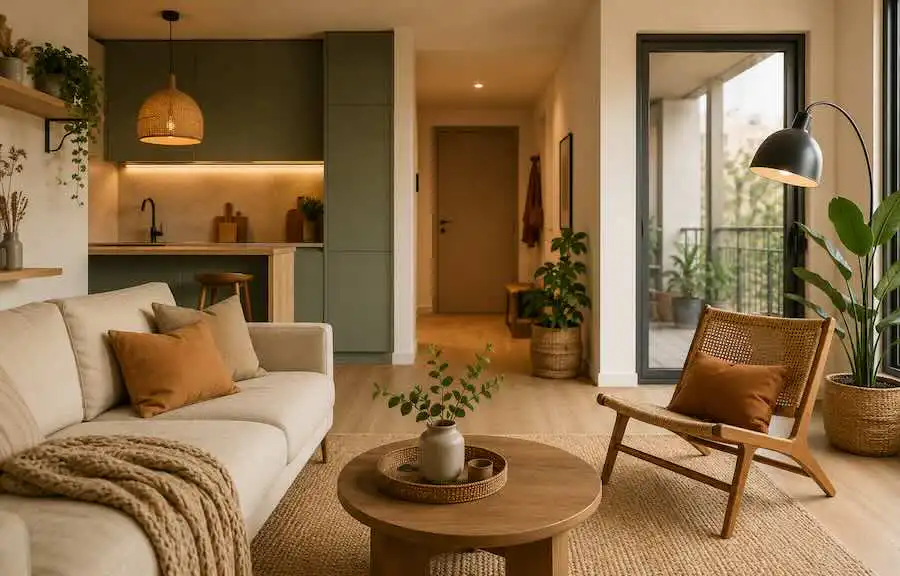
A small apartment feels most comfortable when every element has a reason to be there. Clear floor space, warm pools of light, tactile fabrics and carefully scaled furniture can make even a compact room feel calm rather than constrained. The goal is not to disguise the size of your home. It is to make the available space work beautifully.
That shift usually comes from small decisions rather than an expensive renovation. Storage can disappear into walls, lighting can follow the rhythm of the day, and a single painted surface can change the visual depth of a room. These ten ideas offer a practical starting point for creating a small apartment that feels warmer, quieter and easier to live in.
1. Start by clearing visual clutter
In a compact home, clutter becomes part of the architecture. A stack of papers on a table, shoes beside the door or cables across a shelf can quickly make a room feel tighter than it actually is.
Begin by giving everyday objects a permanent place. Baskets, boxes, drawers and closed cabinets are useful for items that would otherwise collect on visible surfaces. Open shelving can work too, but it benefits from restraint: leave breathing room between books, ceramics and decorative objects rather than filling every centimetre.
The result should not feel empty. It should feel intentional.
2. Use wall color to shape the room
White is not the only sensible choice for a small apartment. Muted blues, mineral greens, soft clay tones and other restrained colors can give a compact room character without making it feel crowded.
Darker colors can work particularly well when used deliberately. A deep accent wall may create a sense of depth, while painting an entire intimate room in one enveloping shade can produce a cocoon-like atmosphere. Before committing, test paint samples at different times of day. Natural and artificial light can dramatically change how a color reads.
3. Connect the walls and flooring
Walls and floors are two of the largest visual surfaces in a home, so they should feel connected. This does not mean they need to match. Instead, look for compatible undertones, levels of warmth and visual intensity.
Wood, stone and restrained neutral flooring can create continuity between rooms. In smaller areas such as an entrance or kitchen, patterned tiles can introduce personality without dominating the entire apartment. Geometric designs and subtle color combinations work particularly well when the surrounding palette remains quiet.
4. Build storage into overlooked spaces
Storage is essential in a small apartment, but one oversized freestanding wardrobe can consume valuable floor area and visual space. Built-in solutions often create a cleaner alternative.
Look beyond conventional cupboards. The space beneath a bed, above a doorway, around a desk or along an unused wall can hold surprisingly effective storage. Floor-to-ceiling cabinetry can also make better use of vertical space while creating a more architectural, integrated appearance.
Closed storage is particularly useful for reducing visual noise. Keep frequently used or beautiful objects visible and let everything else disappear behind a door or drawer.
5. Layer the lighting
Lighting changes how a room feels after sunset. A single bright ceiling fixture tends to flatten a space, while several softer sources create depth, shadows and distinct areas for different activities.
Think about how you actually move through your apartment. A reading chair needs focused illumination. A kitchen worktop needs practical task lighting. A bedside lamp should be softer than the light used for getting ready in the morning.
- Use ceiling fixtures for practical general illumination.
- Add floor or table lamps to create softer pools of light.
- Install focused lighting around bathroom mirrors and work surfaces.
- Use warm, lower-level lighting in areas intended for rest.
The U.S. Department of Energy also provides practical guidance on LED lighting and energy-efficient choices for the home.
6. Choose furniture in proportion to the room
Large furniture is not automatically wrong in a small home, but scale matters. A deep three-seat sofa that interrupts the main route through a living room will make the space harder to use regardless of how attractive it looks.
Measure before buying. Pay attention not only to width but also to depth, height and the amount of clear space required around each piece. Furniture with exposed legs can preserve visible floor area, while nesting tables, extendable dining tables and storage ottomans allow one object to perform several functions.
7. Introduce texture through textiles
Textiles soften the hard edges of a compact interior. Linen curtains moving beside a window, a wool throw folded across a sofa and a textured rug beneath bare feet can change the atmosphere without occupying much physical space.
Keep the palette relatively cohesive and create interest through texture rather than an excess of competing patterns. Cotton, linen, wool and other tactile materials can be layered across curtains, cushions, bedding and rugs.
Hanging curtains closer to the ceiling can also emphasize vertical lines and draw the eye upward. Allowing them to fall toward the floor creates a cleaner, more continuous silhouette.
8. Create a defined place to unwind
Even a studio apartment benefits from a distinct place associated with rest. It does not need to be a separate room. A chair beside a window, a compact sofa with a side table or a quiet corner illuminated by a floor lamp can be enough.
Use a rug, lighting or furniture placement to define the area rather than adding physical partitions. This creates psychological separation while preserving an open floor plan.
9. Put the balcony to work
A balcony can become valuable additional living space when local regulations, the building structure and climate allow it. Rather than treating it as storage, consider whether it could support a small seating area, plants or a compact workspace.
For enclosed balconies, improvements to glazing and insulation may make the area more comfortable across a wider part of the year. You can explore options to replace windows, but any structural, glazing, electrical or insulation work should be checked against local building rules and, where applicable, landlord or housing-association requirements before work begins.
10. Give the walls some personality
Bare walls do not necessarily make a small apartment appear larger. Art can give the eye a focal point and make a room feel considered rather than unfinished.
A single substantial artwork can create a calmer effect than many unrelated small pieces. Alternatively, build a restrained gallery wall using photographs, prints or personal images connected by similar frames or a consistent color palette.
Small changes can make a compact home feel bigger
The most successful small apartments rarely depend on clever tricks alone. They work because storage, furniture, light and decoration have been edited around everyday life. There is room to walk. Useful objects are within reach. Evening light is soft where it needs to be.
Start with the element that causes the most friction. Clear one crowded surface, improve the lighting beside the sofa or measure for a better piece of furniture. Once the room feels calmer, the decorative details become much easier to judge.
Frequently asked questions
What makes a small apartment feel cozy?
Layered lighting, tactile textiles, controlled clutter and furniture that fits the proportions of the room can create warmth without making the apartment feel crowded. Personal objects and artwork add character when they are edited carefully.
What colors work best in a small apartment?
Light neutrals can create an airy atmosphere, but they are not the only option. Muted colors and carefully chosen darker shades can introduce depth. The amount and direction of natural light should guide the final choice.
How can I add storage without making a room feel smaller?
Use vertical and overlooked areas first. Built-in cabinetry, under-bed drawers, wall-mounted storage and furniture with hidden compartments can increase capacity while keeping floors and surfaces relatively clear.
How do I make a small living room feel comfortable?
Choose appropriately scaled seating, maintain clear walking routes and use several light sources instead of relying on one ceiling fixture. A rug, side table and a small number of tactile accessories can visually define the seating area without adding unnecessary bulk.