




Stress has a way of following us into the bedroom. The lights go out, the room becomes quiet, and suddenly tomorrow’s deadlines, money worries and unfinished conversations seem much louder. When that pattern repeats, sleep can begin to feel like another task to complete rather than a natural end to the day.
The good news is that better sleep does not necessarily require an elaborate nighttime ritual. A handful of consistent changes to light, temperature, timing and pre-bed habits can create conditions that make rest easier. According to the National Heart, Lung, and Blood Institute, regular sleep times, quieter evenings and a cool, dark bedroom are among the practical habits that can support healthy sleep.
Why Good Sleep Matters
Sleep is not simply downtime. While we rest, processes supporting brain function, physical recovery, cardiovascular health and the immune system continue working. Regularly getting insufficient or poor-quality sleep has been associated with increased risks of several chronic health problems.
For adults, the NHLBI cites a general recommendation of seven to nine hours of sleep per night. Individual needs can differ, but duration is only one part of healthy sleep. Regularity and quality matter too.
1. Make the Bedroom Feel Like Night
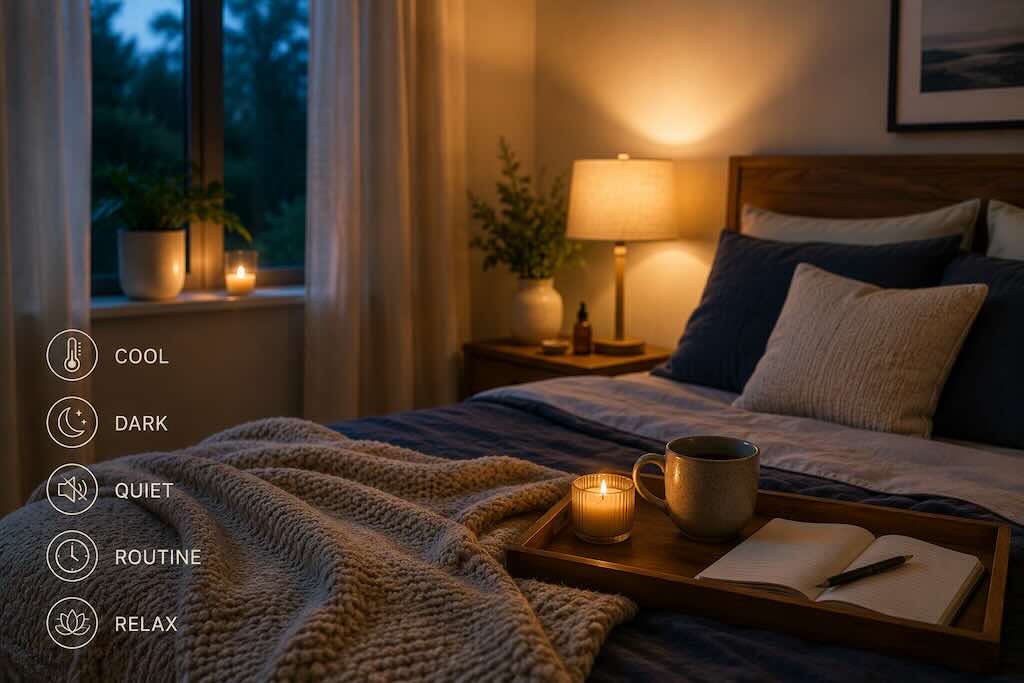
The bedroom should send clear signals that the active part of the day has ended. Think darkness, quiet and a comfortably cool temperature rather than bright lamps, televisions and glowing screens.
Light is particularly important because it helps regulate the body’s sleep-wake cycle. Bright artificial light late in the evening can interfere with the biological processes that prepare us for sleep. The NHLBI’s guide to the sleep-wake cycle explains how artificial evening light can make falling asleep more difficult.
Blackout curtains can help when streetlights reach the bedroom, while earplugs or steady background sound may be useful in noisy environments. Shift workers sleeping during daylight hours can benefit particularly from controlling incoming light and sound.
There is no single perfect bedroom temperature for everyone. Rather than chasing an exact number, adjust bedding, ventilation and room temperature until the space feels comfortably cool without leaving you cold.
2. Give Your Body a Predictable Schedule
Sleep responds well to rhythm. Going to bed and waking at roughly the same times each day helps reinforce the body’s internal clock, while dramatic changes between weekdays and weekends can make that rhythm harder to maintain.
Build the schedule around enough time to sleep rather than simply choosing an ambitious wake-up time. For many adults, that means allowing approximately seven to nine hours in the night’s schedule.
The final hour can become a transition zone. Lower the lights. Read. Listen to something quiet. Take a warm bath. The NHLBI’s sleep treatment guidance recommends relaxing routines alongside consistent bed and wake times.
3. Put Some Distance Between You and the Screen
A phone combines several things capable of keeping the brain engaged: bright light, conversation, work, entertainment and an essentially endless stream of new information. None creates much psychological distance from the day.
Artificial light from televisions, computers and smartphones can also affect circadian timing. The NHLBI recommends managing nighttime exposure to artificial light as part of maintaining a healthier sleep-wake rhythm.
Instead of setting an unnecessarily rigid rule, experiment with a screen-free wind-down period before bed. Charge the phone away from the pillow if late-night scrolling is habitual, dim household lighting and replace the feed with something deliberately less stimulating.
4. Watch Caffeine, Alcohol and Late Meals
Sometimes the obstacle to sleep entered the body hours earlier. Caffeine is a stimulant, and its effects can linger long enough for an afternoon coffee to interfere with bedtime for some people.
Alcohol presents a different problem. It can make a person feel sleepy initially, yet sleep later in the night may become lighter and more fragmented. Large meals close to bedtime can also make settling down uncomfortable.
That does not require turning the evening into a list of prohibitions. Notice patterns instead. If sleep regularly deteriorates after late caffeine, alcohol or heavy dinners, move them earlier, reduce them or skip them and see whether the night changes.
5. Use Breathing as a Wind-Down Tool
When the body is tired but the mind remains busy, slow breathing can provide a simple point of attention. There is no need for an intricate sequence. Sit or lie comfortably and allow the breath to become slower and gentler without forcing it.
A 2026 systematic review of slow breathing before bedtime found improvements in self-reported sleep duration and quality across several studies, although results from objective sleep measurements were inconclusive. That distinction matters: breathing exercises can be a useful relaxation practice, but they should not be presented as a guaranteed treatment for insomnia.
If counting helps, gently count each exhale. If it becomes another task to perform correctly, stop counting. The point is to reduce stimulation, not create a new bedtime test.
6. Give Daylight a Role Too
A better night can begin in the morning. Exposure to natural light during the day helps the body distinguish daytime from nighttime, supporting the circadian rhythm that influences sleep and wakefulness.
The National Center on Sleep Disorders Research specifically highlights daytime sunlight alongside reducing artificial light at night. A morning walk can therefore do double duty: providing daylight exposure and physical activity.
When Sleep Hygiene Is Not Enough
These habits can improve the conditions surrounding sleep, but persistent insomnia is different from occasionally having a restless night. If difficulty falling asleep, staying asleep or functioning during the day continues despite changing your routine, speak with a healthcare professional.
For chronic insomnia, cognitive behavioral therapy for insomnia, or CBT-I, is commonly recommended as a first-line treatment. It addresses both sleep behavior and the thoughts that can keep the insomnia cycle running.
Conclusion
Better sleep is often built through repetition rather than one dramatic intervention. A darker room. A steadier bedtime. Less stimulation late at night. Daylight in the morning. Small signals, repeated consistently, can help separate waking life from rest.
Start with the habit creating the most friction and change that first. Sleep does not need another layer of pressure.
Frequently Asked Questions
How much sleep do adults generally need?
Most adults are advised to get around seven to nine hours per night, although individual sleep needs vary.
Should the bedroom be cold for better sleep?
A comfortably cool, dark and quiet bedroom is generally recommended. There is no universal temperature that works perfectly for everyone, so comfort should guide the setting.
Does using a phone before bed affect sleep?
It can. Bright artificial light and stimulating content can interfere with winding down and the body’s normal sleep-wake signals. Reducing screen exposure before bedtime may help.
Can breathing exercises cure insomnia?
No. Slow breathing may help some people relax and research suggests potential benefits for self-reported sleep, but evidence is not strong enough to consider breathing exercises a cure for insomnia.
What should I do if better sleep habits do not work?
Persistent sleep difficulties are worth discussing with a healthcare professional. Chronic insomnia may benefit from structured treatment such as cognitive behavioral therapy for insomnia.