




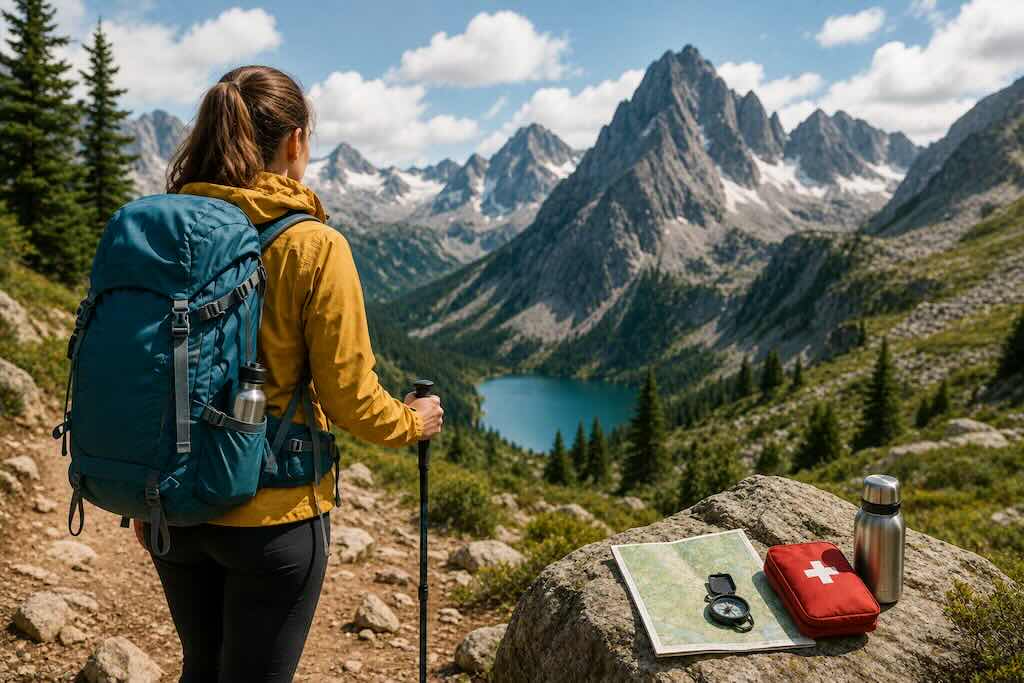
A hiking holiday has a particular kind of quiet. Boots on earth, cold air in your lungs, a trail disappearing between trees. It can be restorative, physically demanding and beautifully simple. But once you move beyond busy paths and into more remote terrain, preparation becomes part of the experience.
Hiking naturally combines movement with time outdoors, while longer routes can lead to landscapes that roads never quite reach. There is also a social side to trail life. Campsites, mountain huts and popular routes create opportunities to meet other walkers, exchange recommendations and discover places you might otherwise miss.
The freedom is part of the attraction. So is the responsibility. Weather can turn, daylight disappears, phone coverage can vanish and a minor injury becomes considerably more complicated when the nearest road is several kilometers away. A few sensible hiking safety habits can make the difference between a memorable adventure and an avoidable emergency.
1. Carry the right hiking gear
Start with your feet. Properly fitted hiking footwear should suit the terrain, distance and conditions you expect rather than simply looking suitably outdoorsy. Break new footwear in before a long trip and choose socks that remain comfortable after several hours of walking.
Clothing works best in adaptable layers. Carry protection against rain and wind, along with an insulating layer when conditions could turn cold. A hat, sun protection and spare dry clothing may also belong in your pack depending on the season and environment.
Trekking poles or walking sticks can provide additional stability on uneven ground, particularly during steep descents. Navigation equipment matters just as much. Carry an appropriate map and compass and know how to use them rather than relying entirely on your phone.
Your pack should also contain enough water and food for the planned route, plus a reasonable reserve. A basic first-aid kit, headlamp, emergency insulation and a charged phone or communication device are sensible additions when heading away from populated areas.
2. Research the trail before leaving
A beautiful photograph tells you very little about how demanding the trail was to reach it. Before setting out, research the route’s distance, elevation gain, terrain, expected duration and any technically difficult sections.
Pay attention to seasonal conditions too. River crossings, snow, heat, recent storms and trail closures can transform a familiar route. Local park authorities, visitor centers and official trail information are useful places to check for current conditions.
Digital mapping can help with preparation, and offline maps are particularly useful where mobile coverage is unreliable. However, technology should support your navigation rather than becoming its only layer.
Most importantly, choose a trail appropriate for your experience and fitness. Turning around because conditions have deteriorated or the route is taking longer than expected is good judgment, not a failed hike.
3. Check the weather — then keep watching it
Mountain and wilderness weather can change remarkably quickly. Check a reliable local forecast before departure, paying attention to more than temperature. Wind, precipitation, thunderstorms, visibility and overnight conditions can all affect whether a route remains safe.
The National Weather Service provides guidance on weather hazards and outdoor safety, but hikers should also consult forecasts and warnings specific to the country and region they are visiting.
Conditions on the ground matter just as much as the morning forecast. Darkening skies, rising winds or deteriorating visibility are signals worth taking seriously. Sometimes the smartest hiking decision is spending another day at base and trying again when conditions improve.
4. Tell someone exactly where you are going
This small habit becomes especially important when hiking alone or entering remote terrain. Give a trusted person your route, starting point, intended destination and expected return time before you leave.
Agree on what they should do if you fail to check in. That plan should include enough information for them to contact the appropriate local emergency or rescue service and explain where you were expected to be.
If your route changes significantly, update them whenever communication is available. A vague message saying you are “going hiking somewhere in the mountains” offers considerably less help than an actual route and timetable.
5. Do not depend on mobile reception
A smartphone is useful until the battery dies, the device gets wet or the trail drops into an area without coverage. Download maps and essential information before leaving, conserve battery and consider carrying a power bank on longer routes.
For genuinely remote adventures, research whether a satellite communication or emergency beacon is appropriate for the terrain. Whatever technology you carry, basic navigation skills remain valuable when electronics stop cooperating.
6. Know when to turn around
Summit fever can make otherwise sensible hikers continue when the conditions are telling them not to. Fatigue, fading daylight, unexpected snow, worsening weather, dwindling water or uncertainty about the route are all legitimate reasons to change the plan.
The mountain will still be there tomorrow. Your original itinerary does not need to be completed simply because you wrote it down that morning.
A practical hiking safety checklist
- Check the route, distance, elevation and current trail conditions.
- Review the local weather forecast immediately before departure.
- Wear footwear and clothing appropriate for the terrain and season.
- Carry sufficient food, water and essential emergency equipment.
- Take navigation tools and know how to use them.
- Leave your route and expected return time with somebody you trust.
- Be prepared to shorten the route or turn around when conditions change.
Conclusion
The best hiking holidays leave room for spontaneity without treating the wilderness casually. Prepare properly, understand the route and keep an eye on what the landscape and weather are telling you.
Then you can concentrate on why you came: the rhythm of walking, the smell of wet earth, the long view from an exposed ridge and that particular silence you only notice when the road is far behind you.
FAQ
What should I pack for a hiking holiday?
Your equipment should reflect the route, climate and length of the hike. Appropriate footwear, layered clothing, weather protection, navigation tools, food, water, a first-aid kit and emergency equipment provide a sensible foundation.
Is it safe to hike alone?
Solo hiking requires additional preparation. Choose routes within your abilities, research conditions carefully and always tell somebody your itinerary and expected return time. Remote or technically difficult routes may require additional communication and emergency equipment.
Should I rely on my phone for hiking navigation?
No. Phones and offline mapping apps are useful, but batteries, damage and technical problems can leave them unavailable. Carry an appropriate backup navigation method and understand how to use it.
When should I turn back during a hike?
Consider turning back when weather deteriorates, daylight is running out, you become unusually fatigued, supplies are becoming inadequate or you are uncertain about the route. Reaching the planned destination is never more important than returning safely.