




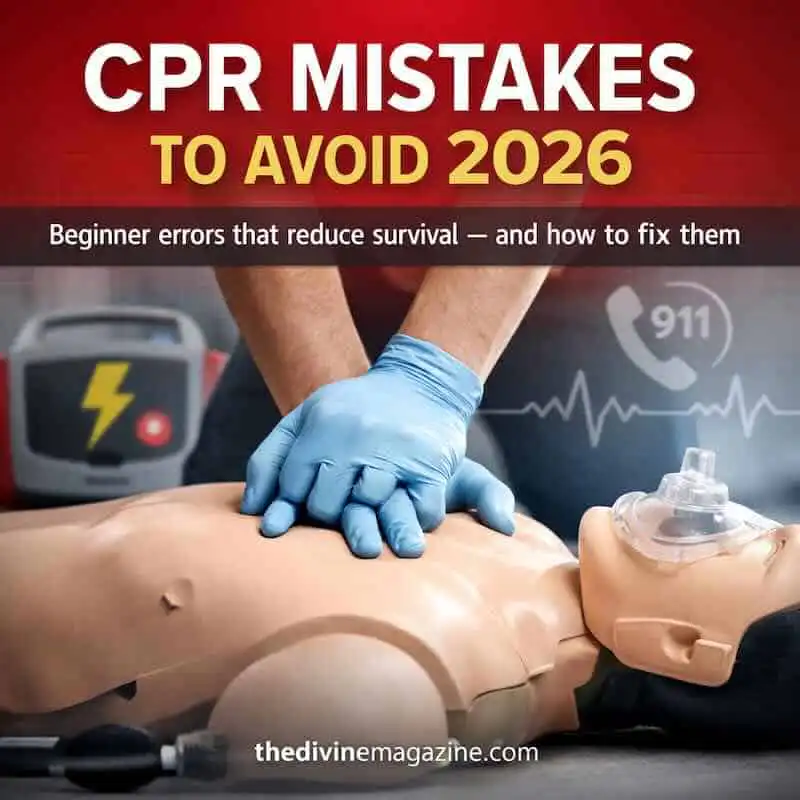
Did you know that every year about 436,000 Americans die from cardiac arrest? In 2026, CPR remains one of the most critical life-saving skills anyone can learn. If you’re new to CPR and want to perform it correctly and confidently, this updated guide is for you.
While CPR can dramatically increase a person’s chance of survival, beginners often make avoidable mistakes that reduce its effectiveness. In this article, we break down the most common CPR mistakes and provide evidence-based tips to help you avoid them—based on updated guidance from the American Red Cross and the American Heart Association.
Whether you’re learning CPR for personal preparedness, workplace requirements, or professional certification, understanding these mistakes will help you perform CPR more effectively when it matters most.
1. Delaying Starting CPR
One of the most common and dangerous mistakes is hesitating to begin CPR. Many people freeze because they don’t have an AED Certification or worry they might “do it wrong.” But in cardiac arrest, every second without chest compressions reduces survival chances by 7–10%.
Immediate action is always better than waiting. If you’re unsure how to begin, remember that hands-only CPR—pushing hard and fast in the center of the chest—is still highly effective. For deeper training, consider enrolling in a certified CPR course through the AHA or Red Cross.
2. Not Calling 911
Another major mistake is failing to call 911 right away. Some people worry they’ll get in trouble or think they must start CPR first. But emergency responders need to be alerted immediately so advanced care can arrive as soon as possible.
Good Samaritan laws protect bystanders who act in good faith. When you call 911, the dispatcher can guide you step-by-step through CPR, even if you’ve never done it before. Early activation of emergency services is a critical part of the survival chain.
3. Not Giving Adequate Chest Compressions
Inadequate chest compressions are one of the most common CPR errors. Effective compressions must be deep enough and fast enough to keep blood circulating to the brain and vital organs. The American Heart Association recommends:
• Depth: At least 2 inches (5 cm)
• Rate: 100–120 compressions per minute
• Technique: Allow full chest recoil between compressions
Using a song with the right tempo—such as “Stayin’ Alive”—can help maintain the correct rhythm.
4. Not Breathing Properly
Improper rescue breaths are another frequent mistake. If breaths are too shallow, too forceful, or too frequent, they can reduce oxygen delivery or cause air to enter the stomach instead of the lungs.
The recommended ratio remains 30 compressions to 2 breaths. If you are not trained or uncomfortable giving breaths, hands-only CPR is still highly effective and recommended by the AHA.
5. Not Using a Mask
Not using a CPR mask is a common oversight. Masks protect both the rescuer and the victim by reducing direct mouth-to-mouth contact and lowering the risk of disease transmission.
CPR masks or face shields are inexpensive and widely available. Many first-aid kits now include them, and carrying a keychain mask is recommended for anyone trained in CPR.
Avoid These CPR Mistakes for Beginners
Learning CPR is one of the most empowering skills you can acquire. Avoiding these common mistakes—delaying CPR, failing to call 911, improper compressions, incorrect breathing, and not using a mask—can dramatically improve a victim’s chance of survival.
If you’re in Canada, enrolling in CPR Courses Hamilton Ontario can help you gain hands-on experience and confidence. The more prepared you are, the more effectively you can respond in an emergency.
Conclusion: CPR Confidence Saves Lives
In 2026, CPR remains one of the most essential emergency skills. By understanding the most common beginner mistakes and following updated guidelines from trusted organizations like the AHA and Red Cross, you can perform CPR more confidently and effectively. Remember: quick action, proper compressions, and calling 911 are the keys to saving a life.
FAQ: CPR Mistakes & Best Practices (2026)
1. What’s the most important step in CPR?
Starting compressions immediately. Early CPR can double or triple survival rates according to the CDC.
2. Should I still give breaths in 2026?
Yes—if you are trained. If not, hands-only CPR is recommended and still highly effective.
3. What if I break a rib during CPR?
It can happen, and it’s not uncommon. Broken ribs are far less dangerous than not performing CPR at all.
4. Do I need certification to perform CPR?
No. Good Samaritan laws protect bystanders who act in good faith. Certification simply improves your skill and confidence.
5. Where can I learn CPR in 2026?
You can take certified courses through the American Red Cross, American Heart Association, or local training centers in your area.