




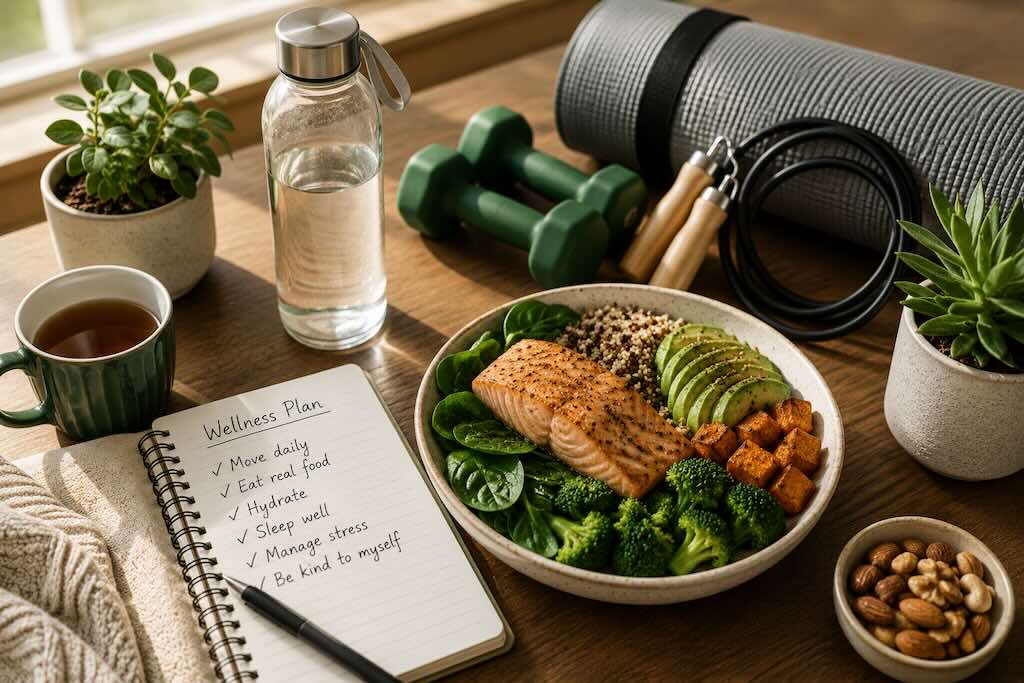
Good health is rarely built through dramatic interventions. More often, it takes shape quietly: walking when you could sit, sleeping enough to recover, eating a varied diet, keeping preventive appointments and asking for help when something feels persistently wrong.
That may sound less exciting than the language of biohacking and “optimal longevity,” but the fundamentals remain remarkably powerful. In 2026, a sensible approach to wellness still begins with evidence, consistency and knowing when personalized medical advice matters.
Editor’s note: This article has been updated for 2026 to remove unsupported claims about IV vitamin therapy, annual nutrient testing, metabolism and overtraining, while adding current guidance on physical activity, nutrition, mental health and preventive care.
1. Spending Too Much of the Day Sitting
There is nothing unhealthy about settling into a chair with a book or relaxing on the sofa after a demanding day. The problem is not sitting itself. It is allowing sedentary time to dominate daily life while regular movement gradually disappears.
The World Health Organization reports that higher amounts of sedentary behavior are associated with poorer health outcomes in adults, including greater risks of cardiovascular disease and type 2 diabetes.
Rather than repeating the misleading phrase “sitting is the new smoking,” think about movement as something distributed across the day. Walking to a shop, taking the stairs, gardening, cycling, household tasks and structured exercise can all contribute.
WHO recommends that adults generally aim for 150–300 minutes of moderate-intensity aerobic activity each week, or 75–150 minutes of vigorous activity, alongside muscle-strengthening activity on at least two days. Importantly, WHO’s physical activity guidelines emphasize that some activity is better than none and that all movement counts.
If a full workout feels unrealistic today, a ten-minute walk is still movement. Health does not require an all-or-nothing approach.
2. Exercising Hard Without Allowing Enough Recovery
Exercise creates a stimulus. Recovery gives your body time to respond to it.
That does not mean every challenging workout is harmful, nor that a demanding training program inevitably creates “chronic inflammation.” Training tolerance varies according to fitness, age, health, sleep, nutrition, exercise history and the type of activity involved.
A more useful approach is to increase training progressively and pay attention to recovery. Persistent fatigue, declining performance, recurring pain or an inability to recover normally deserve attention rather than being treated as evidence that you simply need to work harder.
Rest can include complete days away from structured exercise, but it can also mean an easy walk, gentle cycling or another lighter activity. Sleep and adequate nutrition matter too.
If you have a chronic health condition, significant mobility limitation, recurring injury or have been inactive for a long period, individualized advice from an appropriate healthcare professional can help you choose activity safely.
Divine’s guide to getting in shape without wasting time and energy offers another way to think about sustainable exercise.
3. Assuming Supplements Can Fix an Unbalanced Diet
Vitamins and minerals are essential, but that does not mean everyone needs a cabinet full of supplements.
Individual requirements can change because of diet, age, pregnancy, certain health conditions, medications and diagnosed deficiencies. In those situations, a clinician may recommend a particular supplement or test rather than a generic wellness routine.
The National Institutes of Health Office of Dietary Supplements provides evidence-based information on individual vitamins, minerals and supplements, including recommended intakes, potential interactions and the risks associated with excessive consumption.
The original version of this article also recommended IV vitamin therapy and claimed that it provides “100% absorption” and is inherently more effective than oral supplementation. That is too broad.
Intravenous treatment can be medically appropriate in specific clinical circumstances, but wellness IV drips should not be presented as a routine shortcut to better nutrition. Injectable products enter the bloodstream directly, which is precisely why appropriate clinical standards matter. The U.S. Food and Drug Administration has highlighted regulatory concerns surrounding IV hydration clinics and compounded products.
If you suspect a deficiency, particularly because of symptoms or a restrictive diet, discuss whether testing is appropriate with a qualified healthcare professional instead of trying to diagnose it yourself.
4. Treating Mental Health as Separate From Health
Mental wellbeing does not sit on the margins of a healthy life. Stress, anxiety, depression, loneliness and other psychological difficulties can influence sleep, concentration, relationships, work and the routines that support physical health.
Small habits can support wellbeing: spending time outside, moving regularly, maintaining social connections, protecting sleep and creating periods without constant digital stimulation. None of these should be presented as substitutes for appropriate mental healthcare when it is needed.
The National Institute of Mental Health provides information about mental health conditions, treatments and routes to professional support.
There is growing scientific interest in communication between the gastrointestinal system and the brain, commonly described as the gut-brain axis. That research is interesting, but it does not justify reducing anxiety, depression or other mental health conditions to gut health alone.
For practical everyday ideas, Divine’s guide to supporting mental wellness offers a useful starting point. Our article on spiritual wellness and mental health treatment also explores how personal practices can sit alongside professional care.
5. Ignoring Persistent or Unusual Symptoms
Knowing what is normal for your body can be useful. A new lump, unexplained bleeding, persistent pain, significant changes in bowel habits, unusual breathlessness or another unexplained change should not automatically be dismissed because life is busy.
At the same time, constantly monitoring every minor sensation can create unnecessary anxiety. The aim is not hypervigilance. It is knowing when a persistent, severe, worsening or otherwise concerning symptom deserves professional assessment.
Routine preventive care matters even when you feel well. The Centers for Disease Control and Prevention notes that preventive care can include appropriate screening tests, vaccinations, dental care and counseling. Which screenings are appropriate depends on factors such as age, sex, health history and individual risk.
Wearable devices can provide useful information about activity and other measurements, but they should not be described as devices that “keep serious illnesses at bay.” A watch can collect data. It cannot replace appropriate medical evaluation or recommended screening.
6. Treating Sleep as Time You Can Borrow
It is easy to steal an hour from sleep because the consequences are less visible than missing a meeting or workout. Repeat that habit often enough, however, and the effects can reach far beyond feeling tired the following morning.
Sleep supports physical and mental health, and both duration and regularity deserve attention. A dark, quiet bedroom, a relatively consistent schedule and less stimulating late-night screen use can help create better conditions for rest.
Divine explores the subject in more detail in how sleep deprivation can affect mental health and our guide to building healthier sleep habits.
7. Looking for Optimization Before Building the Basics
Wellness culture has become increasingly interested in optimization: wearables, supplements, cold exposure, recovery devices, elaborate morning routines and endless streams of personal data.
Some tools can be useful. The problem is allowing small potential gains to distract from larger habits that are still missing.
If you rarely move, improving regular activity matters. If sleep is consistently poor, another performance supplement is unlikely to solve the underlying routine. If your diet lacks variety, concentrating on a single fashionable nutrient misses the wider picture.
Start with the ordinary things that repeatedly matter: movement, sleep, nutritious food, social connection, mental healthcare when needed, appropriate preventive care and avoiding tobacco.
Divine’s simple guide to staying healthy with less effort takes a similarly practical approach.
A Better Way to Break Up a Sedentary Day
Short periods of movement are sometimes called “movement snacks.” The phrase is informal, but the idea is useful: movement does not have to happen only during a formal workout.
| Time | Simple Option | Where It Fits |
|---|---|---|
| 1 minute | Stand, walk around the room and gently move your shoulders | Between desk tasks |
| 2 minutes | Walk while making a short phone call | Home or office |
| 3 minutes | Take an easy walk around the building or home | Between meetings |
| 5 minutes | Walk outside at a comfortable pace | Morning or afternoon break |
| 5 minutes | Climb stairs at an appropriate pace | Where safe and accessible |
| 10 minutes | Take a brisk walk | Lunch break or after a meal |
There is no evidence-based requirement that everyone perform a particular exercise every 60 or 90 minutes to stop the metabolism entering “sleep mode.” That language is misleading.
The stronger principle is simpler: reduce prolonged sedentary time where practical and accumulate more movement across the day. WHO guidance explicitly recognizes that physical activity of different intensities can contribute to health.
Practical Takeaway: Keep the Health Plan Boring Enough to Maintain
- Move regularly and gradually work toward appropriate weekly activity targets.
- Include strength work while allowing enough recovery for your fitness level.
- Build nutrition around a varied diet rather than assuming supplements are necessary.
- Discuss suspected nutrient deficiencies with an appropriate healthcare professional.
- Protect sleep rather than treating it as expendable time.
- Take persistent or concerning physical and mental health changes seriously.
- Keep recommended preventive care and screening up to date.
Conclusion
Health rarely turns on one perfect workout, supplement or morning routine. It develops through repeated choices that are ordinary enough to survive busy weeks.
Walk. Rest. Eat with variety. Stay connected. Keep appropriate medical appointments. Notice meaningful changes in your body without turning every sensation into a diagnosis.
Longevity may be the fashionable word in 2026, but a longer life is not something anyone can guarantee. The more grounded goal is to support health now while reducing avoidable risks where you reasonably can.
FAQ
How often should I have my vitamin levels checked?
There is no universal rule that every healthy adult needs a comprehensive vitamin blood panel once or twice each year. Testing should be guided by symptoms, medical history, diet, medications, risk factors and professional advice. Ask your healthcare provider which tests, if any, are appropriate for you.
Are short movement breaks actually useful?
They can be a practical way to reduce prolonged periods of sitting and add activity to the day. They do not replace all other exercise, but movement accumulated through daily life still counts toward physical activity.
Can IV vitamin therapy replace a healthy diet?
No. IV treatment may have legitimate medical uses in specific circumstances, but routine wellness infusions should not be treated as substitutes for nutritious food or appropriate medical care. Intravenous products also carry risks and should only be used with suitable medical oversight.
Do I need supplements to stay healthy?
Not necessarily. Some people need or benefit from specific supplements because of life stage, diet, diagnosed deficiency or medical circumstances. More is not automatically better, and some nutrients can cause harm at excessive doses or interact with medications.
Can a fitness tracker tell me whether I am healthy?
No single wearable measurement can establish your general health. Trackers can provide useful information about activity and certain physiological measurements, but the results need context and do not replace appropriate medical assessment, diagnosis or preventive screening.
This article provides general wellness information and is not a substitute for individualized medical advice, diagnosis or treatment. Speak with an appropriate healthcare professional about symptoms, supplements, testing or changes to an exercise program when needed.