




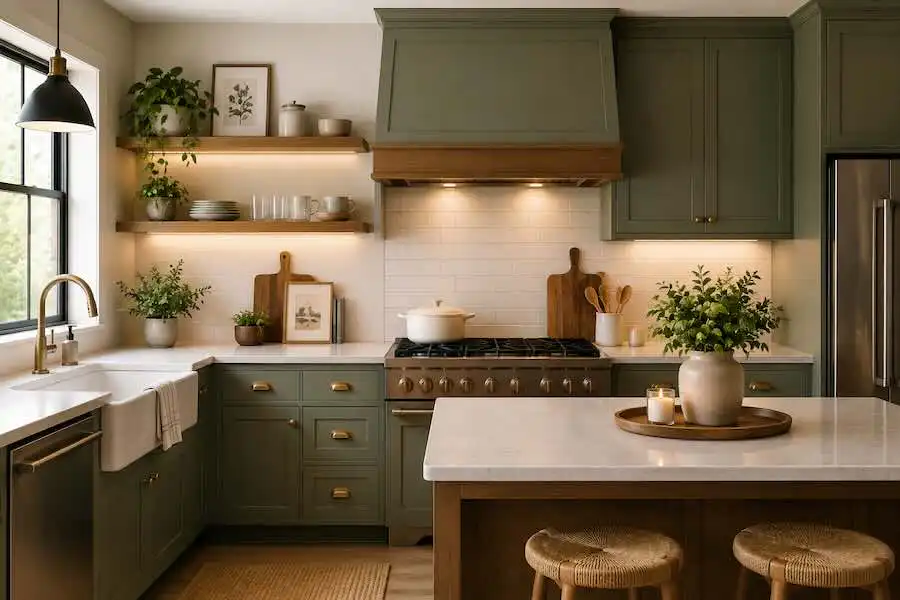
A full kitchen renovation can quickly become expensive, but a room does not need to be stripped back to the studs to feel new. A clearer worktop, a warmer wall colour, better storage, or freshly painted cabinetry can shift the atmosphere with surprisingly little disruption.
The key to an affordable kitchen update is choosing changes that affect what you see and use every day. Instead of replacing everything at once, focus on surfaces, storage, hardware, and layout. Small interventions can build on one another until the kitchen feels calmer, brighter, and considerably more considered.
Start by Organising the Storage
Kitchens collect objects quickly. Appliances migrate onto worktops, packets disappear into cupboards, and awkward corners become holding areas for things that rarely get used. Before buying anything new, edit what is already there.
Keep frequently used pieces within easy reach and move occasional items into baskets, boxes, or higher cupboards. In a small kitchen, freeing even a narrow stretch of worktop can make the entire room feel larger. Wall-mounted rails, shelves, hooks, and magnetic storage can also move useful objects vertically rather than allowing them to consume preparation space.
Look closely at overlooked areas too. The space above cabinets, the side of a tall unit, the inside of cupboard doors, and narrow gaps can all become useful storage without adding another bulky piece of furniture.
Use Paint Where It Has the Most Impact
Paint remains one of the simplest ways to change a kitchen without changing its structure. Rather than automatically repainting every wall, identify the surfaces that visually dominate the room.
A vent hood, feature wall, island, or run of cabinetry can become a focal point through colour. Warm neutrals can soften a stark kitchen, while muted greens, clay tones, deep blues, and charcoal can add depth without making the room feel overly busy.
If you have some DIY experience, a basic vent hood can also be visually integrated with a simple surround made from suitable board and architectural trim. Once painted to coordinate with the cabinetry, it can read as a deliberate design feature rather than an appliance floating above the hob.
Replace a Tired Backsplash
The backsplash occupies a relatively small area, yet it sits directly within the kitchen’s main sightline. That makes it an efficient place to spend a limited renovation budget.
If existing tiles or walls feel dated, options range from paint and washable wall coverings to coloured splashbacks. Peel-and-stick surfaces and DIY mosaic systems can also provide a visual change without the labour associated with a conventional tiled installation.
Material choice matters around heat and water, however. Check that any backsplash product is suitable for its intended position, particularly behind a hob or close to other heat sources, and follow the manufacturer’s installation and clearance guidance.
Refresh Existing Wood Cabinets
Cabinet carcasses can remain perfectly functional long after their finish begins to look tired. If the underlying units are sound, painting or refacing them may deliver much of the visual impact of replacement cabinetry at a fraction of the disruption.
Preparation is what separates a quick paint job from a convincing result. Remove grease, repair damaged surfaces, sand where required, use a suitable primer, and select a durable finish designed for cabinetry. Allowing sufficient curing time is equally important in a hardworking room.
Hardware offers another inexpensive layer of change. New handles and knobs can sharpen older doors, while appropriately sized backplates can help disguise marks or existing fixing holes. Keeping the finish consistent across handles, taps, and visible fixtures can make the kitchen feel more cohesive.
Improve the Layout Without Gutting the Kitchen
Sometimes the problem is not how a kitchen looks but how it moves. A narrow entrance, badly positioned table, oversized island, or unnecessary partition can make an otherwise adequate kitchen feel cramped.
Before considering a complete rebuild, examine circulation and the relationship between cooking, preparation, washing, and storage zones. Moving furniture or changing storage may solve the problem without construction at all.
More substantial alterations, such as widening an opening or removing a wall between the kitchen and an adjoining living area, can transform light and movement. These projects require more planning, though. A qualified professional should determine whether a wall is structural and identify any electrical, plumbing, ventilation, or building-code implications before work begins.
Spend the Budget in the Right Order
Start with what costs nothing: declutter, clean, rearrange, and remove objects that interrupt the room visually. Next, address paint and hardware. Then consider the backsplash, cabinet fronts, lighting, and other finishes. Structural changes should come only after you understand what the smaller improvements have already achieved.
This staged approach also makes it easier to stop when the kitchen feels finished. You may discover that the room never needed a complete renovation in the first place.
Conclusion
An affordable kitchen makeover is less about replacing everything and more about editing what already exists. Clear surfaces create breathing room. Paint changes the light. New hardware sharpens tired cabinetry. A carefully chosen backsplash adds texture and colour.
Work gradually and let each improvement inform the next. The result can feel quieter, more functional, and distinctly newer without turning the kitchen into an expensive construction site.
Frequently Asked Questions
What is the cheapest way to update a kitchen?
Begin with decluttering and deep cleaning, then consider paint, new cabinet hardware, improved storage, and small lighting changes. These updates can noticeably alter the room without replacing major fixtures.
Is painting kitchen cabinets worth it?
If the cabinets are structurally sound, painting can be a cost-effective alternative to replacement. Careful cleaning, preparation, priming, and curing are essential for a durable finish.
Can I update a backsplash without removing the old tiles?
Potentially. Certain panels, coatings, and renovation products can be installed over suitable existing surfaces. Always check the manufacturer’s requirements, particularly around heat and moisture.
How can I make a small kitchen feel larger?
Reduce worktop clutter, use vertical storage, improve lighting, keep circulation paths clear, and avoid filling every available surface. A restrained colour palette can also create greater visual continuity.
Should I remove a wall to create an open-plan kitchen?
Only after professional assessment. The wall may be structural or contain electrical wiring, plumbing, or other services, and local building requirements may apply.