




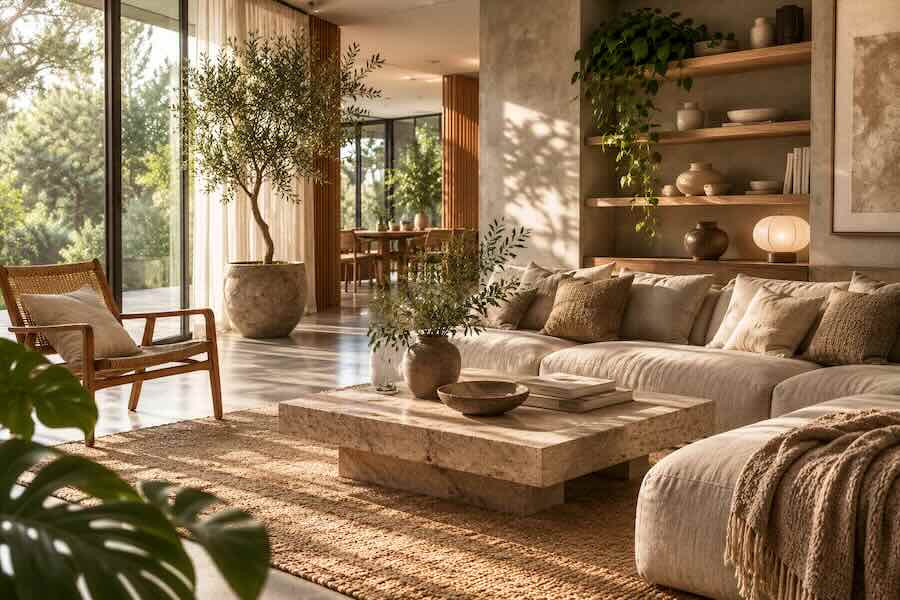
A room can feel different before you consciously understand why. Morning light moves across a timber floor. Linen softens the edge of a sofa. Leaves shift beside an open window. These small encounters with natural materials, light, texture, and living things sit at the heart of biophilic design.
Biophilic interiors are less about filling a home with greenery and more about rebuilding a connection between indoor life and the natural world. The approach can influence everything from materials and color to airflow, views, acoustics, and the way daylight moves through a room.
The result does not need to resemble a greenhouse. Often, the most convincing spaces are restrained: fewer synthetic finishes, tactile materials, carefully positioned plants, and enough visual breathing room for each element to register.
Start With Wood, but Let It Feel Like Wood
Wood brings grain, irregularity, warmth, and visible traces of growth into an interior. Those qualities are precisely why it works so naturally within biophilic spaces.
Rather than introducing it everywhere, choose a few surfaces where its texture can carry the room. Oak flooring can create a warm foundation, while timber shelving, doors, ceiling details, or furniture can introduce smaller points of contrast. This guide to using wood in interior design offers additional inspiration.
- Flooring: Consider oak or another durable timber in straight, herringbone, or parquet patterns.
- Walls: Contemporary timber paneling can introduce warmth without making a room feel traditional.
- Room dividers: Vertical timber slats can loosely separate living zones while allowing light to travel through them.
- Furniture: A solid wood table, bench, sideboard, or chair can provide enough natural texture without dominating the space.
A matte or lightly oiled surface will generally preserve more of wood’s tactile character than a heavily glossy finish. Knots and variations do not necessarily need hiding. They are part of the material.
Bring Softer Nature Into the Bedroom
The bedroom is particularly suited to natural textiles because so many surfaces come into direct contact with the body. Linen bedding, cotton sheets, wool blankets, woven baskets, and tactile rugs can replace some of the harder synthetic textures that accumulate around a home.
There is no need for everything to match. Slight differences in weave and tone can make the room feel calmer and less manufactured. Washed linen beside warm timber, for example, creates depth without requiring pattern or bright color.
When replacing a mattress, comfort, support, sleeping position, and personal needs should take priority. An archived mattress guide can provide background reading, while wool remains an option worth considering when choosing rugs and carpets.
Use Plants as Architecture, Not Decoration
A single plant placed where it receives the right light can have more presence than a shelf crowded with struggling greenery.
Think about plants in relation to the room itself. A taller specimen can soften an empty corner. Trailing foliage can break up a rigid shelving system. Herbs beside a bright kitchen window introduce scent and something useful to harvest while cooking.
Humidity, temperature, available daylight, pets, and the amount of care you realistically want to provide should guide plant selection. Bathrooms, in particular, need species suited to their actual light and moisture conditions rather than plants chosen purely for appearance.
Let Stone Introduce Weight and Contrast
Where wood feels warm and fibrous, stone brings coolness and visual weight. That contrast can make natural interiors more interesting.
A stone countertop or backsplash creates a strong architectural gesture, but smaller applications can be equally effective. Travertine side tables, slate trays, stoneware vessels, pebble details, and natural-stone plant pots bring mineral texture into a room without requiring renovation.
Try not to polish away every imperfection. Veining, tonal changes, and irregular surfaces are often what give natural stone its character.
Think Beyond What Nature Looks Like
Biophilic design can engage more than sight. Sound matters too.
A small indoor fountain can introduce the gentle movement of water, although it requires cleaning and maintenance. An open window may offer something simpler: rain against glass, wind moving through leaves, or distant birdsong.
The aim is not to manufacture a spa atmosphere. It is to reduce the sensory distance between the interior and what is happening outside it.
Treat Daylight as Part of the Furniture
Natural light changes continuously. It stretches across floors in the morning, sharpens around midday, then becomes warmer and lower toward evening. Allowing those changes to remain visible can give a room a sense of time that artificial lighting cannot reproduce in quite the same way.
Large windows and skylights can transform a renovation, but structural work is not always necessary. Heavy window treatments can be replaced with lighter fabrics. Furniture can move away from windows. Mirrors can be positioned to carry daylight farther into darker areas.
At night, continue the softer rhythm with warm, layered lighting rather than relying exclusively on one bright ceiling fixture.
The Most Convincing Biophilic Homes Don’t Try Too Hard
There is a temptation to treat biophilic design as another shopping list: buy plants, add wood, order linen, install stone. Yet the calmer approach is usually to begin with what the home already offers.
Open the curtains. Reconsider the furniture blocking a window. Keep materials that age gracefully. Introduce a plant where there is enough daylight for it to thrive. Replace synthetic objects gradually rather than discarding everything at once.
Nature rarely looks perfectly coordinated. A home inspired by it does not need to either.
Creating a More Natural Home
Biophilic design works best when it becomes part of how a home feels rather than an obvious theme. Timber underfoot, linen against the skin, changing daylight, greenery in the peripheral view and the quiet texture of stone can collectively soften the boundary between indoors and outdoors.
Start with one room and notice what feels absent. Perhaps it needs daylight rather than another lamp. Perhaps the answer is a plant, a wooden surface, or simply less clutter. The strongest change may be the smallest one.
Biophilic Design FAQ
What is biophilic interior design?
Biophilic design incorporates elements and qualities associated with nature into built environments. This can include plants, natural materials, daylight, outdoor views, organic forms, water, airflow, and sensory connections with the surrounding landscape.
Do I need lots of houseplants to create a biophilic home?
No. Plants are only one element. Natural light, timber, stone, linen, outdoor views, ventilation, earthy colors, and organic textures can create a strong connection with nature without turning the interior into an indoor garden.
Can biophilic design work in a small apartment?
Yes. Small spaces can benefit from a carefully positioned plant, natural textiles, wooden furniture, unobstructed windows, mirrors that distribute daylight, and a restrained palette drawn from natural materials.
Which natural materials work well together?
Wood, stone, linen, cotton, wool, clay, rattan, and other woven fibers can sit comfortably together. Varying their texture and temperature usually creates a richer result than attempting to match every surface precisely.
How can I introduce biophilic design on a budget?
Begin with changes that cost little or nothing: expose more daylight, rearrange furniture around windows, reduce unnecessary clutter, propagate existing plants, use secondhand wooden furniture, and gradually replace worn synthetic textiles with natural alternatives.