




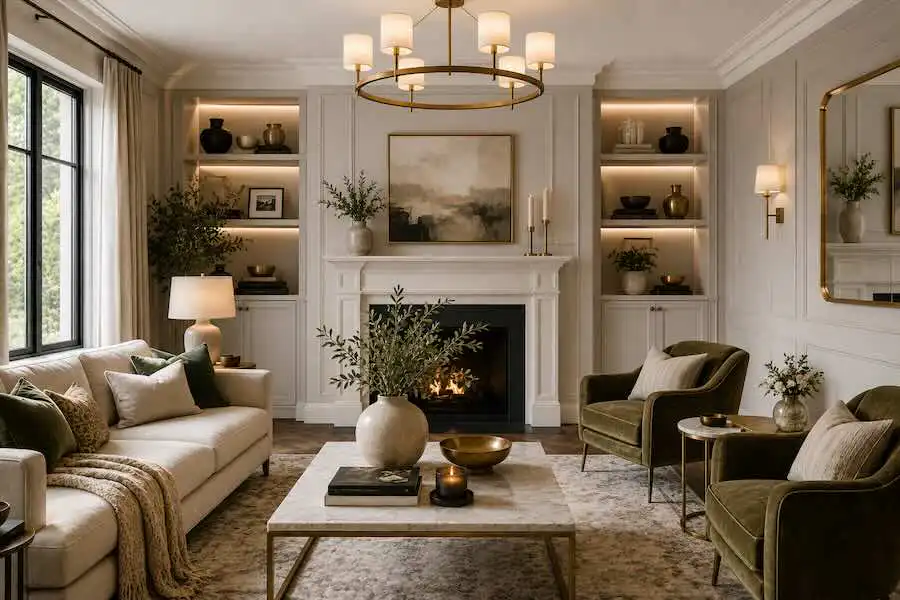
Luxury at home is rarely about filling a room with expensive objects. More often, it comes from restraint: clear surfaces, considered proportions, warm lighting, tactile materials, and a few details that look deliberately chosen.
That is good news if you are working with a realistic budget. Whether you have just moved into a new property or want to refresh a familiar space, several relatively small changes can make a room feel calmer, richer, and more resolved without requiring a complete renovation.
6 Ways to Make Your Home Look More Luxurious on a Budget
1. Start by Editing the Room
Before buying anything new, remove what the room does not need. Luxury interiors often have breathing room around furniture and decorative objects, allowing shape, texture, and light to become more visible.
Clear crowded countertops, edit overloaded bookshelves, hide loose cables, and give everyday objects a designated place. Rather than stripping the room of personality, the aim is to make the pieces you genuinely love easier to see.
Practical tip: Divide clutter into four categories: keep on display, store, donate, and discard. Storage baskets, closed cabinetry, and decorative boxes can keep necessary objects nearby without creating visual noise.
2. Introduce Architectural Detail
Crown molding, picture-frame molding, ceiling trim, and wall paneling can give otherwise plain rooms a more finished architectural character. These details create shadow lines where walls meet ceilings and can make a simple space feel intentionally designed.
You do not necessarily need traditional timber molding. Lightweight polyurethane and other paintable molding products can provide a similar visual effect while being easier to install and, depending on the project, considerably less expensive.
Practical tip: Pay attention to scale. Trim should feel proportional to the ceiling height and dimensions of the room rather than simply being as wide as possible.
3. Refresh the Color Palette
Few decorating changes alter a room as quickly as paint. A fresh, consistent finish removes years of visual wear while giving furniture, artwork, and textiles a cleaner backdrop.
Warm whites, stone, taupe, muted clay, soft olive, and other grounded neutrals can create a quiet foundation, while deeper shades work beautifully when you want a more intimate atmosphere. Before committing, use a digital paint color visualizer and, more importantly, test physical samples in the actual room. Color changes considerably between morning daylight and evening lamps.
Practical tip: If you frequently change furniture and accessories, keep large wall areas relatively neutral and introduce stronger color through smaller, easier-to-replace elements.
4. Give the Room One Strong Focal Point
A room feels more coherent when the eye has somewhere to land. That focal point could be a fireplace, sculptural light fixture, oversized mirror, statement chair, large artwork, or an especially beautiful view.
The key is hierarchy. Instead of allowing every decorative object to compete for attention, choose one visual anchor and let the surrounding furniture support it. If artwork is the focus, collections such as Minted’s abstract art can provide ideas for scale, framing, and composition.
Practical tip: Before buying several small artworks, consider whether one larger piece would create a cleaner and more confident composition.
5. Use Curtains to Change the Proportions
Window treatments have an outsized effect on how polished a room feels. Curtains add softness to hard architectural lines, introduce another layer of texture, and can visually alter the proportions of a window.
Instead of positioning the curtain rod directly above the window frame, mounting it higher can draw the eye upward. Full-length curtains that reach the floor tend to create a more composed silhouette than panels that stop awkwardly above it.
Linen-look fabrics, cotton blends, velvet, and softly textured weaves can all work depending on the room. The fabric does not need to be expensive; convincing drape, appropriate fullness, and careful installation matter considerably.
Practical tip: Extend the curtain rod beyond the sides of the window when space permits. When opened, the panels can sit beside the glass instead of blocking valuable daylight.
6. Let Materials and Lighting Do the Work
Small objects become more convincing when they share a restrained material palette. A ceramic vase, linen cushion, brushed-metal lamp, wooden tray, stone bowl, or secondhand glass candleholder can introduce depth without overwhelming the room.
Lighting deserves equal attention. Instead of relying exclusively on one bright ceiling fixture, combine ambient, task, and accent lighting. Table lamps and floor lamps create pools of warm light at different heights, giving a room dimension after sunset.
Vintage stores, flea markets, estate sales, and secondhand marketplaces are particularly useful here. Older pieces often bring patina, weight, and irregular texture that can prevent an affordable interior from looking overly coordinated.
Where to Spend and Where to Save
A budget works harder when money follows the objects you touch and use most. A comfortable sofa, supportive mattress, durable flooring, quality hardware, and good lighting can justify a larger share of the budget. Decorative objects, occasional tables, frames, vases, and accessories are easier places to experiment with vintage or inexpensive finds.
In practice, the most convincing rooms usually mix price points. A flea-market vessel can sit comfortably beside a carefully chosen lamp. An inexpensive curtain can look sophisticated when properly hung. The common thread is not price; it is proportion, material, and placement.
Conclusion: Luxury Comes From Intention
You do not need a designer budget to make a home feel considered. Begin by removing visual clutter, then work with paint, architectural details, curtains, lighting, and one clear focal point. Give every addition enough space to register.
The result should not feel like a showroom. It should still feel unmistakably yours—only quieter, warmer, and more carefully composed.
Frequently Asked Questions
What makes a home look luxurious without spending much?
Consistent colors, uncluttered surfaces, full-length curtains, layered lighting, appropriately scaled artwork, and a restrained selection of materials can create a more expensive-looking interior without major construction.
What should I change first on a small budget?
Start with decluttering and rearranging what you already own. Then consider paint and lighting. These changes can noticeably alter the atmosphere without requiring new furniture.
Do neutral colors always look more expensive?
No. Neutral palettes can create visual calm, but deep greens, blues, browns, and other saturated colors can feel equally sophisticated when they suit the room’s architecture and lighting.
How can I make inexpensive curtains look better?
Choose sufficient fabric fullness, hang the rod higher than the window frame when appropriate, and use panels long enough to reach the floor. Careful steaming and consistent hardware also improve the finish.
Can secondhand furniture make a room look luxurious?
Yes. Vintage and secondhand pieces can introduce natural wood, metal, stone, glass, and aged finishes that give an interior character. Focus on condition, construction, scale, and how the piece relates to the rest of the room.