




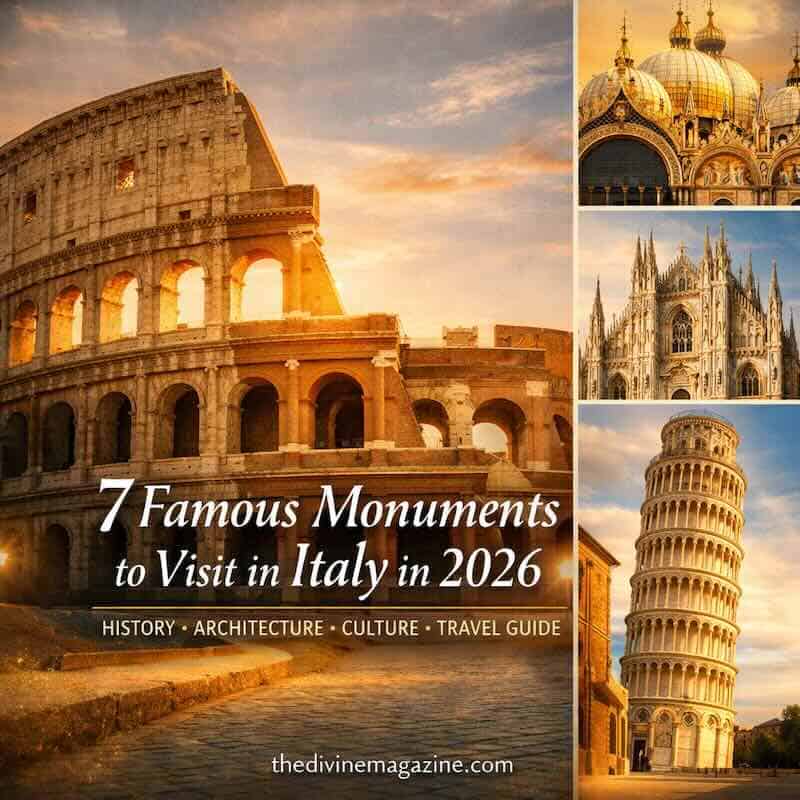
In 2026, a trip to Italy remains one of the most unforgettable experiences in Europe — whether you’re drawn by its world-class cuisine, ancient history, or vibrant nightlife. With over 50 UNESCO World Heritage Sites and countless cultural landmarks, narrowing down the best places to visit can be overwhelming. This updated guide highlights seven of Italy’s most iconic monuments that continue to captivate travelers worldwide.
From the grandeur of Rome to the charm of Venice and the artistry of Milan, these destinations represent the essence of Italy’s architectural brilliance and cultural legacy. Let’s explore the top seven monuments that define Italy in 2026.
The Colosseum, Rome
The Colosseum remains the crown jewel of Rome’s ancient wonders. This monumental amphitheater, built in 80 AD, continues to symbolize the might and ingenuity of the Roman Empire. As one of the most visited landmarks in the world, it offers a glimpse into gladiatorial history and Roman engineering. For updated visitor information, see CoopCulture — the official ticketing partner for the Colosseum.
Its accessibility and central location make it easy to include in any itinerary. As the largest amphitheater ever built, the Colosseum remains unmatched in scale and historical significance.
Basilica San Marco, Venice
Hop on the Rome to Venice train and discover the breathtaking Basilica San Marco. Located at the eastern end of St. Mark’s Square, this architectural masterpiece blends Byzantine, Romanesque, Islamic, and Gothic influences. It once served as the political and religious heart of the Republic of Venice.
Adorned with golden mosaics and intricate marble work, the basilica is a living testament to Venice’s artistic legacy. For current opening hours and guided tours, visit Basilica San Marco Official Site.
Trevi Fountain, Rome
The Trevi Fountain remains one of Rome’s most beloved landmarks. Designed by Nicola Salvi and completed by Giuseppe Pannini, it epitomizes Baroque elegance. Visitors flock here to toss coins and make wishes — a tradition so popular that over €2 million is collected annually and donated to charity. Learn more about its restoration and history at Turismo Roma.
Duomo di Milano, Milan
Milan’s Duomo stands as a Gothic marvel and the largest church in Italy. Construction began in 1386 and concluded in 1965, spanning six centuries of architectural evolution. The cathedral’s spires and sculptures narrate stories of faith and artistry. For panoramic views, visitors can access the rooftop terraces via Duomo Milano Official Site.
Beyond its religious significance, the Duomo represents Milan’s cultural identity — a fusion of history, design, and devotion.
Arena di Verona, Verona
Known as the “Colosseum’s little sibling,” the Arena di Verona dates back to 30 AD and remains one of Italy’s best-preserved Roman amphitheaters. While Verona is famous for Shakespeare’s Romeo and Juliet, the arena steals the spotlight with its world-class opera performances. Check the latest event schedule at Arena di Verona Opera Festival.
Unlike its ancient counterpart in Rome, this amphitheater continues to host concerts and cultural events, blending history with modern entertainment.
Cathedral of Monreale, Palermo
The Cathedral of Monreale in Palermo is a stunning example of Norman architecture and religious artistry. Built in the 12th century, it features intricate mosaics depicting biblical scenes and remains one of Sicily’s most revered landmarks. For visitor details, see Visit Sicily.
Legend has it that King William II was inspired by a divine vision to build the cathedral. Whether myth or history, Monreale’s beauty and craftsmanship are undeniable.
The Leaning Tower of Pisa, Pisa
No trip to Italy is complete without a photo at the Leaning Tower of Pisa. Constructed in the 12th century, the tower began tilting due to unstable soil — a flaw that turned into its defining charm. Today, it stands as one of Italy’s most recognizable monuments. For tickets and climbing tours, visit Opera della Primaziale Pisana.
Beyond its famous tilt, the tower represents Italy’s resilience and ingenuity in preserving historical architecture.
Conclusion
Italy’s monuments are timeless — each telling a story of art, faith, and innovation. From the Colosseum’s grandeur to the elegance of Venice’s basilicas, these landmarks embody the country’s cultural heartbeat. Whether you’re exploring by train or on foot, use Cozycozy to find accommodations and plan efficiently. For travel inspiration and updates, check Italia.it — the official tourism portal of Italy.
FAQ: Visiting Italy’s Monuments in 2026
1. What’s the best time to visit Italy’s monuments?
The ideal seasons are spring (April–June) and autumn (September–October), when temperatures are mild and crowds are smaller. For updated travel insights, visit Lonely Planet Italy or Italia.it.
2. Can I see all seven monuments in one trip?
Yes — with efficient planning and rail travel. Use Rail Europe or Trenitalia to book multi‑city passes connecting Rome, Venice, Milan, Verona, Palermo, and Pisa.
3. Are guided tours worth it?
Absolutely. Guided tours provide historical context and skip‑the‑line access. Platforms like GetYourGuide and Viator offer curated experiences for each monument, often led by local historians.
4. How can I save money while visiting Italy’s landmarks?
Purchase city passes such as the Roma Pass or Milano Card for discounted entry and public transport. Booking online in advance also helps avoid peak‑season surcharges.
5. What are the photography rules at major monuments?
Photography is allowed at most outdoor sites, but flash and tripods are often restricted inside churches and museums. Always check official guidelines on each monument’s website before your visit.
6. Are Italy’s monuments accessible for travelers with disabilities?
Yes, accessibility has improved significantly. Many landmarks, including the Colosseum and Duomo di Milano, offer ramps and elevators. For detailed accessibility resources, visit Accessible Italy.
7. How can I find reliable accommodations near these sites?
Use Cozycozy or Booking.com to compare hotels and apartments near major monuments. Look for properties within walking distance of train stations for easy transfers.
8. What’s new for travelers in Italy in 2026?
Italy has introduced digital museum passes and eco‑friendly transport options across major cities. Check ENIT – Italian National Tourist Board for the latest updates on sustainable travel initiatives.