




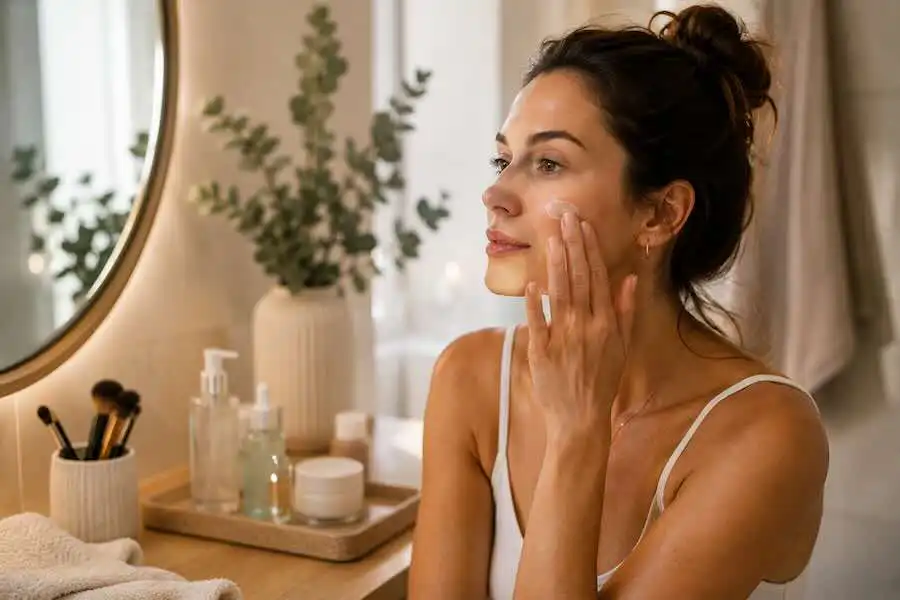
Beauty in your 30s often becomes less about chasing every new launch and more about understanding what your skin actually needs. Texture can shift, recovery may feel slower, and the habits that once seemed optional suddenly matter. A thoughtful routine built around sun protection, hydration, gentle exfoliation, and makeup that works with your skin can make far more sense than an overflowing bathroom shelf.
The aim isn’t to erase signs of age. It is to keep skin comfortable, protected, and healthy while choosing products that make you feel like yourself. These four beauty principles offer a practical place to begin.
Skincare Shouldn’t Stop at Your Jawline
Facial skincare gets most of the attention, but the neck, upper chest, and hands are exposed to many of the same environmental factors. If you’re already applying moisturizer and sunscreen to your face, extending those products beyond the jawline is a simple habit that requires almost no additional time.
The skin in these areas can develop visible changes in texture, pigmentation, and fine lines over time. Rather than treating them as separate beauty projects, think of exposed skin as part of the same routine. Moisturize according to comfort and apply broad-spectrum sunscreen to areas that won’t be covered by clothing.
Consistency matters more than an elaborate collection of products. The American Academy of Dermatology offers dermatologist-reviewed guidance on building straightforward skincare habits without unnecessarily complicating the process.
Choose Foundation and Concealer for the Skin You Have Now
Foundation doesn’t need to create a perfectly uniform surface. In your 30s, a lighter hand can often produce a fresher finish, particularly when skin texture is becoming more noticeable. Light-to-medium coverage foundation, skin tint, or tinted moisturizer can soften uneven tone while allowing natural dimension to remain visible.
Concealer works best when it has a specific job. Apply a small amount where you actually want additional coverage — perhaps beneath the eyes, around the nose, or over an occasional blemish — rather than layering it across the entire face.
Preparation also changes the result. Give moisturizer and sunscreen time to settle before applying complexion products, then build coverage gradually. Thin layers tend to move more naturally with the skin than one heavy application.
Daily Sunscreen Is the Habit Worth Keeping
If there is one skincare habit worth making automatic, it is sun protection. Ultraviolet exposure contributes to premature visible skin aging and increases the risk of skin cancer, which makes sunscreen much more than a cosmetic product.
The American Academy of Dermatology recommends choosing a broad-spectrum, water-resistant sunscreen with SPF 30 or higher. Sunscreen should also work alongside shade, clothing, and other forms of sun protection rather than functioning as the only defense.
Think beyond obvious summer afternoons, too. UV exposure isn’t confined to beach weather, so making sunscreen part of your normal morning routine is easier than trying to decide whether a particular day warrants it. Divine Magazine’s guide to keeping skin healthy during summer offers additional seasonal skincare ideas.
Exfoliate Gently, Not Aggressively
Exfoliation can help remove dead surface cells and leave skin feeling smoother, but more is not necessarily better. Aggressive scrubbing, combining several exfoliating products, or exfoliating too frequently can irritate the skin and compromise its barrier.
The right approach depends on your skin type and the products already in your routine. Some people prefer a gentle physical exfoliant, while others use products containing exfoliating acids. Either way, introduce new formulas cautiously and pay attention to redness, burning, unusual dryness, or persistent sensitivity.
Homemade scrubs can sound appealing, but kitchen ingredients aren’t automatically suitable for facial skin. A formulated product with clear usage instructions gives you greater control over how and when you’re exfoliating. If you use retinoids, prescription acne treatments, or have a skin condition, professional advice can help you avoid incompatible combinations.
Build a Routine You Can Actually Maintain
A useful beauty routine doesn’t need twelve steps. Start with the essentials: gentle cleansing, appropriate moisturization, daily sun protection, and carefully chosen treatments for concerns that genuinely matter to you. Makeup can then sit on top as expression rather than camouflage.
That simplicity has another advantage. When fewer products are competing for attention, it becomes easier to notice how your skin responds to each one. Introduce changes individually, give them time, and resist replacing a routine simply because another trend appears on your feed.
Conclusion: Better Beauty Habits in Your 30s
Your 30s don’t require a completely different face or an expensive new beauty identity. They offer a good moment to become more selective. Protect exposed skin, keep hydration consistent, exfoliate with restraint, and choose complexion products according to how your skin looks and feels today.
The most useful beauty secret is surprisingly quiet: a routine you enjoy enough to repeat will usually serve you better than a crowded shelf of products you rarely use.
Frequently Asked Questions
What skincare products are most important in your 30s?
A gentle cleanser, moisturizer, and broad-spectrum SPF 30 or higher provide a strong basic routine. Additional treatments can then be selected according to individual concerns and skin tolerance.
Should I put facial skincare products on my neck?
Many moisturizing and sun-protection products can be extended to the neck and upper chest. Follow individual product directions, particularly with stronger active ingredients.
Do I really need sunscreen every day?
Making broad-spectrum sun protection a regular habit helps reduce cumulative UV exposure. Combine sunscreen with shade and protective clothing when appropriate.
How often should I exfoliate?
There isn’t one schedule suitable for everyone. Frequency depends on your skin, exfoliant, and other treatments in your routine. Start conservatively and reduce use if irritation develops.
Is heavy foundation necessary for mature-looking skin?
No. Coverage is a personal preference. Light layers, targeted concealer, and well-prepared skin can create an even finish without masking natural texture.