




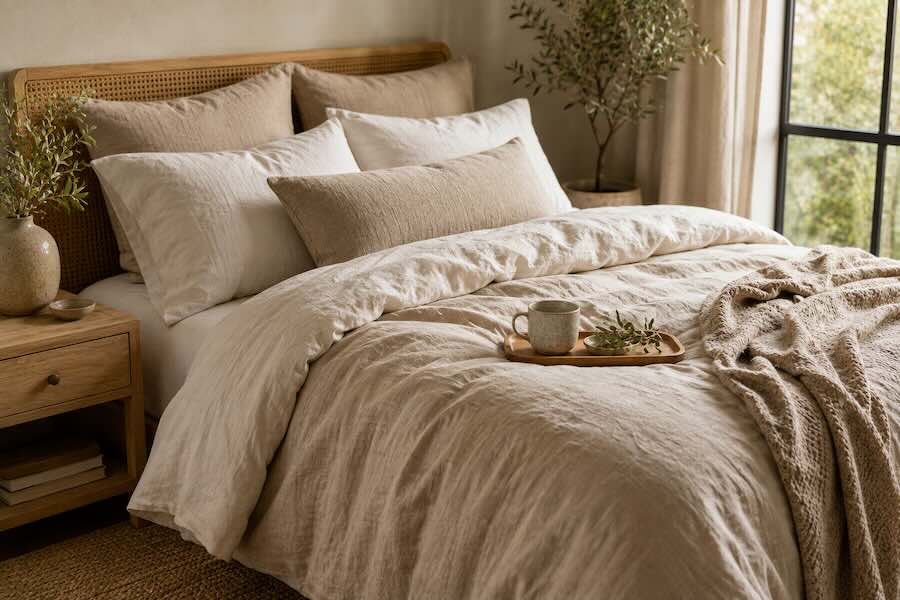
A duvet cover shapes more than the look of a bedroom. It sits against the body night after night, changes how warm or cool the bed feels, and protects the duvet beneath it. The best choice is therefore less about chasing a pattern and more about finding the right balance of fabric, weight, construction, and care.
For 2026, bedding is moving toward a quieter kind of luxury: breathable natural fibers, tactile finishes, softer earth-led colors, and pieces designed to stay in the home for years. Linen with a relaxed crease, crisp cotton percale and smooth sateen all create distinctly different sleeping environments. The right one depends on how you sleep.
Choose a duvet cover for your sleep style
Material should be the starting point. A fabric can look beautiful in photographs and still feel completely wrong at 2 a.m. Temperature, texture and moisture management matter far more once the lights are off.
For hot sleepers: keep it light and breathable
People who tend to sleep warm should look first at breathable fabrics and relatively airy weaves. Linen is particularly appealing because of its textured surface and relaxed drape. Parachute, for example, offers European flax linen bedding built around that softly rumpled aesthetic.
- Linen: Airy, tactile and increasingly soft with repeated washing. Its natural creasing is part of the look rather than something that needs to be ironed away.
- Lyocell: Smooth against the skin and useful for sleepers who prefer a fluid, cooler-feeling fabric. Cozy Earth is one example of a brand working extensively with this category of bedding.
- Cotton percale: Crisp, matte and fresh. A quality percale can recreate that cool-sheet sensation associated with a well-made hotel bed. Sleep Foundation provides additional guidance on comparing bedding materials and construction.
For cold sleepers: look for a warmer hand
A cooler bedroom calls for a different surface. Cotton sateen has a smoother hand and typically feels denser than percale, while brushed flannel introduces a soft layer of texture that feels particularly inviting through winter.
- Cotton sateen: Smooth, softly lustrous and suited to anyone who prefers bedding with a slightly more enveloping feel.
- Cotton flannel: Brushed fibers create a warmer, softer surface that works naturally in colder climates and bedrooms kept at lower temperatures.
Measure the duvet, not just the mattress
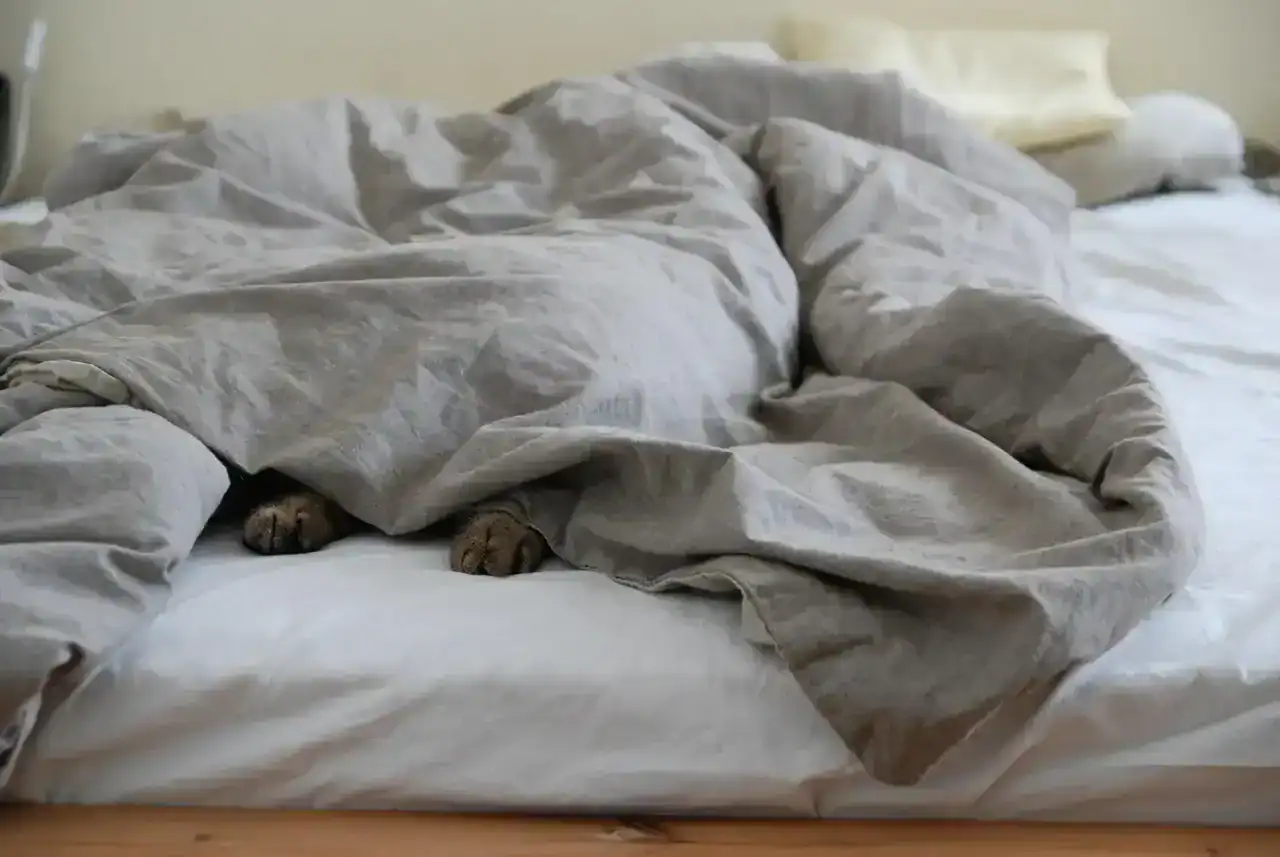
Queen, king and double labels can create a false sense of certainty. Dimensions vary between manufacturers and countries, so the measurements of the actual duvet insert should always be checked against the cover before ordering.
The visual result matters too. A closer fit tends to create a fuller appearance, while an oversized duvet can produce the long, soft drape seen in contemporary editorial bedrooms. Using a larger duvet on a smaller mattress is one way to create that generous silhouette, provided the extra weight and dimensions remain comfortable in practice.
Small construction details make a difference
A beautiful fabric can quickly become frustrating if the duvet shifts into one corner during the night. Look beyond color and weave and inspect how the cover is actually constructed.
- Internal corner ties: These help anchor compatible duvet inserts and reduce movement inside the cover.
- Secure closures: Hidden buttons create a traditional tailored finish, while zippers can make changing the cover faster.
- Clear textile certification: Certifications can provide useful additional information about how textiles have been tested or produced. Consumers can read directly about GOTS and OEKO-TEX before comparing claims.
Think beyond thread count
Thread count is one specification, not a complete measure of quality. Fiber quality, yarn, weave, finishing and construction all influence how bedding feels and how it ages. A well-made lower-thread-count percale can be a far better choice than a densely woven fabric purchased simply because the number on the packaging is larger.
Touch the material whenever possible. Hold it toward the light. Notice its weight, texture and density. Bedding is an unusually sensory purchase, and specifications alone cannot tell you whether you will enjoy sleeping beneath it.
How to make a duvet cover last
Good bedding develops character with use. Linen relaxes, cotton softens and subtle creases become part of the room. Aggressive laundering, however, can shorten that life considerably. The manufacturer’s care label should always take priority because washing requirements vary by fiber, dye and construction.
Use gentler temperatures
Unless the care instructions specify otherwise, avoid unnecessarily high washing and drying temperatures. Heat can contribute to shrinkage and place additional stress on some fibers. Air drying is particularly gentle when space and weather allow it; otherwise, choose the lowest appropriate dryer setting recommended by the manufacturer.
Avoid overloading the machine
A duvet cover needs room to move through water. Packing a washing machine too tightly can make rinsing less effective and encourage the cover to twist around smaller items. Washing bedding separately or with similarly sized pieces can make the process easier.
Treat each material differently
| Fabric | Care approach | What to watch |
|---|---|---|
| Linen | Use a gentle detergent and follow the recommended wash temperature. | High heat can cause unnecessary shrinkage. |
| Lyocell | Use the cycle specified on the care label, often a gentler setting. | Avoid assuming all lyocell blends have identical care requirements. |
| Cotton sateen | Wash gently and remove promptly after drying. | Excessive heat and friction can affect the smooth finish. |
| Flannel | Use gentle washing and drying settings appropriate to the label. | Friction and high heat can contribute to pilling. |
A calmer approach to buying bedding
The most useful duvet cover is not necessarily the most expensive one. Start with the room temperature and your own sleeping habits, then choose a material. Check the precise dimensions, inspect the closures and internal ties, and read the care instructions before buying.
Then consider color. Sand, oat, clay, warm white and muted botanical shades sit easily within the softer interiors shaping 2026, but longevity matters more than a passing palette. A duvet cover that feels good at midnight and still looks considered after years of washing is the stronger design decision.
FAQ: Choosing and caring for a duvet cover
Should I wash a new duvet cover before using it?
Check the manufacturer’s instructions first. Washing new bedding before use can remove manufacturing or packaging residue and often changes the initial hand of natural fibers.
How often should a duvet cover be washed?
There is no universal schedule. Frequency depends on whether you use a top sheet, whether pets share the bed, personal hygiene, allergies and other practical factors. Wash it regularly and follow its specific care instructions.
Is linen better than cotton for a duvet cover?
Neither is automatically better. Linen offers a relaxed texture and breathable feel, while cotton can range from crisp percale to smoother sateen. The better option is the one that matches your preferred temperature and texture.
Does a higher thread count mean better bedding?
No. Thread count should be considered alongside fiber quality, weave and construction rather than used as the sole indicator of quality.
Should my duvet cover be the same size as my duvet?
Start by matching the manufacturer’s actual measurements rather than relying only on labels such as queen or king. Sizing conventions can vary between brands and markets.