



There’s nothing quite like a bohemian rug to tie a room together. Eclectic, colorful, unapologetically layered — these rugs add texture and warmth to a space in a way that matching furniture sets rarely manage on their own. With so many types and designs out there, the harder question is usually where to start. This guide covers exactly that: choosing, sizing, styling, and caring for a bohemian rug that actually fits your home.
What is a Bohemian Rug?
Bohemian rugs are defined less by a single look than by a mixing instinct — colorful designs, unusual patterns, and a blend of textures pulled from ethnic, tribal, and vintage traditions across cultures. Most are made from natural, sustainable materials like wool, cotton, or jute, and many are still hand-woven by skilled artisans, which is part of why no two ever look quite the same.
Choosing The Right Size
Size decides whether a rug reads as intentional or accidental. Choosing the right bohemian rug starts with the room itself: larger rugs suit larger rooms, smaller rugs suit cozy nooks, and the space rarely forgives a mismatch either way. As a general rule of thumb, leave at least 12 inches of bare floor between the rug’s edge and the walls on all sides — enough to frame the piece without letting it float.
Picking The Perfect Pattern
The pattern range is where bohemian rugs earn their reputation — geometric prints, floral motifs, and everything between. The right choice depends on what’s already happening in the room. A busy, color-saturated space calls for something simpler underfoot; a bold, graphic pattern is what turns a neutral, quiet room into one with a pulse.
Persian-Inspired Bohemian Rugs
Persian-inspired rugs bring intricate patterns, warm color palettes, and a level of craftsmanship that reads as heirloom rather than trend. Paired with neutral or muted surroundings, one of these becomes the natural focal point of a living room or bedroom — the density of the pattern doing the work that extra furniture would otherwise have to do. The Victoria and Albert Museum’s overview of historic carpet traditions is worth a look if you want to understand where these motifs actually originate.
Geometric Bohemian Rugs
Geometric rugs are the more modern branch of the bohemian family — chevrons, triangles, zig-zags, diamonds, in colors that don’t apologize for themselves. They tend to look best in minimalist settings, against white walls and simple furniture, where the pattern has nothing to compete with. There’s a playfulness here that Persian-inspired rugs don’t quite go for.
Natural-Fiber Bohemian Rugs
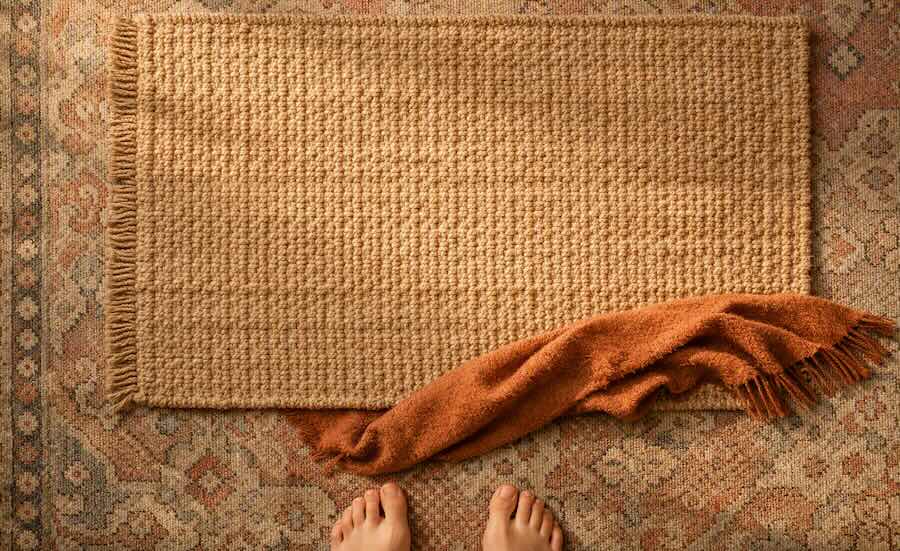
For an organic, understated approach, natural-fiber rugs made from jute, sisal, or seagrass bring texture and warmth without leaning on color to do it. Natural-fiber bohemian rugs work in nearly any room and pair easily with almost any furniture style — the quiet option in a category not known for being quiet.
Layering Rugs
Layering a bohemian rug over another rug or textile is the fastest way to a lived-in, collected look — extra dimension, extra texture, without redecorating the whole room. Choose pieces with patterns and colors that complement rather than compete, and use a smaller rug over a larger one to informally divide a bigger space into zones. The Spruce’s guide to layering rugs covers proportion and placement in more detail if you’re working with an unusually shaped room.
Caring For Your Bohemian Rug
Longevity comes down to a few consistent habits: vacuum regularly to lift dirt and dust out of the fibers, and spot-clean spills the moment they happen rather than after they set. Skip harsh chemicals or bleach entirely — they degrade both fiber and color faster than ordinary wear ever would. When storing a rug, roll it tightly rather than folding it, and keep it somewhere dry and cool; folds can crease natural fibers permanently. For deeper stains or an older, more delicate weave, The Spruce’s rug-cleaning guide breaks down which methods suit which materials.
Vintage bohemian rugs are worth considering separately — genuinely one of a kind, carrying a history that no new weave can replicate. They range from bold and saturated to muted and pastel, and they slot naturally into eclectic or bohemian interiors, adding a layer of storytelling that a factory-made rug simply can’t offer.
Conclusion
A bohemian rug rarely just fills floor space — done right, it sets the tone for everything else in the room. Get the size right, let the pattern respond to what’s already there, and treat care as part of the design decision rather than an afterthought. Do that, and a good rug will outlast several rounds of redecorating around it.
FAQ: Bohemian Rugs
Q: Do I need a rug pad under a bohemian rug? A: Almost always, yes. A rug pad prevents slipping, adds cushioning underfoot, and protects both the rug’s backing and the floor beneath it — especially important on hardwood, where a bare rug can shift with regular foot traffic.
Q: Wool or synthetic — which holds up better in a bohemian rug? A: Wool is generally the more durable, longer-lasting choice and tends to hide dirt better between cleanings, though it costs more upfront. Synthetic fibers are more budget-friendly and often more stain-resistant, making them a reasonable option for high-traffic areas or homes with pets.
Q: Is a vintage bohemian rug worth the extra cost over a new one? A: If the piece is authentic and in reasonable condition, often yes — vintage rugs bring a depth of pattern and a history that new weaves can’t replicate, and well-maintained wool rugs can last decades. Inspect for excessive wear, moth damage, or a compromised backing before buying.
Q: How do I keep a bohemian rug from clashing with an already busy room? A: Let one element lead. If the room’s walls, furniture, or art already carry strong pattern or color, choose a simpler, more solid-leaning rug to ground the space rather than compete with it.