




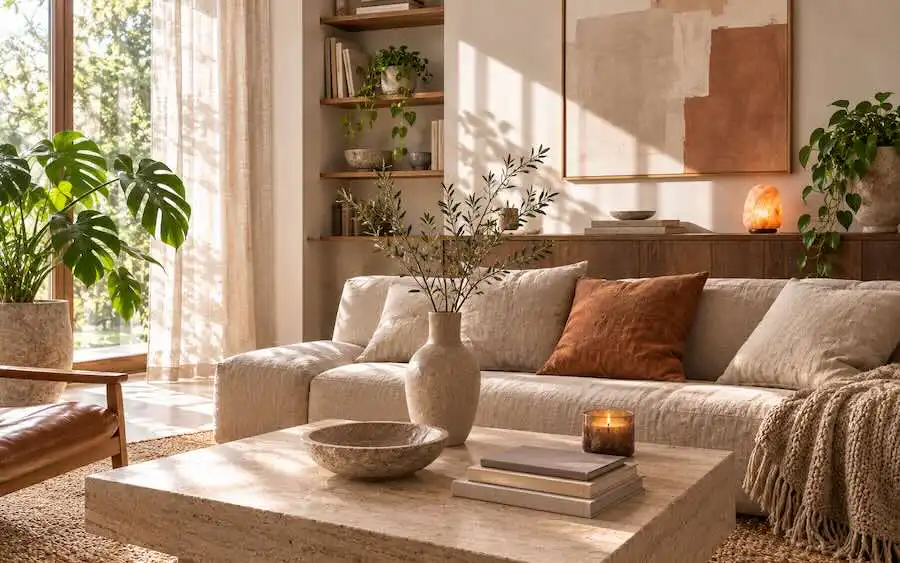
A home can change the way a day ends. Soft light across a wall, a clear kitchen counter, fresh herbs by a window, or one photograph you genuinely love can make a room feel quieter and more personal. Creating that atmosphere does not require a complete redesign. Often, the smallest visual and sensory adjustments have the strongest effect.
The idea of bringing “positive energy” into a home is best approached practically. Color, natural light, organization, meaningful objects, greenery, sound, and scent can all influence how comfortable a space feels. Rather than filling rooms with things marketed as wellness products, focus on creating an environment that supports the way you actually live.
Bring In Color With Intention
Color is one of the quickest ways to change the atmosphere of a room. You do not need to repaint every wall. A muted green cushion, terracotta throw, ochre chair, or softly colored piece of art can introduce warmth without overwhelming the space.
Pay attention to how colors behave in natural light throughout the day. A shade that feels bright in morning sun may become deeper and quieter by evening. Rather than following rigid claims about individual colors controlling mood, choose tones that make the room feel comfortable to you.
Declutter the Surfaces You See Most
Visual noise accumulates almost unnoticed: unopened mail on a console, chargers across the kitchen counter, clothes on a chair, bottles around the bathroom sink. Eventually, the room begins to feel busier than it actually is.
Start with the surfaces that remain in your sightline. Clear the bedside table, coffee table, desk, and kitchen counter before attempting an ambitious whole-house organization project. Give frequently used objects a permanent place and remove items that no longer serve a practical or emotional purpose.
The goal is not a sterile home. Books can remain stacked, blankets can stay within reach, and personal objects should still be visible. Calm interiors feel lived in; they simply give everything enough room to breathe.
Choose Wall Art That Means Something
Blank walls can provide useful visual silence, but the right artwork gives a room identity. Instead of choosing pictures simply because they coordinate with a sofa, consider photographs, paintings, prints, textiles, or illustrations that carry some personal connection.
A large piece of canvas wall art can establish a focal point, while a smaller arrangement of photographs and collected works can make a hallway or bedroom feel intimate.
Scale matters. One substantial artwork often feels calmer above a sofa or bed than a collection of undersized pieces competing for attention. Leave negative space around the composition so the wall remains part of the design.
Use Sound to Soften the Atmosphere
The feeling of a room is not exclusively visual. Sound changes it too. An open window carrying distant rain, a quiet playlist, or the occasional movement of a wind chime can add another sensory layer to the home.
Wind chimes are sometimes associated with spiritual ideas about clearing negative energy, but they can also be appreciated simply for their sound and movement. If you use them, place them where a gentle breeze produces occasional notes rather than constant noise. Calm comes from restraint.
Create Softer Evening Light
Lighting can transform a room faster than almost any decorative purchase. Bright overhead illumination is useful for cleaning and practical tasks, but evenings often benefit from smaller pools of warmer light.
Place table and floor lamps at different heights and use them to illuminate specific corners rather than flooding the entire room. A lamp beside a chair creates a reading zone. A small bedside lamp makes the bedroom feel quieter. A warm light across textured plaster, timber, or fabric introduces depth after sunset.
Himalayan salt lamps can provide a warm decorative glow if you enjoy their appearance, but claims that they significantly purify indoor air or remove allergens are not well supported by scientific evidence. Treat them as atmospheric lighting rather than air-cleaning equipment.
Grow Herbs Where You Can Use Them
A kitchen windowsill filled with basil, mint, thyme, or rosemary introduces living texture while keeping useful ingredients close to the cutting board. Brush against a leaf and the scent enters the room immediately.
Choose plants according to the light available rather than appearance alone. Herbs generally need strong light, while some houseplants tolerate darker corners more successfully. Healthy greenery will always look more inviting than a struggling plant placed somewhere unsuitable.
Use Mirrors to Work With Natural Light
Mirrors are particularly effective in smaller or darker rooms because they can redirect existing light and create a greater sense of depth. Placement matters more than size.
Position a mirror where it reflects something worth seeing: daylight from a window, greenery, artwork, or an open part of the room. Avoid placing it where it simply doubles visual clutter. The reflection becomes part of the composition, so consider it as carefully as the object itself.
Make the Home Personal, Not Perfect
A restorative home does not need to resemble a showroom. In practice, the rooms that feel best often contain signs of the people living there: a worn book beside the bed, ceramics collected while traveling, photographs on a shelf, linen softened through use.
Before buying another decorative object, ask whether removing, moving, repairing, or rediscovering something you already own could improve the room instead. Sometimes the most effective redesign is simply opening the curtains, clearing a table, moving a lamp, and allowing afternoon light to reach the floor again.
Conclusion
Bringing positive energy into a home is less about following mystical rules and more about creating surroundings that feel comfortable, useful, and distinctly yours. Clear unnecessary clutter. Let daylight move through the rooms. Introduce plants, meaningful art, considered color, and softer evening lighting.
Then stop before the room becomes overworked. A peaceful interior needs empty space too. When every object has a reason to be there, home begins to feel lighter without losing its warmth.
Frequently Asked Questions
How can I make my home feel more positive without redecorating?
Begin with what costs nothing: clear clutter from visible surfaces, open curtains, rearrange furniture to improve movement, clean windows, and remove objects you no longer enjoy seeing.
What colors make a home feel calmer?
There is no universal calming color, but muted greens, warm neutrals, soft blues, earthy browns, and restrained terracotta tones can create a visually quiet palette. Personal preference and the room’s natural light matter just as much.
Can houseplants improve the atmosphere of a room?
Plants introduce color, texture, and a connection with nature. Choose varieties appropriate for the room’s available light and your ability to care for them consistently.
Do Himalayan salt lamps purify the air?
There is not strong scientific evidence that salt lamps meaningfully purify household air or remove allergens. Their main interior-design benefit is the soft, warm light they produce.
Where should I place mirrors to make a room brighter?
Position mirrors where they can reflect useful natural light or an attractive view. Consider what appears in the reflection, since a mirror can amplify clutter just as easily as light.