


Few handbags have survived seven decades of changing fashion without losing their identity. The Chanel 2.55 has. Quilted leather, an elegant chain, a rectangular profile, and a quietly rebellious origin story still make it one of the most recognizable luxury bags in fashion.
The story begins with Gabrielle “Coco” Chanel. After establishing her Paris millinery business in 1910, Chanel spent decades challenging the restrictive conventions of women’s dress. Then, in February 1955, she introduced a shoulder bag that gave women something surprisingly radical for luxury fashion at the time: their hands back.
That date gave the Chanel 2.55 its name. More than 70 years later, the bag remains closely connected to Chanel’s visual language, while vintage examples and later interpretations continue circulating among collectors and on the luxury resale market.
Its longevity is particularly interesting because the 2.55 does not depend entirely on novelty. Fashion moves quickly; this bag barely needs to. Its appeal comes from proportion, recognizable details, history, and the way generations of stylish women have carried it.
The Story Behind the Chanel 2.55 Handbag
The Chanel 2.55 arrived in February 1955, hence the numerical name. Its defining idea was practical as much as aesthetic: a shoulder strap allowed a woman to carry her bag without occupying one of her hands.
That practicality feels ordinary now. In the context of mid-century luxury handbags, it was much more disruptive.
The design brought together quilted material, a rectangular flap, chain hardware and carefully organized interior details. Rather than making utility look utilitarian, Chanel folded it into an object that still felt refined.
The result became one of those rare fashion designs where the silhouette can be recognized from across a room. For a deeper look at its origins, the history of the Chanel Gabrielle 2.55 traces the details that helped turn the bag into an enduring design.
Why the Details Matter
A 2.55 is not memorable simply because the Chanel name appears behind it. Its design vocabulary does much of the work.
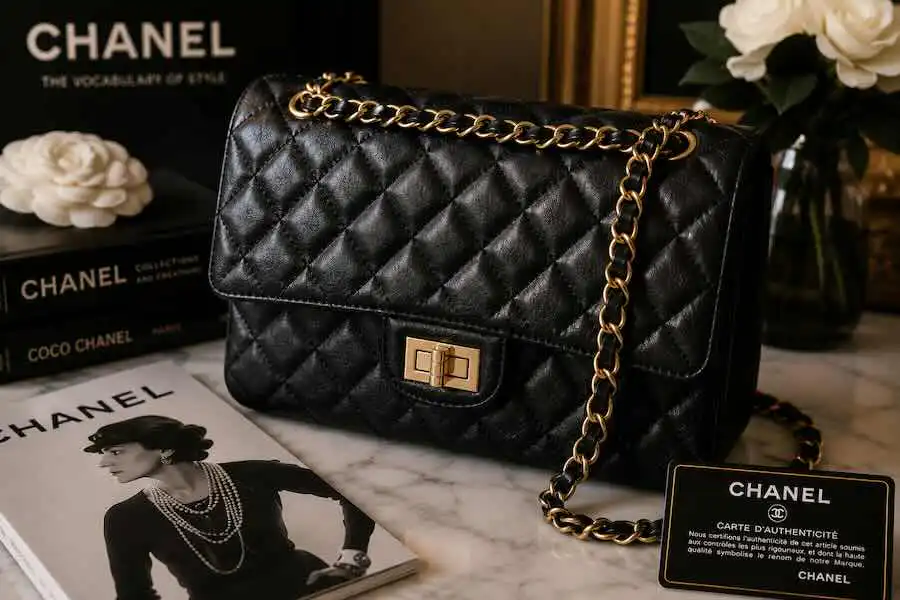
The quilting gives the surface dimension without requiring elaborate decoration. The chain introduces cool metal against soft leather. The flap keeps the silhouette disciplined, while the shoulder construction preserves the practical idea that made the original so interesting.
Perhaps most important is the Mademoiselle turn-lock associated with the 2.55. It provides a useful visual distinction from the interlocking CC closure many shoppers immediately associate with Chanel flap bags.
These details also explain why the bag works with dramatically different wardrobes. Against denim, it looks polished. With tailoring, it becomes almost architectural. Beside an evening dress, its hardware catches the light without demanding the entire room.
Chanel 2.55 vs. Classic Flap: What’s the Difference?
The Chanel 2.55 and Classic Flap are frequently discussed as though they are interchangeable. They are related, but collectors should understand the distinction.
The original 2.55 dates to Coco Chanel’s February 1955 design. The bag is associated with the rectangular Mademoiselle lock rather than the prominent interlocking CC turn-lock. Its chain treatment and interior details also contribute to its more understated character.
The Classic Flap emerged later under Karl Lagerfeld and brought recognizable Chanel branding more visibly into the design, particularly through its CC closure.
Then there is the Reissue 2.55, introduced decades after the original and drawing directly on the historic design. That terminology can become confusing on resale listings, where “2.55,” “Reissue,” and “Classic Flap” are sometimes used too loosely.
If you are buying rather than simply admiring, identify the exact model, approximate production period, size, leather, hardware, and construction rather than relying on a listing title alone.
How Celebrity Style Helped Build the Chanel Myth
Chanel has spent generations occupying an unusually powerful intersection of fashion, celebrity, cinema, and popular culture. Editors document it. Stylists repeatedly return to it. Famous faces carry Chanel bags through airports, restaurants, premieres, and ordinary-looking street-style photographs that are anything but accidental in their cultural reach.
That visibility matters. Publications such as Vogue and Harper’s Bazaar have chronicled Chanel across different eras, helping place its bags within a much larger conversation about luxury and celebrity style.
Jennifer Garner, Victoria Beckham, and Kim Kardashian are among the celebrity names associated with Chanel handbags and the broader culture surrounding the house. Yet celebrity endorsement alone does not explain why a design lasts for generations. Plenty of highly photographed bags disappear once fashion’s attention moves elsewhere.
The 2.55 has something more difficult to manufacture: continuity.
Why Black Chanel Bags Remain So Desirable
Seasonal Chanel colors can be extraordinary, particularly for established collectors. Yet black remains the visual shorthand many people imagine when they picture a quilted Chanel bag.
The reason is partly practical. Black integrates easily into an existing wardrobe and makes the construction of the bag — quilting, hardware, proportions, chain — more prominent than the color itself.
Gold-toned hardware brings warmth and vintage glamour, while cooler metal can give the same dark leather a quieter character. Neither combination automatically makes a bag more valuable. On the secondary market, desirability depends on the specific model, age, material, condition, rarity, provenance, and current buyer demand.
That distinction is worth making because “iconic” and “guaranteed investment” are not the same thing.
Is the Chanel 2.55 Really an Investment?
Luxury handbags are frequently described as investments, but buyers should approach that word carefully.
Some Chanel bags command strong resale prices, and historical retail price increases can make older purchases look particularly attractive in retrospect. That does not guarantee that every 2.55 will appreciate or that a seller will recover the original purchase price after commissions, authentication costs, condition adjustments, and market fluctuations.
A handbag is also a physical object. Corners wear. Leather scratches. Hardware changes. Interiors pick up marks. Storage affects shape. Repairs and alterations can influence collector interest.
If resale value matters to you, research completed sales for the specific model rather than assuming every Chanel bag follows the same trajectory. Price history resources, including this overview of Chanel price increases, can provide context, but current resale demand remains a separate question.
Buying a Chanel 2.55 From a Boutique
Buying through Chanel offers the clearest route for someone seeking a new bag. Availability, sizes, materials, colors, and seasonal versions can vary, so shoppers may need to contact or visit a boutique rather than expect every configuration to be immediately available.
A new purchase also removes much of the detective work involved with vintage and pre-owned pieces. For someone primarily interested in owning and wearing the design rather than hunting for a particular production era, that simplicity has real value.
Buying a Vintage or Pre-Owned Chanel 2.55
The second-hand market is where the story becomes more interesting. Older bags can offer discontinued colors, unusual materials, previous iterations, and the soft patina that only arrives through time.
They also require more scrutiny.
- Research the seller: Look beyond polished product photography and investigate reputation, return policies, authentication procedures, and buyer protection.
- Confirm the exact model: Do not assume every quilted Chanel flap bag is a 2.55.
- Inspect condition carefully: Look at corners, edges, quilting, chain, lock, interior lining, stitching, shape, and signs of repair.
- Ask about alterations: Recoloring, replaced hardware, refinishing, and structural repairs may matter to collectors.
- Understand authentication: Chanel’s identification systems have changed over time, so authentication should consider the bag’s production era rather than relying on one isolated detail.
- Compare market prices: An unusually low price deserves investigation rather than excitement.
General guides to buying designer bags can help first-time luxury shoppers understand the questions worth asking before committing significant money.
How to Style a Chanel 2.55 Without Making It Feel Precious
An iconic handbag becomes considerably more interesting when it stops looking like a museum object.
The 2.55 can sharpen an oversized wool coat and straight denim. It can sit against a white shirt and black trousers without needing another obvious luxury marker. With a summer wardrobe, the chain and quilting provide texture against linen, cotton, and simpler silhouettes.
For evening, resist the urge to make everything equally formal. A compact quilted bag beside a fluid dress, clean tailoring, or understated separates often feels more contemporary than an outfit built entirely around recognizable status pieces.
That versatility may be the most convincing argument for the design. The bag has history, but it does not have to look historical.
Practical Takeaway: Buy the Bag, Not the Hype
If you are considering a Chanel 2.55, begin with the reason you actually want one.
If you love the design, choose the size, leather, hardware, and color you can imagine wearing repeatedly. If you are collecting, production history and condition become more important. If resale is part of the decision, study comparable transactions and remember that future prices cannot be promised.
Above all, authentication deserves the same attention as aesthetics when buying pre-owned. Confidence in fashion should include knowing what you are paying for, particularly at this end of the market. Our guide to navigating fashion with confidence follows much the same principle.
Conclusion: Why the Chanel 2.55 Still Matters
The Chanel 2.55 survives because its original idea still makes sense. It gave women freedom of movement without abandoning elegance, then wrapped that practicality in a design strong enough to become instantly recognizable.
Celebrity visibility, fashion editorials, scarcity, price increases, and resale culture have all added layers to its mythology. Beneath them sits a remarkably disciplined object: quilted surface, chain, flap, lock, proportion.
More than 70 years after February 1955, that silhouette still walks comfortably into the present. Few fashion accessories get that much time — and fewer still know what to do with it.
FAQ: Chanel 2.55 Handbag
Why is the Chanel 2.55 called 2.55?
The name references February 1955, when Coco Chanel introduced the original shoulder-bag design.
What is the difference between a Chanel 2.55 and Classic Flap?
The historic 2.55 is associated with Coco Chanel’s original design and its rectangular Mademoiselle lock. The later Classic Flap is closely associated with Karl Lagerfeld’s interpretation and the interlocking CC turn-lock. Buyers should also distinguish between vintage originals and later Reissue versions.
Is a Chanel 2.55 a good investment?
Some Chanel bags retain substantial resale value, but appreciation is not guaranteed. Model, age, rarity, material, condition, purchase price, selling fees, and market demand can all affect the eventual return.
Can you still buy a Chanel 2.55?
Yes. Chanel continues to offer interpretations of the 2.55, while vintage and pre-owned examples circulate through the secondary market. Availability varies by size, material, season, and location.
How can I tell whether a pre-owned Chanel 2.55 is authentic?
Authentication should consider multiple details appropriate to the bag’s production period, including construction, stitching, hardware, materials, interior details, and identification features. For an expensive pre-owned purchase, use a reputable seller or qualified independent authentication service rather than relying on a single visual clue.
Which Chanel 2.55 color should I buy?
Black is exceptionally versatile and closely associated with Chanel’s visual identity, but the best choice depends on how you intend to wear the bag. Collectors may also value particular seasonal shades, materials, or discontinued configurations.