

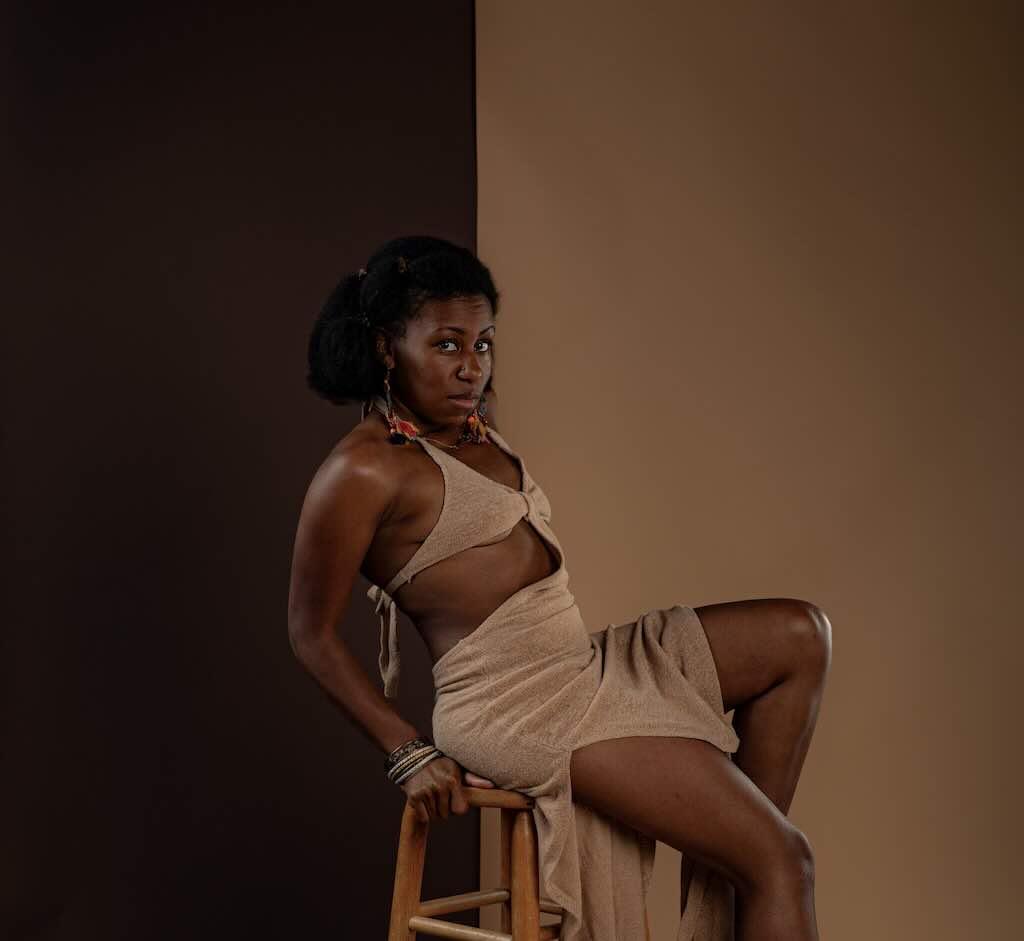


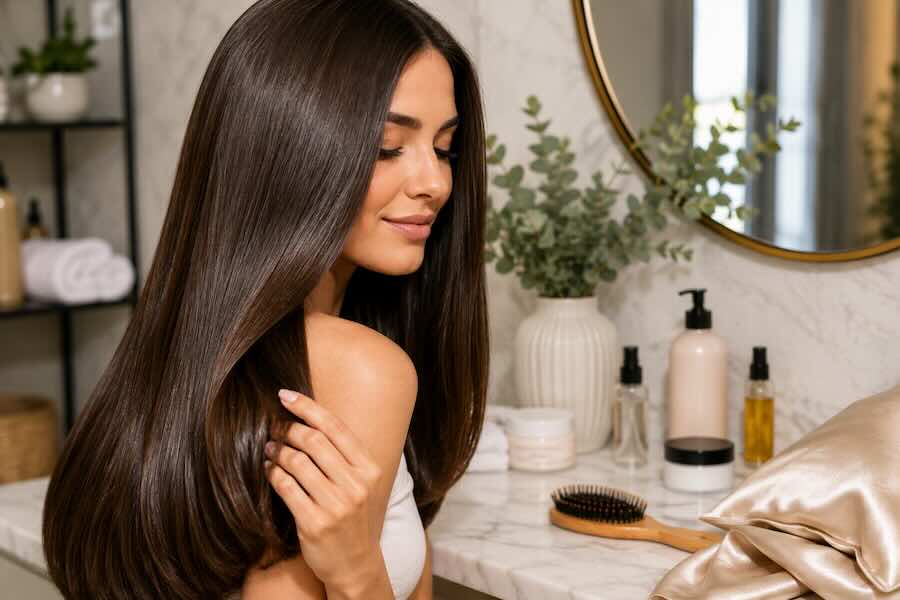
Glossy, smooth hair rarely comes from one miracle bottle. The polished finish seen on red carpets and beauty campaigns is usually the result of something less dramatic: consistent care, careful styling, protection from damage, and treatments chosen for the individual hair type.
That distinction matters. Hair that looks sleek under studio lights may have been professionally styled minutes earlier, while everyday hair has to contend with humidity, mineral buildup, heat, coloring, sleep, and ordinary wear. Instead of chasing an impossible finish, the more useful goal is healthy-looking hair with softness, shine, and manageable texture.
A few habits can make a visible difference. Some happen in the shower. Others start before your head even touches the pillow.
Pay Attention to the Water in Your Shower
If your hair feels coated, rough, or difficult to manage despite regular conditioning, your water may be part of the equation. Hard water contains higher concentrations of dissolved minerals such as calcium and magnesium, which can leave deposits on surfaces and hair.
A shower filter may help with certain substances in household water, particularly chlorine, depending on the filtration system. However, standard shower filters should not automatically be treated as water softeners. Removing calcium and magnesium effectively generally requires a proper water-softening system.
If hard water appears to be affecting your hair, consider occasionally using a clarifying or chelating shampoo formulated to remove mineral buildup. Follow it with conditioner or a moisturizing mask, since stronger cleansing products can leave some hair types feeling dry.
You can also check your local water-quality report or test your water before investing in equipment. That gives you a clearer picture of what you are actually trying to remove rather than buying a filter based solely on beauty claims.
Be Selective About Professional Smoothing Treatments
Professional smoothing treatments can create a noticeably sleeker finish and make some hair easier to style. Keratin-based treatments and other salon smoothing systems work in different ways, however, and the ingredients matter just as much as the finished look.
This is one area where glossy results should not outrank safety. The U.S. Food and Drug Administration notes that some hair-smoothing products contain or release formaldehyde when heated. Formaldehyde exposure can cause irritation and other health problems, particularly when treatments are performed in poorly ventilated environments. The FDA provides guidance on formaldehyde in hair-smoothing products for consumers considering these services.
Before booking a treatment, ask the salon for the exact product name and ingredient information. A stylist should also be able to explain what happens when the formula is heated, how much ventilation is available, and whether the treatment is suitable for your hair’s condition and previous chemical processing.
Chemical straighteners and relaxers deserve particular care. Research has investigated associations between frequent use of chemical hair-straightening products and certain health risks. The National Cancer Institute has discussed research finding an association between frequent use of chemical straighteners and uterine cancer risk. An association does not prove that a product caused an individual case, but it is meaningful information to consider when deciding which treatments to use.
Reduce Heat Rather Than Constantly Repairing It
There is an irony to chasing glossy hair: repeatedly using very high temperatures to create a smooth finish can contribute to the dryness and breakage that make hair look less polished later.
When using a blow-dryer, straightener, or curling tool, apply an appropriate heat-protectant product and use the lowest effective temperature for your hair. Avoid repeatedly passing a hot tool over the same section simply to achieve a glass-like surface.
Giving hair occasional breaks from heated styling can help too. Air-drying will not suit every texture or desired style, but reducing unnecessary heat exposure is one of the simplest ways to protect already fragile or chemically processed hair.
Try a Silk or Satin Pillowcase
Your nighttime routine is another place to look. A smooth silk or satin pillowcase creates a different surface from a rougher fabric, which may help reduce friction as hair moves across the pillow during sleep.
Do not expect a pillowcase to repair damaged hair or transform its structure. Think of it instead as a low-effort protective habit. Less friction can be particularly appealing for curls, longer hair, delicate strands, and styles that tend to become tangled overnight.
Loosely securing long hair before sleeping can also help prevent tangling. Avoid tight elastics that pull on the same area night after night; a soft scrunchie or other gentle fastening is usually kinder to the hair shaft.
Give Dry Hair More Conditioning Time
A weekly hair mask can be useful when ordinary conditioner is not giving dry or processed hair enough softness. Rich conditioning formulas temporarily improve manageability and can make the surface of the hair feel smoother.
The right formula depends on the hair. Fine strands can become limp under heavy oils and butters, while coarse, curly, bleached, or particularly dry hair may benefit from richer conditioning. Protein-containing products can suit some damaged hair but may not need to be used constantly.
Apply a mask according to its instructions, concentrating on the mid-lengths and ends unless the product is specifically designed for the scalp. More product and a longer application time do not necessarily produce better results.
Handle Wet Hair Carefully
Some of the most useful hair habits are almost invisible. Vigorous towel drying, aggressive detangling, and repeatedly pulling through knots can all contribute to breakage.
After washing, gently squeeze excess water from the hair rather than rubbing it. Detangle according to your hair type using an appropriate comb or brush, working through knots gradually instead of pulling from root to tip in one movement.
For curly and textured hair, detangling while the hair is conditioned can often make the process gentler and help preserve the natural curl pattern.
Build a Routine Around Your Own Hair
The strongest lesson from professionally maintained hair is not that everyone needs an expensive collection of products. It is consistency.
Start with a shampoo and conditioner suited to your scalp and hair texture. Address mineral buildup if it is genuinely present. Protect the hair from excessive heat and chemical processing, condition dry lengths when necessary, and handle fragile strands gently.
That approach is less glamorous than promising instant red-carpet hair, but it is considerably more useful. Healthy-looking shine is built gradually, strand by strand.
Conclusion
Silky hair is not a single texture, and smoothness should never require erasing the natural character of curls, coils, waves, or straight strands. The aim is hair that feels healthy and manageable in its own form.
A gentler routine can do much of the work: understand your water, be cautious with chemical treatments, reduce unnecessary heat, condition according to your hair’s needs, and minimize friction and breakage. The finish may not come with studio lighting, but it can still catch the light beautifully.
Frequently Asked Questions
Can a shower filter make hair softer?
It depends on what is in your water and what the filter removes. Some shower filters can reduce substances such as chlorine, but ordinary shower filters generally do not soften genuinely hard water by removing calcium and magnesium. Test your water if mineral buildup is a persistent concern.
Are keratin treatments safe?
Formulations vary. Some smoothing products can contain or release formaldehyde when heated, so ask the salon exactly which product will be used and review its ingredients and safety information before treatment.
How often should I use a hair mask?
There is no universal schedule. Once a week can work for some dry or processed hair, while fine or easily weighed-down hair may need less frequent treatment. Follow the product directions and adjust according to how your hair responds.
Does sleeping on silk prevent hair damage?
A smooth pillowcase cannot repair existing damage, but reducing friction during sleep may help limit tangling and mechanical stress. It works best as one part of a broader gentle hair-care routine.