


Dance and fashion have been borrowing from each other for decades. A garment designed for rehearsal can begin as something practical — close-fitting, flexible, warm or easy to move in — and later appear far beyond the studio.
That relationship is particularly visible in leotards, leggings and wrap garments, but it also runs through hip-hop, sneaker culture and the wider movement of athletic clothing into everyday wardrobes. The history is more interesting than the simple idea that dancers invented everything we now wear.
Editor’s note: This article has been updated to correct the histories of hoodies, leggings and sneakers, remove unsupported origin claims, replace outdated shopping advice, and add museum-backed context on the relationship between dance, hip-hop and mainstream fashion.
Dancewear Has a Real Place in Fashion History
The connection between the studio and the street is well documented. The Museum at the Fashion Institute of Technology has examined ballet’s influence on modern fashion, including the way practice clothing and performance garments moved into sportswear and everyday dress.
Function helps explain the appeal. Dance clothing needs to accommodate movement. In many forms of dance, close-fitting garments can also make the body’s lines easier to observe during training. Warm-up pieces serve another practical role before or between periods of activity.
Once these garments moved beyond dance, their meaning changed. Something designed around movement could suddenly become an expression of nightlife, fitness culture, street style or minimalism.
1. Leotards Moved From Performance to Everyday Fashion
The leotard is one of the clearest examples of dancewear crossing into fashion.
The Museum at FIT notes that George Balanchine’s modern ballets were frequently performed in leotards and tights from the 1940s onward. Designers including Claire McCardell subsequently drew inspiration from ballet and modern dance when creating sportswear.
The crossover became particularly visible in the 1970s. Dancewear manufacturers increasingly presented pieces such as leotards, leggings and wrap skirts as clothing capable of moving from the studio into everyday life.
That lineage remains visible today. Bodysuits perform a similar styling function in contemporary wardrobes, creating a close, uninterrupted line beneath trousers, denim and skirts without the bulk of a loose shirt.
2. Leggings Became Bigger Than the Dance Studio
Leggings followed a similarly complicated route. They were not simply invented by dancers, but dance and fitness culture played an important role in bringing close-fitting legwear into modern mainstream wardrobes.
The Fashion History Timeline at FIT describes how the fitness boom helped move gym clothing into everyday fashion during the 1980s, with dance-inspired leggings and sweatshirts becoming highly visible.
Four decades later, leggings occupy several wardrobes at once. They can be technical exercise clothing, a base layer, travel wear or an everyday piece worn with an oversized shirt, knit or jacket.
The important fashion lesson is the same one dance understood early: stretch and freedom of movement can become aesthetic qualities as well as practical ones.
3. Warm-Up Clothing Helped Normalize Athletic Style
Dancers routinely use layers before rehearsals and performances, but it would be inaccurate to say that dance created the hoodie.
The more useful connection is broader. Sweatshirts, track pieces, leg warmers and other practical athletic garments gradually escaped their original settings as sportswear and fitness culture became part of everyday fashion.
Dance contributed strongly to that visual language. The 1980s in particular made warm-up clothing highly visible through dance, aerobics, film, music and popular fitness culture.
Today, the hoodie sits at the intersection of sportswear and streetwear. Its appeal is remarkably straightforward: softness, warmth, layering and an easy silhouette. What once looked purely utilitarian can now sit beneath tailoring or alongside more polished pieces.
Comfort-driven clothing also fits naturally with Divine’s guide to styling casual pieces with jeans.
4. Sneakers Connect Dance, Hip-Hop and Streetwear
Sneakers have an even broader history than leggings or leotards. Their origins belong to sport rather than dance, but dance and music cultures played a major role in transforming particular sneakers into cultural objects.
Hip-hop provides one of the clearest examples. The Smithsonian National Museum of African American History and Culture identifies sneakers alongside tracksuits, denim, hats and jewelry as part of the visual language that developed around early hip-hop.
Breaking adds a direct dance connection. The Smithsonian National Museum of American History preserves Adidas sneakers worn by pioneering B-Girl Laneski around 1984–1985, documenting the relationship between footwear and early breaking culture.
Performance needs are different from casual styling, however. A shoe suitable for dance has to work with the movements, surface and demands of that particular discipline. A fashionable sneaker is not automatically appropriate performance footwear.
For everyday styling rather than performance, Divine’s guide to finding sneakers for different occasions explores the footwear side in more detail.
5. Dance Bags Made Utility Part of the Look
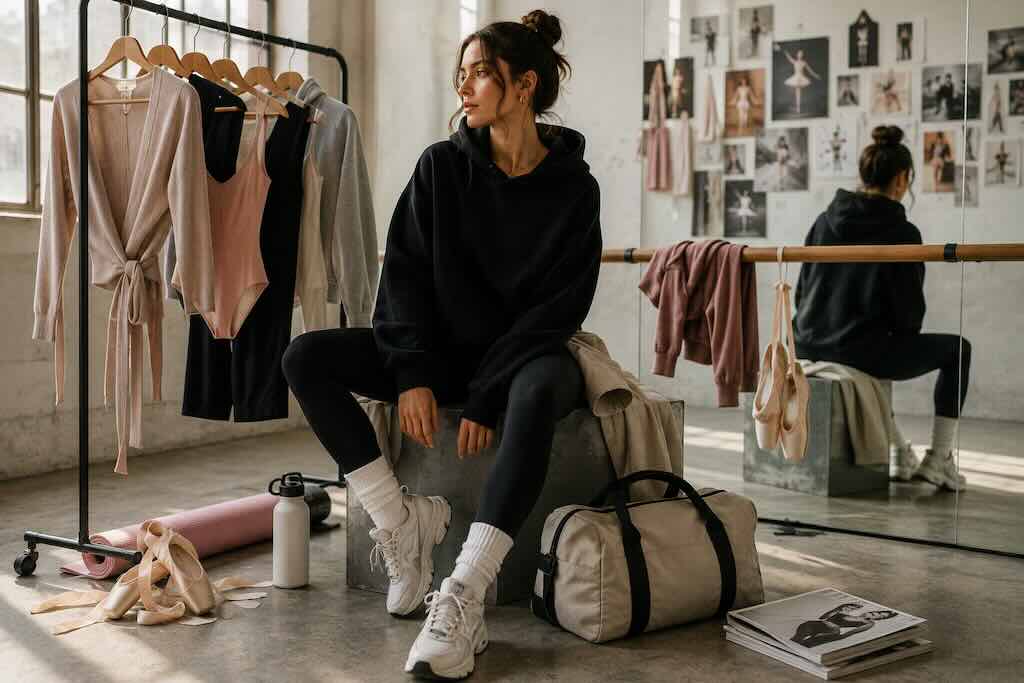
Dancers need to carry more than an everyday handbag typically accommodates: shoes, layers, water, rehearsal clothing, accessories and personal essentials. Spacious duffel-style bags are an obvious practical response.
The duffel itself did not originate in dance culture, but dancers demonstrate why utilitarian bags remain useful. The same principle applies to gym bags, oversized totes and technical backpacks.
Fashion repeatedly absorbs objects built around function. Once materials, proportions and details change, the practical bag can become part of the outfit rather than something carried reluctantly beside it.
6. Ballet Details Continue to Return
Dance’s influence extends beyond obvious activewear. Wrap tops, tights, soft knits, fitted cardigans, ballet flats and delicate layering have repeatedly moved between rehearsal rooms and fashion collections.
This is where the relationship becomes less literal. A contemporary outfit does not need to resemble a ballet costume to carry the influence. Sometimes it appears through a wrap closure. Sometimes it is a flat shoe, a close-fitting knit or the contrast between a structured coat and something soft beneath it.
The most durable ideas tend to survive precisely because they can lose the costume association and function as ordinary clothes.
7. Hip-Hop Shows How Movement and Style Can Become Culture
The relationship between dance and fashion cannot be told entirely through ballet. Hip-hop demonstrates how music, dance, neighborhood style and identity can interact until separating one influence from another becomes almost impossible.
The Smithsonian’s hip-hop fashion collection documents the movement of street style toward mainstream fashion, including the importance of sneakers and the increasingly close relationship between artists and fashion brands.
Breaking, meanwhile, gave clothing a physical test. Garments had to coexist with athletic movement while still carrying the visual identity of the dancer and the wider culture around them.
That combination — movement, identity and practicality — explains much more about dance’s relationship with fashion than the idea that one garment simply moved from a studio to a runway.
How to Bring Dance-Inspired Style Into an Everyday Wardrobe
The easiest approach is not to dress like you are heading to rehearsal. Borrow one element and place it against something with a different character.
- Try a bodysuit with tailored trousers: The close dancewear-inspired line creates contrast against a wider or more structured trouser.
- Wear leggings with intentional layers: A substantial knit, long coat or oversized shirt gives the silhouette structure.
- Use sneakers as the casual counterpoint: Clean footwear can relax tailoring, dresses and more formal outerwear.
- Add a wrap detail: Wrap tops and cardigans reference ballet without turning an outfit into costume.
- Choose one athletic layer: A hoodie or sweatshirt can soften a polished outfit when the proportions remain deliberate.
- Prioritize movement: The strongest lesson from dancewear is not a particular garment. It is clothing that works with the body wearing it.
Conclusion
Fashion does not simply copy the dance floor. The relationship is more fluid than that.
Ballet helped bring leotards, tights, wraps and other streamlined forms into the fashion conversation. Fitness culture pushed leggings and sweatshirts further into everyday wardrobes. Hip-hop and breaking gave sneakers and streetwear an enormous cultural stage.
Across all of them, the same principle keeps returning: clothes designed around movement can look compelling precisely because they have a purpose. Fashion notices. Then it changes the context.
Frequently Asked Questions
Has dance influenced everyday fashion?
Yes. Museum research documents links between ballet practice clothing and mainstream garments including leotards, leggings and wrap designs. Dance and fitness culture also contributed to the wider adoption of athletic clothing as everyday fashion.
Did dancers invent leggings?
No. Leg coverings have a much longer history. The stronger claim is that ballet, dance and later fitness culture helped make modern close-fitting leggings highly visible in twentieth-century fashion.
Did hoodies originate in dance?
No. Dancers use sweatshirts and other warm-up clothing, and dance helped popularize athletic styling, but the hoodie should not be described as a dance invention.
How did hip-hop influence sneaker fashion?
Sneakers became an important element of hip-hop’s visual identity, with artists and dancers helping particular styles gain cultural significance far beyond their original sporting context.
Can you wear dancewear as everyday clothing?
Yes, although performance dancewear and fashion pieces are not always interchangeable. Bodysuits, leggings, wraps, soft knits and dance-inspired flats can be incorporated into everyday outfits without requiring specialist performance clothing.