





The digital transformation in dental care is dramatically reshaping claims processing, bringing greater efficiency, accuracy, and patient convenience. As technological and administrative innovations accelerate, both dental providers and patients stand to benefit. Today’s providers have to keep pace with these rapid developments to remain competitive and ensure seamless service delivery. For those seeking insights on optimizing their dental claims experience, understanding dental insurance claims processing for providers is an essential starting point.
With a surge in automation, more innovative reimbursement systems, and advanced data security solutions, the industry is rapidly shifting from traditional paper-based models to fast, data-driven, and secure workflows. This not only speeds up the reimbursement process but also reduces administrative errors and improves satisfaction for both dental offices and patients.
Healthcare stakeholders are investing in digital tools that streamline claim submissions, reduce denials, and deliver transparency in financial transactions. The emergence of AI and analytics platforms now allows practices to automate much of the adjudication process, minimizing time and labor costs. As a result, providers can focus more on patient care, rather than bureaucratic tasks.
Crucially, digitalization is not just about speed and convenience. Enhanced data security measures are now fundamental to preserving patient trust and maintaining compliance with rigorous privacy regulations. With these advancements, the future of dental claims processing looks more integrated, predictable, and patient-centric than ever before.
AI Integration in Claims Processing
AI is playing a pivotal role in modernizing dental claims processing. Through automation, AI handles repetitive and time-consuming manual tasks such as data entry, analysis, and compliance verification. By scanning claims for potential errors and inconsistencies before submission, AI-powered solutions help dental practices reduce their claim rejection rates and improve cash flow. Recent studies suggest that AI-driven platforms can halve claim rejection rates, enabling practices to redirect resources to patient care and strategic business initiatives.
Furthermore, AI can help dental teams keep up with regulatory changes, flag unusual billing patterns, and ensure claims meet payer guidelines before submission. This digital intelligence not only streamlines processes within the office but also builds in systemic checks that improve overall practice performance. For more on the influence of AI in healthcare billing, Forbes explores AI’s impacts on dental economics and insurance approvals.
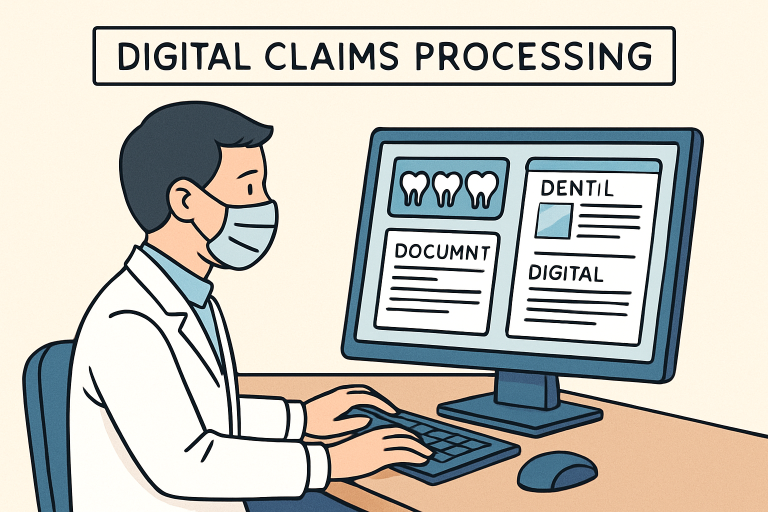
Real-Time Reimbursement Systems
The movement toward real-time reimbursement is eliminating traditional financial bottlenecks in dental care. These solutions instantly verify patient eligibility and treatment coverage, leveraging AI-driven adjudication for prompt claim decisions. Practitioners are increasingly able to predict payment timelines, thereby improving cash flow and reducing billing uncertainty.
Projections indicate that by 2026, real-time reimbursement models will be widespread, helping providers avoid lengthy reimbursement cycles and empowering patients with more transparent billing experiences. By integrating these systems, practices can create seamless revenue cycles, reduce outstanding insurance accounts, and deliver more predictable financial outcomes. This move toward instant reimbursements positions dental practices to meet patient expectations for efficiency and clarity.
Transition from Paper to Electronic Claims
Although a portion of dental claims is still processed on paper, the momentum to keep up with electronic claims is building quickly. Electronic claims submission expedites the payment timeline and reduces administrative costs associated with printing, mailing, and manual data entry. It also enhances the accuracy of submissions and enables more detailed analysis, benefiting both insurance companies and dental providers.
Professional organizations like the American Dental Association highlight that moving to electronic claims processing supports research and industry-wide quality improvement projects. This shift makes information easier to collect, compare, and analyze at scale, enabling continuous improvements in care delivery and claims accuracy. Additional insights can be found on ADA’s official dental claims resource.
Predictive Analytics for Claim Approval
Insurance companies are increasingly using predictive analytics to determine the likelihood of claim approvals. By evaluating diagnosis codes, treatment patterns, and past provider histories, these systems develop risk scores that can inform claims decisions. This technology helps insurers triage claims, target high-risk submissions for closer review, and reduce denials without altering existing policy frameworks.
The benefits of predictive analytics go beyond efficiency. Providers receive more reliable timelines for claim adjudication and can address potential issues proactively, resulting in fewer payment delays and smoother patient financial journeys. Predictive analytics is also driving a broader industry movement toward data-driven decision-making, a trend supported by healthcare research and analytics organizations globally.
Enhanced Data Security Measures
With the extensive adoption of digital records, securing sensitive patient data has become a top priority. New claims processing platforms now incorporate advanced security technologies such as blockchain and homomorphic encryption. These tools encrypt claims data end-to-end, safeguarding information against unauthorized access and ensuring compliance with HIPAA and other privacy regulations.
Incorporating blockchain brings additional benefits such as immutable audit trails, decentralized storage, and cryptographic integrity for every claim interaction. These features help alleviate patient concerns about privacy and establish trust between providers and insurers. For a detailed exploration of advancements in healthcare data protection, visit the journal HealthIT.gov.
Impact of Digitalization on Patient Satisfaction
Going digital has tangible impacts on patient satisfaction. Electronic claims submissions mean patients receive decisions and reimbursements more quickly, making the process more transparent and less stressful. Digital solutions often offer user-friendly portals where patients can check claim statuses and submit inquiries, giving them greater control and information throughout the billing process.
Despite these improvements, there is still room for practices to enhance communication by providing proactive updates and clear explanations of claim progress. Aligning technology with patient needs will continue to raise satisfaction levels, which is crucial as consumers increasingly demand smooth, tech-enabled healthcare experiences.
Future Trends in Dental Claims Processing
The digital transformation of dental claims processing is still accelerating. By 2025, nearly 70% of dental practices are expected to adopt AI-powered billing and automation solutions. This will drive further efficiencies, shrink reimbursement timelines, and set new standards for transparency in financial communications with patients.
Moreover, as more organizations switch to cloud-based platforms and interoperable systems, the industry will transition toward a more unified data ecosystem. Dental offices that adopt and adapt to these technological trends will find themselves better equipped to deliver high-quality care while maintaining strong financial health.
Dental practices prepared to leverage these innovations will not only optimize operational efficiency but will also enhance the patient experience, ensuring they remain at the forefront of industry advancements.