




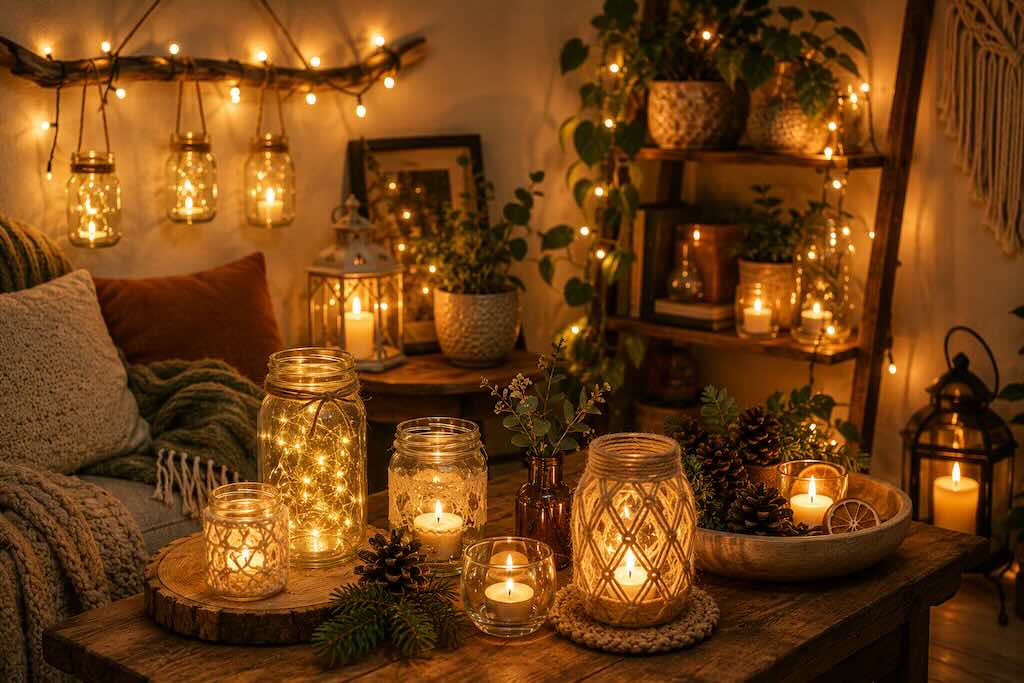
Good lighting changes a room before you move a single piece of furniture. A dark corner becomes useful. A bookshelf gains depth. Warm pools of light soften the edges of an evening and make familiar rooms feel quieter.
You do not need to rewire the house to create that effect. Simple DIY lighting projects can work with rechargeable lamps, low-heat LEDs, existing glassware and materials already sitting in cupboards. The key is knowing where creativity ends and electrical safety begins.
Start With Layers, Not Brightness
A cozy room rarely relies on one powerful ceiling fixture. Instead, light appears at different heights: a lamp beside the sofa, a small glow across a shelf and perhaps another source near the floor or dining table.
Before making anything, look at the room after sunset. Notice where it becomes flat or uncomfortably dark. Those areas are better starting points than adding decorative lights everywhere at once.
Warm-white LEDs are particularly practical for decorative projects because they are available in low-voltage and battery-operated formats. For electrical fixtures, always use components for their intended purpose and follow the manufacturer’s installation instructions.
1. Turn Glass Jars Into Soft LED Lanterns
Clean glass jars can become understated lanterns with a short strand of battery-operated micro LEDs. Clear glass produces crisp points of light, while frosted glass creates a softer effect.
Try grouping two or three vessels of different heights on a shelf or sideboard rather than scattering them around the room. Keeping the glass similar in color gives the arrangement a more intentional appearance.
Battery-operated LEDs are the simpler option here. Avoid improvising electrical connections or enclosing mains-powered equipment inside containers that were not designed for it.
2. Use String Lights as Architectural Detail
String lights become more interesting when they follow the architecture rather than floating randomly across a wall. Trace a bookshelf, frame a deep window or weave a fine strand through an open shelving unit.
Keep the cable discreet and avoid overcrowding the surface. A sparse line of warm light can produce more atmosphere than a dense curtain of bulbs.
For outdoor installations, only use lights and power equipment specifically rated for outdoor conditions.
3. Repurpose Glassware With Flameless Candles
Old tumblers, jars and decorative glass vessels can become small points of ambient light when paired with appropriately sized flameless LED candles.
Arrange several vessels on a tray and vary their heights. Amber, smoked or textured glass produces particularly warm shadows and can make inexpensive battery lights feel considerably softer.
Flameless candles are also useful when you want to decorate with dried flowers, paper, textiles or other combustible materials that should never sit close to an open flame.
4. Make Paper Lanterns Without Open Flames
Paper offers enormous freedom for shape, shadow and color. Fold cardstock into geometric lanterns, create simple perforated sleeves or experiment with translucent papers that diffuse light.
The important rule is straightforward: pair paper projects only with suitable cool-running battery-operated LED lights. Never place an open flame inside a paper lantern, and do not position paper against hot bulbs or electrical components.
5. Create a Removable Wall Light
A dark hallway or reading corner can sometimes benefit from light without requiring permanent electrical work. A rechargeable wall lamp or battery-operated puck light can provide the functional component, while a simple wooden backing plate or existing wall shelf provides the visual structure.
This is a useful boundary for DIY projects: customize the decorative mounting rather than modifying the electrical hardware itself.
For renters, removable rechargeable lighting can also add another layer of illumination without opening walls or altering fixed wiring.
6. Bring Natural Materials Into the Composition
Wood, branches and stone can soften the technical appearance of decorative lighting. Place a low-voltage LED strand around a tabletop arrangement of branches, for example, or combine warm lights with pinecones in an open decorative bowl.
A branch suspended above a dining table can also become a sculptural feature, but anything mounted overhead must be securely supported. Keep combustible natural materials away from hot light sources and open flames.
7. Turn a Bottle Into a Rechargeable Table Lamp
One of the simplest ways to give an old bottle or vessel another purpose is to pair it with a removable rechargeable lamp top designed for that use.
Choose a stable, heavy container with a wide enough base to resist tipping. Ceramic and textured glass can produce a more substantial look, while colored glass changes the character of the light after dark.
8. Create a Reading Corner With Three Levels of Light
Not every DIY lighting project needs to involve making a fixture. Sometimes the more effective project is rearranging what you already own.
Start with a practical reading lamp positioned to illuminate the page. Add a smaller ambient source on a shelf or side table, then allow a third, softer light to sit farther into the room. The variation in height creates depth while preserving enough task lighting to make the corner genuinely useful.
This layered approach works particularly well with the ideas in Divine Magazine’s guide to creating cozy corners with DIY decor.
A Quick Safety Check Before You Switch On
- Use electrical products according to their manufacturer instructions and intended environment.
- Choose outdoor-rated equipment for exterior spaces.
- Keep paper, dried foliage, fabric and other combustible materials away from open flames and hot components.
- Do not improvise mains wiring, plugs, sockets or electrical connections.
- Replace damaged cables, plugs and light sets rather than attempting unsafe temporary repairs.
If a project requires altering permanent wiring or installing a mains-powered fixture, use an appropriately qualified professional where required. Decorative DIY and electrical installation are not the same task.
Conclusion
Cozy lighting comes from contrast. A warm lamp beside a chair feels intimate because the entire room is not equally bright. A small illuminated shelf draws attention because darkness remains around it.
Work with those layers. Reuse glass and natural materials, experiment with rechargeable and low-voltage LEDs, and let shadow remain part of the room. A few carefully positioned lights can change the atmosphere more convincingly than another bright fixture overhead.
FAQ
What is the easiest DIY cozy lighting idea?
Battery-operated micro LEDs placed inside suitable decorative glassware are one of the simplest options. They require little assembly and can be moved between shelves, tables and seasonal displays.
What color temperature feels cozy?
Warm-white lighting is commonly used when creating a softer residential atmosphere. The effect also depends on brightness, placement, lampshades, wall colors and the other light sources in the room.
Can I make lamps from jars and bottles?
Yes, but the safest simple approach is to use removable battery-operated or rechargeable lighting products designed for decorative applications. Avoid improvising mains-powered electrical assemblies.
Can DIY lighting be used outdoors?
Only use lights, cables, power supplies and other components specifically rated for the outdoor conditions in which they will be used. Indoor decorative lights should not simply be moved outside.
How can I make a room feel cozy without adding more lights?
Reposition existing lamps at different heights, reduce unnecessary overhead lighting and use shades or indirect placement to soften glare. Creating distinct pools of light can make a room feel warmer without increasing the number of fixtures.