




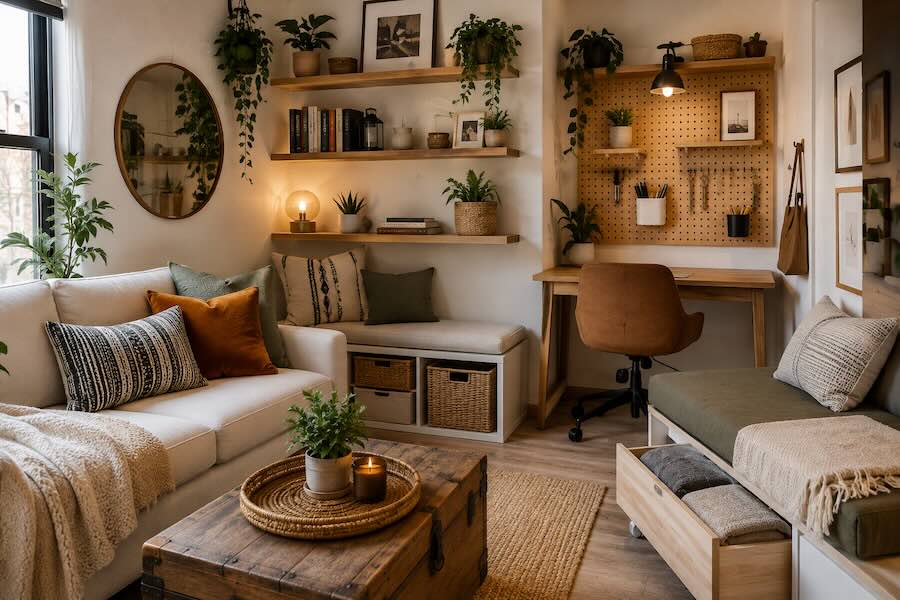
Living in a small space does not mean stripping a room of personality. Limited square footage can actually sharpen the design process: every shelf, surface and piece of furniture has to earn its place. With a few considered DIY projects, even a compact apartment can feel calm, useful and distinctly personal.
Why DIY Works So Well in Small Spaces
Ready-made furniture is designed around standard dimensions. Small homes rarely behave so neatly. An awkward corner, narrow wall or shallow alcove can become useful when a piece is built specifically around it.
- Customization: DIY lets you adapt storage and furniture to your unique space and decorating style.
- Budget control: Reusing existing furniture or working with simple materials can cost less than replacing everything.
- Personality: Handmade details introduce texture, color and character without filling the room with unnecessary objects.
- Smarter storage: Many DIY projects can exploit walls, corners and overlooked spaces instead of consuming valuable floor area.
That vertical approach remains particularly relevant. Designers increasingly treat walls and ceiling height as usable territory in compact homes, using shelving and other elevated elements to add function without crowding the floor.
5 Clever DIY Decor Ideas for Small Spaces
1. Install Floating Shelves for Vertical Storage
When floor area is scarce, look upward. Floating shelves turn an otherwise blank wall into storage for books, ceramics, plants and everyday objects while keeping the footprint underneath clear. This is particularly useful when creating a cozy studio apartment.
DIY tip: Keep the shelf depth proportional to the room and choose a finish that relates to something already present, such as the flooring, kitchen worktop or furniture. Painting shelves the same color as the wall can make the installation feel quieter and more architectural.
For heavier shelving, always use fixings appropriate for the wall construction and expected load rather than relying on decorative brackets alone.
2. Position Mirrors Where They Can Work Harder
Mirrors can alter the visual depth of a compact room and redistribute available daylight. Placement matters. A mirror positioned opposite or near a window can catch natural light and send it deeper into the room.
DIY tip: Give an inexpensive or secondhand mirror a new frame using timber trim, or create a small gallery arrangement from mirrors with complementary shapes. One substantial mirror can also feel calmer than a collection of tiny pieces when the surrounding wall is already visually busy.
3. Turn a Pegboard Into Flexible Wall Storage
A pegboard sits somewhere between storage and decoration. Hooks, narrow shelves and baskets can be moved as your needs change, making the system particularly useful in kitchens, craft corners, entryways and a compact home office.
DIY tip: Paint the board in the same tone as the wall for a restrained finish, or use a contrasting earthy shade to turn it into a graphic focal point. Leave some empty space between objects; filling every available hole quickly makes a small wall feel cluttered.
4. Make Furniture Perform More Than One Job
A small home rarely has room for furniture that serves only occasional purposes. A bench can provide seating and concealed storage. A dining table can become a desk. An old trunk can function as both a coffee table and somewhere to keep blankets.
DIY tip: Before buying another piece of furniture, consider whether something you already own can be modified. Adding a hinged upholstered top to a storage box, fitting shelves beneath a console or adapting a bench can introduce another function without adding another object.
This principle works especially well with smart storage coffee tables for small spaces, where concealed compartments keep frequently used objects close without leaving them scattered across the room.
5. Use the Space Under the Bed
The area beneath a bed is some of the most valuable concealed storage in a compact bedroom. Instead of letting it become a dusty collection of forgotten boxes, turn it into an organized extension of the wardrobe.
DIY tip: Build shallow plywood drawers or crates and attach low-profile casters underneath. They can hold seasonal clothing, spare bedding, shoes or bags while remaining easy to pull out. Measure the lowest point of the bed frame before building anything, including enough clearance for wheels and handles.
Do Not Assume Everything Has to Be Small
One of the more interesting shifts in small-space design is the move away from filling compact rooms exclusively with miniature furniture. Too many undersized pieces can produce visual noise rather than openness.
A stronger approach can be to use fewer pieces with carefully considered proportions. One comfortable sofa with concealed storage may make more sense than several tiny chairs and tables. A large mirror can create a cleaner visual statement than five small ones. The room should feel composed, not reduced to dollhouse scale.
Keep the Floor Visually Quiet
The eye notices circulation almost immediately. When bags, furniture legs, storage boxes and cables occupy every strip of visible flooring, a room can feel tighter than its actual dimensions.
Wall-mounted shelves, raised furniture, concealed storage and carefully positioned lighting can restore some breathing room. Meanwhile, preserving an obvious walking path makes the layout feel intentional rather than squeezed into place.
A Practical Small-Space Decorating Plan
Before reaching for the drill, spend a day observing how the room actually works. Notice where objects accumulate, which corners remain empty and which pieces of furniture are rarely used.
Then solve those specific problems. Add vertical storage where clutter gathers. Put concealed storage beneath furniture. Position a mirror where it can catch daylight. Adapt existing furniture before buying something new. Small-space design becomes far easier when every project responds to a real need.
Conclusion
A compact home does not need to imitate a larger one. Its strength can be intimacy: warm light across a wall, a beautifully organized shelf, clear floor space and furniture chosen with precision.
The most effective DIY ideas are often the least complicated. Use the height you already have, create storage in overlooked places and let fewer objects perform more functions. The result can feel spacious without losing the character that makes a home yours.
Frequently Asked Questions About Small-Space Decor
How can I make a small room feel bigger?
Keep circulation paths clear, use vertical storage, position mirrors to reflect available light and avoid filling every surface. Furniture raised on legs can also expose more flooring and create a lighter visual footprint.
Do small rooms have to be painted white?
No. Light colors can produce an airy effect, but darker and richer colors can make a compact room feel intimate and deliberate. The relationship between lighting, furniture, texture and color matters more than following a blanket rule that every small room should be white.
Should I use small furniture in a small apartment?
Not exclusively. A few appropriately scaled pieces can create a cleaner composition than numerous small items. Prioritize furniture that fits the room’s proportions, leaves usable circulation space and ideally performs more than one function.
What is the best storage for a small bedroom?
Under-bed drawers, floating shelves, wall-mounted storage and multifunctional bedside furniture are useful starting points. The best solution depends on what you actually need to store and which areas of the bedroom are currently unused.
How can I reduce clutter in a small apartment?
Give frequently used objects designated storage, remove items that no longer serve a purpose and avoid treating every empty surface as display space. Concealed storage is particularly valuable because it keeps necessities accessible without adding visual noise.