


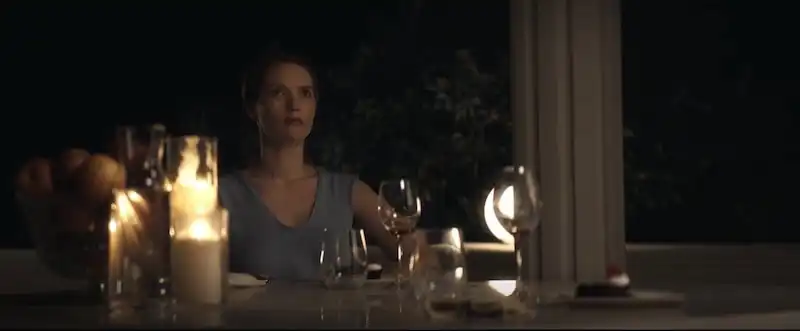
Close your eyes and imagine you are drinking an exquisite bottle of wine. Three luscious flavours of rare grapes, three different densities, three different feelings, all merge in one. Janis Joplin plays balmily in the background. You are transported to a different realm. Where do you think you imagine yourself and with whom?
“Le vin, c’est comme la musique. Il te connecte avec tes émotions,” the sommelier and protagonist, Camille Léger, says, in the midst of an informal wine tasting sojourn of sorts with Davit, the mercenary antagonist who wants to dismantle the production of a rare, extraordinary wine produced in the countryside of Georgia to settle scores with his estranged sister, who produces the wine in their family qvevris.
The first season of Oden Ruskin’s adaptation of the manga Kami no Shizuku by Tadashi Agi aired in April 2023 as Apple TV’s Drops of God. Drops of God seems at first like one of those slower, aesthetic-laden dramas, but the story is nothing but sharp, riveting, and rich. It is luxury TV, with the stakes of the plot being a million-dollar wine collection, but the real prestige is not what you think it is. Spanning Tokyo, Paris, and Provence, the first season follows an intense series of wine tasting competitions that Alexandre Léger, Camille’s father, sets up for her and his esteemed pupil, Issei Tomine, for inheriting his huge wine collection and his revered wine guide. Long story short, it turns out Issei and Camille are half-siblings, and their father, like most entitled white old men, was a jerk.
Drops of God, the plot –
Months after the competition, Issei and Camille are on a quest to find the origins of a mysterious and one-of-a-kind wine of a forgotten grape variety that Alexandre has sent them from his grave. Passive-aggressive and competitive still, Camille and Issei trace the roots of the wine to countryside Georgia, where they learn that the wine is called Herbemont and is produced by a local woman, Tamar Abashidze, and her family. To Tamar, her wine is sacred and magical even since it is a product of generational artisan practices. Camille and Issei learn that soon the production of the wine will stop because of Davit’s grudge and capitalistic pursuit.
The show builds momentum in the last three episodes when Camille steals a bottle of Hebermont to launch it commercially through a vintage-wine competition without Tamar’s consent, hoping that Davit would reconsider selling the cellars and the land and stop the production once the wine becomes an international success. What happens in the finale is a lesson disguised as a sublime tragedy, but the core philosophical contention of the show lies in the two different beliefs of women who are both devoted to wine: one who will go above and beyond to preserve the wine from extinction, even if it means betraying the values the wine holds, and the other who will cherish the truth and spirituality the wine represents, even at the cost of its material death.
Visual storytelling at its peak
The show narrates in a very Proustian fashion the nature of good wine and how it is connected to a memory, truth, and sheer human serendipity. Great cinematography doesn’t have to be expensive sets and mind-twisting camera work in the Nolan-esque manner; it can be simple and still, yet pristine in the meaning it conveys.
When Issei first sips the Herbemont, he has a vision. The background behind him blurs, and pensive music slowly ascends as Issei looks out of the window at the cream, plump, full moon, and suddenly the music stops, and Issei is in the middle of the ocean, water to his shoulders, gazing at the moon across the Prussian blue horizon. The shot, of course, is tranquility personified, yet there is a modicum of uneasiness in the scene.
The show builds on Issei’s story from season one, where he grappled with his heritage, his draconian mother’s behavior towards him, and his search for purpose in life. Drinking the Herbemont evokes a vision that allows him to access a memory, a memory of his mother attempting to drown him in the ocean when he was a child. Issei thinks that the memory was a fabrication of his mind until the wine settles the dust of nostalgia and allows him passage to not just a memory but the deep-rooted trauma and devastation that reside within Issei’s subconscious and even somewhat heals him. The show brings together three of its vital elements: Issei, wine, and striking shots of nature, natural beauty being a supplementary delight aside from being a plot device.
The show has a plethora of montages and subplots that, though do not directly add to the plot, help establish the worldview. In the first episode, when Issei visits Spain to meet Juan Lopez, the shot begins with Juan’s son Lorenzo, who has but one scene in the entire show, an irrelevant character, yet we are shown that he is practicing Flamenco. It is a sharp montage of a young boy in a loose, feminine, red polka-dotted outfit, tap-dancing with astute fierceness. We think this shot does nothing to serve the plot; it’s true, but it establishes the show’s worldview, which in turn delivers efficacy. What is the worldview? The show, its characters, and its spirit celebrate artists of all kinds and understand the dedication and soul that goes into art and culture that preserve humanity.
Luxury and wine do not come out of thin air
Camille and Issei play art detectives in the first two episodes and map the wine to Georgia using a beekeeper’s help to identify the beeswax used for the cork of the bottle, an ancient method of fitting corks. The show devotes some genuine thought to a conversation around apiculture. It weaves in its narrative the culture of monasteries in Georgia, a family Supra, the underground qvevris, small colloquial ways of life, and uses the vocabulary of climate change and agricultural deterioration to speak about nature and luxury. For example, we are told in the second episode by the guide at the Vassal Research Center that by 2050, ocean levels will rise, and land used to grow grapes will have to be shifted. After Issei and Camille verify that the wine is produced from the Herbemont plant, the guide tells them that the reason why the French Government banned wine production from the plant was economic. Shocking. The plant was apparently resistant to all diseases; it was a threat to the pesticide industry.
The show maintains a safe distance from becoming political on the face, but it does remind you how seminal the environment is, as an affordance to the luxury market. From Thomas’s biodynamic and eco-responsible Chassangre estate to Tamar’s philosophical piety to her wine, the show tells us that luxury products that reach us are born out of artistic meditation and the divinity of the Earth, both of which are ironically at threat by the similar forces perhaps that drive luxury corporates. Perhaps luxury then does not lie in keeping up with the Kardashians, but rather in keeping up with artisanal practices and what we are doing to the Earth. What are the drops of God, after all? In the first season, the drops were rain, without which there is no wine. In this season, the drops of God are the drops of Herbemont.
“This wine doesn’t belong to us. Not to my brother, not to me. It belongs to God,” Tamar says when she shows Camille and Issei the underground cellar where she lets wine ferment. The wine is truth, memory, human bliss, heritage and more.
Drops of God has all the qualities of a luxury-oriented show, where characters are rich, wear good clothes, participate in golf, a rather upper-class vintage wine competition is at the precipice of the show, and of course, at the end of the day, we take a vicarious tour across the best of Greece, Spain, Marseille, Japan, and Georgia. However, the creators show us that at the heart of it all, what makes wine special, is that it is consecrated by family traditions and environmental gifts.
:root { –primary: #2d3436; –accent: #6c5ce7; –bg-glass: rgba(255, 255, 255, 0.9); –text: #4a4a4a; } .author-card { max-width: 600px; margin: 2rem auto; padding: 3rem; background: var(–bg-glass); backdrop-filter: blur(12px); border-radius: 24px; border: 1px solid rgba(255, 255, 255, 0.4); box-shadow: 0 20px 45px rgba(0,0,0,0.06); font-family: ‘Inter’, -apple-system, system-ui, sans-serif; line-height: 1.7; color: var(–text); position: relative; } /* Decorative side accent */ .author-card::before { content: “”; position: absolute; top: 40px; left: 0; width: 5px; height: 60px; background: var(–accent); border-radius: 0 4px 4px 0; } .profile-section { display: flex; align-items: center; gap: 24px; margin-bottom: 2rem; } .author-img { width: 100px; height: 100px; border-radius: 50%; object-fit: cover; border: 4px solid white; box-shadow: 0 8px 20px rgba(0,0,0,0.1); flex-shrink: 0; } .author-header h1 { font-size: 2rem; font-weight: 800; color: var(–primary); margin: 0; letter-spacing: -0.8px; } .author-title { font-size: 0.85rem; text-transform: uppercase; letter-spacing: 2px; color: var(–accent); font-weight: 700; display: block; } .author-bio p { margin: 1rem 0; font-size: 1.05rem; } .highlight { color: var(–primary); font-weight: 600; box-shadow: inset 0 -6px 0 rgba(108, 92, 231, 0.1); } .topics { display: flex; flex-wrap: wrap; gap: 10px; margin-top: 2rem; padding-top: 1.5rem; border-top: 1px solid #eee; } .topic-tag { background: #f8f9fa; padding: 6px 14px; border-radius: 12px; font-size: 0.8rem; font-weight: 600; color: #636e72; border: 1px solid #edf2f7; transition: 0.3s; } .topic-tag:hover { background: var(–accent); color: white; border-color: var(–accent); transform: translateY(-2px); } @media (max-width: 500px) { .profile-section { flex-direction: column; text-align: center; } .author-card { padding: 2rem 1.5rem; margin: 1rem; } }