


Fall 2026 fashion feels less interested in prescribing a single aesthetic than it does in giving clothes personality again. After seasons dominated by restrained wardrobes, the current collections are playing with proportion, romance, texture, color and pieces designed for actual cold weather.
That makes the season unusually easy to personalize. A sculptural coat can change the outline of familiar jeans. Lace can sit beside heavy leather. Olive can replace black without becoming difficult to wear. A scarf can move from practical layer to the detail that holds an outfit together.
The point is not to dress for a particular body type or reproduce a runway look exactly. It is to notice which ideas make you want to get dressed.
Editor’s note: This guide has been updated for September 2026 using the fall/winter collections and current seasonal reporting, replacing speculative trend language with silhouettes, colors and styling ideas visible on the runway and street style.
1. Sculptural Proportions Change the Silhouette
Volume is one of fall’s clearest tools for changing how an outfit feels. The fall 2026 collections highlighted by Vogue include cocoon-like tailoring, exaggerated shapes, cropped proportions and fuller trousers and dresses.
You do not need to wear all of those elements together. In fact, one exaggerated proportion usually has more impact.
Try a rounded coat above straight trousers, a cropped structured jacket with a longer skirt, or wide trousers beneath a relatively close-fitting knit. A high funnel neck is another easy way to introduce architecture around the face without turning the entire outfit into a statement.
The useful idea here is not that larger clothes make someone more powerful. It is simply that proportion can change posture, movement and the amount of visual space a garment occupies.
2. Cold-Weather Texture Becomes Part of the Look
Fall fashion occasionally forgets that autumn eventually becomes winter. The 2026 collections have been rather more practical.
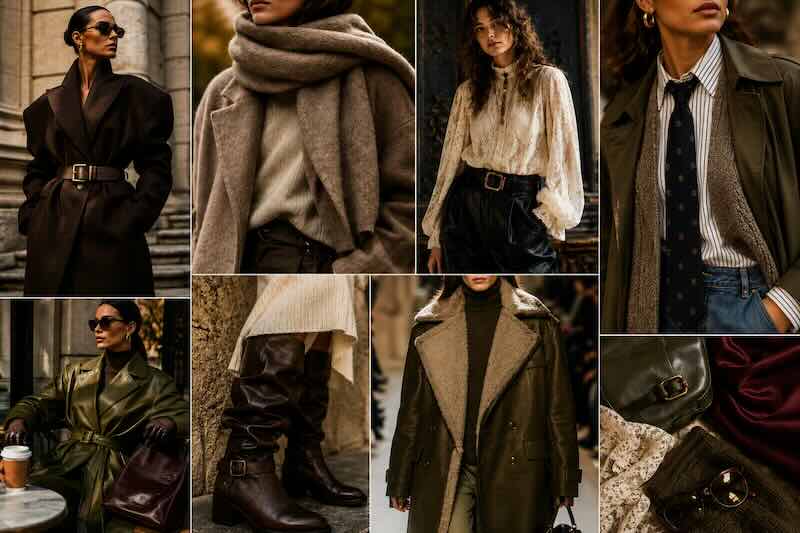
Shearling, soft wool, tactile knits, velvet and plush surfaces bring depth to a season when daylight becomes flatter and layers become heavier. The effect is particularly good when textures are mixed rather than repeated: smooth leather against fuzzy knitwear, crisp cotton beneath wool, or velvet beside worn denim.
Scarf coats also appeared prominently at Copenhagen’s fall 2026 shows, alongside shearling and other pieces designed around genuinely cold conditions.
An integrated scarf is appealing because it changes the outline of a coat while serving a practical purpose. For a less committed version, drape a large wool scarf over a simple coat and work with pieces already in your wardrobe.
3. Romantic Fabrics Look Better With Friction
The bohemian mood has not disappeared, but fall’s more interesting version is less floaty and more complicated.
Lace, sheer fabrics and historically influenced details appeared across the fall collections, including at Saint Laurent, McQueen and Loewe. Rather than styling them as complete romantic looks, contrast gives these fabrics a contemporary edge.
A lace blouse can meet dark denim. A sheer skirt can sit beneath substantial knitwear. A delicate dress can be grounded with a leather jacket or sturdy boots.
The tension is what makes the outfit interesting: transparent against opaque, polished against weathered, delicate against substantial.
This is also a useful way to bring older pieces back into circulation. Before buying another romantic blouse or dress, look at what is already hanging in the wardrobe and change what surrounds it.
4. Prep Returns With a Looser Attitude
Preppy references continue into 2026, but they need not be treated as a costume built around a fictional country club.
Striped rugby shirts, twinsets and collegiate references appeared in the pre-fall collections. The easiest translation is through familiar layers: collared shirts, cardigans, tailored coats, pleated skirts, relaxed trousers and loafers.
A tie can work as an accessory rather than a symbol of formal office dressing. Wear one loosely with denim, beneath a cardigan or with an oversized shirt. A silk scarf can perform a similar role, especially given the renewed experimentation with scarf dressing this season.
Keep something undone. Perfectly matched prep can feel theatrical; an open collar, worn denim or relaxed knit gives it more life.
5. Olive Is One of Fall’s Most Useful Colors
Invented seasonal color names come and go quickly. Olive has a better argument because it is both visible in current collections and easy to integrate into an existing wardrobe.
ELLE’s fall 2026 trend coverage points to olive across outerwear, dresses, bags and shoes. It works almost like a neutral but brings more depth than standard black or navy.
Pair it with cream for softness, burgundy for richness, denim for ease or black for a sharper contrast. Tonal combinations of olive, moss and muted brown can be particularly effective because the colors shift subtly as different materials catch the light.
6. Outerwear Is Becoming More Expressive
A good autumn coat does most of the visual work once temperatures drop, and designers appear to understand that.
Funnel necks, large collars, scarf coats and shearling have all emerged as notable outerwear ideas. At the sportier end, colorful windbreakers appeared at fall 2026 collections including Loewe and Miu Miu, bringing an unexpectedly bright, technical layer into the season.
That creates two useful directions. You can choose an architectural coat that shapes the entire outfit, or introduce a practical technical jacket in a color that interrupts otherwise restrained clothing.
Either way, consider the climate first. A beautiful coat that cannot handle the weather where you live will spend too much time indoors.
7. Boots Become Practical Again
Footwear this season has room for polish without pretending pavements remain dry from September until spring.
Current fall/winter 2026 boot reporting includes riding boots, slouchy suede and leather, Western influences, earthy olive shades, cream leather and even Wellington boots styled with more polished clothing.
The useful lesson is contrast. A practical boot does not require an entirely utilitarian outfit. A substantial hiking-inspired shoe beneath a soft skirt or a riding boot with an oversized knit can make both pieces feel fresher.
If you are deciding what deserves space in the wardrobe, Divine’s guide to choosing the right shoes for different occasions can help move the decision beyond appearance alone.
8. Tonal Dressing Gets More Interesting Through Texture
Minimal dressing has not vanished. It has simply become less sterile.
A tonal outfit can contain camel, tobacco and deep brown rather than one perfectly matched shade. Olive can move through moss and khaki. Burgundy can soften towards rust or deepen towards oxblood.
Texture prevents these combinations from becoming flat. Wool absorbs light differently from leather; silk catches it; brushed knitwear softens everything around it.
This is one reason an outfit built almost entirely from one color family can still feel complex.
9. Vintage and Reworked Clothing Make Trends More Personal
One of the simplest ways to avoid looking as though an entire outfit arrived in the same delivery box is to mix periods.
A worn leather jacket, older silk scarf, inherited jewelry or secondhand wool coat brings variation in surface and cut that can be difficult to reproduce with completely new clothing.
There is an environmental reason to look at clothing already in circulation too. The European Environment Agency’s work on textiles highlights the substantial resource and environmental pressures associated with textile consumption in Europe and the importance of moving towards more circular systems.
That does not make every vintage purchase sustainable by definition. It does make extending the useful life of clothing a sensible consideration when deciding whether something new is actually necessary.
Divine’s guide to minimalism in beauty and fashion offers another way to think about buying less without removing personality from a wardrobe.
How to Wear Fall 2026 Trends Without Rebuilding Your Wardrobe
- Choose one new proportion. Try a funnel-neck jacket, wider trouser or rounded coat before combining several exaggerated shapes.
- Create contrast with texture. Put lace beside leather, velvet beside denim or a polished skirt beneath a substantial knit.
- Work tonally. Combine neighboring shades rather than searching for exact color matches.
- Use accessories to test a trend. A scarf, tie, olive bag or textured boot can change familiar clothes without requiring an entirely new outfit.
- Shop your own wardrobe first. Trends often become useful when they provide a new way to style something you already own.
- Ignore rules based on body shape. Pay attention to movement, comfort, proportion and the silhouette you enjoy instead.
If your wardrobe needs a broader reset, these eight ways to make a wardrobe feel fresh are a useful place to begin before shopping.
Conclusion
The strongest fall 2026 trends leave room for interpretation. Volume can be dramatic or subtle. Romance can mean lace beneath leather rather than a complete bohemian look. Practical outerwear can be colorful. Prep can be loosened. A tonal wardrobe can become richer simply by changing texture.
That freedom is more useful than another rigid list of things everyone supposedly needs to buy.
Take the silhouette that changes how you stand, the color that looks beautiful in autumn light or the coat you genuinely want to live in when temperatures fall. Leave the rest on the runway.
FAQ: Fall Fashion 2026
What are the biggest fashion trends for fall 2026?
Key themes include sculptural proportions, expressive outerwear, tactile fabrics, romantic lace and sheer details, updated prep, tonal styling and practical cold-weather pieces. Olive is also emerging as a useful seasonal color.
How can I wear fall trends without buying lots of new clothes?
Start with styling rather than shopping. Change proportions, layer contrasting textures, add a scarf or tie, combine neighboring colors and bring older pieces back into rotation. If you buy something, choose a piece that works with several things you already own.
What colors are fashionable for fall 2026?
Olive is particularly useful this season, alongside autumnal browns, burgundy, cream and brighter color-blocked combinations. Rather than treating a single shade as compulsory, choose colors that work with your existing wardrobe and complexion.
How do I make oversized clothes look intentional?
Create contrast in proportion. A voluminous coat can sit over a simpler base, while wide trousers can work with a more fitted or cropped upper layer. Pay attention to shoulder placement, sleeve length and trouser hems so deliberate volume does not become poor fit.
Do I need to dress for my body type?
No fixed body-shape system is necessary. It is usually more useful to consider comfort, movement, garment fit and the proportions you personally enjoy. Alterations can also make familiar clothes work better without requiring a completely different style.