

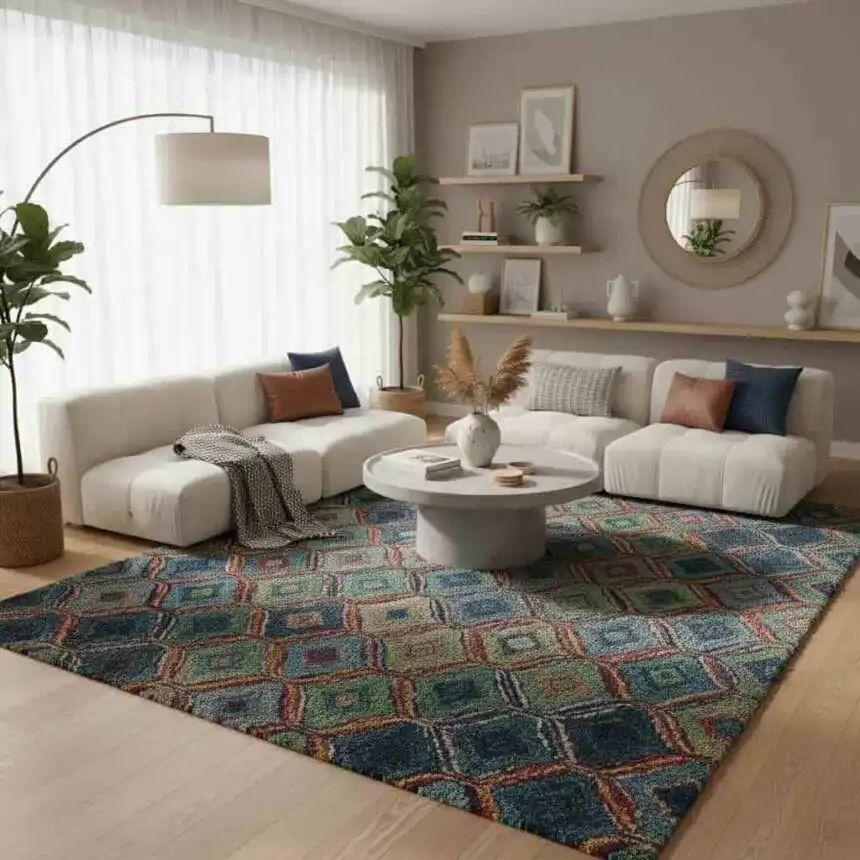
The right rug can instantly transform your space, adding warmth, texture, and personality to any room. But with so many options in size, style, and material, finding the perfect rug can feel overwhelming. In this article, our experts share practical tips on how to choose the ideal rug for your home—so you can enhance your décor, maximize comfort, and make every room feel inviting.
Many homeowners find selecting the right rug overwhelming, but you can simplify the process by focusing on color, size, material, and layout to suit your lifestyle and decor. This guide gives clear, practical tips so you can assess patterns, measure seating areas, pick durable fibers for pets or allergies, and place rugs to enhance flow and comfort—helping you make confident choices that elevate your living room’s look and function.
Unveiling the Impact of Color and Pattern
Color and pattern determine whether your rug ties the room together or competes with it; use the 60-30-10 rule—60% dominant tone (walls/floor), 30% secondary (sofa/large pieces), and 10% accent (rug or cushions)—to balance hues. Neutral bases create cohesion across wood, leather, and painted surfaces, while a high-contrast rug serves as a deliberate focal point. Test swatches in both daylight and evening light, as north-facing rooms tend to appear cooler, while south-facing rooms noticeably warm up colors.
Choosing Colors That Complement Your Space
Match rug undertones to existing finishes: pair warm-leaning wood with ochres, terracotta, or warm grays, and cool stone or concrete with blues, slate, or cool taupes. Bring at least three small swatches into the room and view them at multiple times of day; a rug with 20–30% of a dominant furniture color will feel intentional rather than accidental. You can also use a vintage multi-color rug to bridge disparate hues across furniture and wall colors.
Patterns That Enhance or Detract from Design
Scale matters: in rooms under 12 feet wide, avoid oversized medallions that overwhelm; opt for small repeats or low-contrast motifs that hide wear and stains. Large-format geometric or floral patterns work well in open-plan spaces—think a 9×12 rug in a 15×20 seating area—to anchor distinct zones. Coordinate pattern density with furniture: busy prints pair best with solid upholstery, while plain rugs allow patterned sofas to shine.
Consider pattern direction and visual flow: stripes aligned with the room’s long axis elongate the space, high-contrast patterns create energy but can make traffic paths feel busier; and busy, small-scale weaves (e.g., 1/4–1/2 inch repeat) conceal pet hair and spills better, a practical advantage if you host kids or pets frequently.
More Read

Finding the Perfect Fit: Rug Size Matters
Pick a rug that directly corresponds to your seating footprint:5×8 rugs work well for small conversation nooks, 8×10 anchors a typical living room with a sofa and two chairs, and 9×12 suits larger layouts or open-plan spaces. Aim for a rug that visually connects furniture rather than one that floats awkwardly; this creates a cohesive focal area and prevents the room from feeling disjointed.
Measuring Your Space for Optimal Rug Size
Measure your seating area from outer edge to outer edge and note overall room dimensions, then test with painter’s tape or a folded bed sheet to visualize coverage. For example, in a 12×15 room you’ll often find an 8×10 rug leaves balanced borders, while a 10×14 or 9×12 suits rooms around 15×20. Also measure sofa length and coffee table placement to ensure the rug will extend beneath key pieces.
Balancing Proportions with Furniture Layout
Anchor seating by placing at least the front legs of sofas and chairs on the rug or, for a more unified look, fit all furniture legs on a larger rug; both approaches change perceived scale. Keep walkways of 18–36 inches between major pieces and match rug shape to room geometry—square or round rugs for square rooms, rectangular rugs for long rooms—to maintain visual balance.
In practice, arrange furniture, then size the rug: a standard three-seat sofa (about 84–90 inches) pairs well with an 8×10 to have front legs on the rug, while an 18×20 spacious room often needs a 9×12 or larger so every piece sits fully on the rug. With sectionals, measure the full L-shape and choose a rug that extends at least to the coffee table edge so the grouping reads as one anchored area rather than disconnected pieces.
Material Matters: Understanding Your Options
Evaluating Durability and Maintenance
Gauge pile height, fiber type, and traffic: low-pile rugs endure heavy use, while plush piles add comfort in low-traffic areas. Vacuum high-traffic rugs 2–3 times a week, treat spills immediately with a mild detergent, and schedule professional cleaning every 12–18 months for natural fibers like wool. Consider stain-protect treatments and a quality rug pad to reduce abrasion and slow wear—these steps can extend a rug’s life by years and protect your flooring investment.
Natural vs. Synthetic: Weighing the Pros and Cons
Natural fibers such as wool, cotton, and jute bring breathability, texture, and longevity—wool rugs often last 20–30 years with proper care—while synthetics like polypropylene and nylon offer stain resistance, easy washing, and lower upfront cost, typically lasting 5–10 years under heavy use. Base your choice on traffic level, budget, and allergy sensitivity; the table below breaks common advantages and trade-offs down for quick comparison.
Pros and Cons: Natural vs. Synthetic
| Pros | Cons |
|---|---|
| Wool: durable, insulating and naturally flame-resistant | Wool: higher cost and may trigger allergies for some people |
| Cotton: soft, breathable and easy to dye for varied patterns | Cotton: wears faster in high-traffic zones and can stain more easily |
| Jute/Sisal: eco-friendly texture that ages with character | Jute/Sisal: poor performance in damp areas and rough underfoot |
| Polypropylene/Nylon: highly stain- and fade-resistant, budget-friendly | Synthetics: can pill, feel less luxurious and are less biodegradable |
| Machine-washable synthetics: easy spot care and quick drying | Some synthetics can off-gas VOCs and degrade under high heat |
| Natural fibers develop patina and suit formal living rooms | Often require professional cleaning and specific care routines |
Match material to use case: if you have kids or pets, you’ll likely favor washable polyester or polypropylene; choose a hand-knotted wool or wool-silk blend for a formal sitting room where longevity and luxury matter. Look for abrasion ratings—15,000+ double rubs (Wyzenbeek test) indicate strong wear resistance for busy spaces—and always request a material sample to test texture, shedding, and color in your lighting before committing.
Designing a Cohesive Look: Layout Planning
Start by mapping your seating footprint and using painter’s tape or a folded bed sheet to outline rug placement; aim to anchor the seating—either all furniture legs on an 8×10 or 9×12 rug for larger layouts or front legs on a 5×8 for small conversation areas—so the rug ties the group visually while preserving 18–36 inches of clear walkway between major pieces.
Arranging Furniture for Flow and Movement
Place your larger pieces first and keep walkways 18–36 inches wide so traffic flows naturally; orient sofas and coffee tables along the room’s long axis in elongated spaces, pull seating inward so the rug defines the conversation area, and test configurations with painter’s tape before committing to avoid disruptive sightlines.
Creating Zones with Rugs for Functionality
You can use rugs to define zones: an 8×10 under the main seating anchors the living area, smaller 5x8s delineate reading nooks or play corners, and contrasting shapes—round rugs under a side table versus rectangular under the sofa—signal distinct functions without adding walls.
Coordinate scale and material: choose low-pile or washable synthetic rugs for your high-traffic seating areas and softer plush or vintage pieces for quieter corners; Overlap rugs slightly or maintain consistent margins so visual flow remains uninterrupted, and mock each zone with painter’s tape to ensure every area keeps the recommended 18–36 inches of clearance to adjacent pathways.
Final Words
To wrap up, when choosing a living room rug, you should balance color and pattern with your walls and furniture, pick a size that anchors the seating area (use tape to test), select materials suited to your lifestyle, and plan furniture placement and walkways so the rug fits the room’s shape. These steps will help you find a rug that’s both functional and stylish.
FAQ
Q: How do I choose the right rug size for my living room?
A: Start by measuring your seating area and the overall room dimensions. Common rug sizes include 5’x8′ for small seating areas, 8’x10′ for medium rooms, and 9’x12′ for larger spaces, but the best fit depends on furniture layout. Use painter’s tape or a folded bed sheet to outline potential sizes on the floor so you can visualize coverage before buying. As a general guideline, aim to include all sofa and chair legs on the rug, or at least the front legs, to establish a cohesive grouping, maintain clear circulation paths, and allow proportional space around the rug to avoid cramping.
Q: Which rug materials work best for homes with kids, pets, or allergies?
A: For busy households, choose durable, low-maintenance fibers like synthetic blends (polypropylene, polyester) that are stain-resistant and often machine- or professionally washable. Low-pile rugs are practical because they’re easier to vacuum and won’t trap as much dirt; avoid high-pile shag rugs if you need frequent cleaning. If allergies are a concern, select tightly woven, low-pile options and materials that don’t shed heavily; natural fibers like wool are durable but can trap allergens, while synthetic options can be more hypoallergenic and simpler to clean.
Q: How should I pick a rug’s color, pattern, and shape to match my living room?
A: Choose a color and pattern that complement your walls, furniture, and flooring. Neutral tones create cohesion and versatility, while bold patterns add personality and make the room pop; vintage rugs with multi-color palettes and distressed patterns blend well with many styles. Match the rug shape to the room shape—square or round rugs suit square rooms, and rectangular rugs fit longer spaces—and plan furniture placement so the rug anchors the seating area. If you’re undecided, test samples or use painter’s tape outlines to compare options before committing.
External Links:
- The Spruce – How to Choose the Right Rug
(Comprehensive guide to rug size, material, and style.) - Better Homes & Gardens – Rug Placement Tips
(Expert advice on rug placement for every room.) - HGTV – Area Rug Buying Guide
(Tips for selecting the perfect area rug.) - Apartment Therapy – Best Rugs for Every Room
(Top picks and inspiration for rug shopping.) - Architectural Digest – Decorating with Rugs
(Designer insights on using rugs to elevate your space.)