




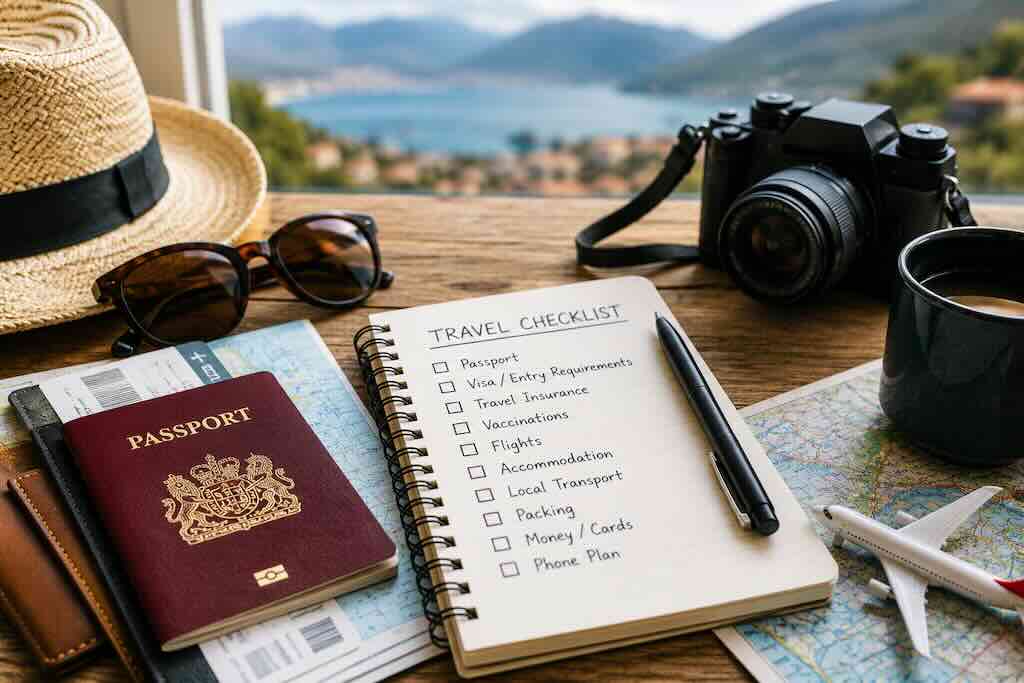
Your first international trip has a particular kind of electricity to it. One minute you’re imagining café tables, unfamiliar streets and that first glimpse of somewhere you’ve only seen in photographs. The next, you’re wondering whether your passport is valid, your phone will work and you’ve forgotten something spectacularly important.
Most first-trip nerves become much easier once the practical details are sorted. You don’t need to plan every hour or anticipate every possible problem. You simply need to take care of the things that are difficult to fix once you’re standing at the airport.
Start With Your Passport, Not Your Packing List
Before booking anything non-refundable, check your passport.
Look at its expiry date and then check the passport rules for your destination. Some countries require a certain amount of validity beyond your planned stay, while others have different requirements. Don’t rely on the idea that having an unexpired passport automatically means you’re ready to travel.
If you need a new passport, apply early. Processing times can change throughout the year, particularly around busy travel periods.
It’s also worth keeping a secure digital copy of the photo page separately from the original. It won’t replace your passport, but having the details accessible can be useful if the document is lost or stolen.
Check the Entry Rules for Your Destination
Visa requirements aren’t universal. They depend on factors including your nationality, destination, reason for travelling and length of stay.
Some travellers can enter a country without obtaining a traditional visa, while others may need a visa, electronic travel authorisation or other documentation before departure.
Check the official government or embassy information for your destination rather than relying on an old blog post or a social-media comment. Entry systems change, and advice that was accurate for somebody else’s trip may not apply to yours.
Know What the Season Actually Looks Like
A photograph of your destination in July tells you very little about what it will feel like in November.
Research the season you’re actually travelling in, including average temperatures, rainfall and daylight hours. Remember that seasons are reversed between the Northern and Southern hemispheres, so escaping a European winter for Australia, for example, means arriving during the Australian summer.
Weather isn’t the only consideration. National holidays, major festivals, school breaks and local events can transform accommodation prices and transport availability.
Don’t Leave Travel Insurance Until the Airport
Travel insurance isn’t the glamorous part of planning a holiday, but neither is paying an unexpected medical bill thousands of miles from home.
Compare policies based on what they actually cover rather than choosing purely on price. Depending on your trip, useful cover may include emergency medical treatment, cancellation, delays, lost or stolen belongings and certain activities.
Read the exclusions too. Adventure sports, existing medical circumstances, valuable equipment and particular destinations may require different levels of cover.
Check Health Advice Before You Travel
Health recommendations vary considerably around the world. Some destinations may have recommended vaccinations or specific entry-related health requirements, while others require little preparation beyond your usual healthcare routine.
Check official travel-health guidance well before departure, particularly if vaccinations might be recommended, as some need to be arranged in advance.
If you take prescription medication, check whether there are restrictions on bringing it into your destination. Keep essential medication in your hand luggage where permitted and carry the appropriate documentation when required.
Work Out How You’ll Pay
Your everyday bank card may work perfectly abroad — but that doesn’t necessarily mean it’s the cheapest option.
Check foreign transaction fees, ATM charges and exchange-rate policies before leaving. Having more than one payment method is sensible in case a card is lost, blocked or unexpectedly rejected.
A small amount of local currency can also be useful for situations where cards aren’t accepted. Just don’t travel with your entire spending budget in cash.
Make Sure Your Phone Is Ready to Travel Too
Few things produce quite the same arrival-day irritation as discovering that your mobile data doesn’t work — or works at a terrifying price.
Check your network’s roaming arrangements before departure. Depending on your destination and length of stay, an international roaming package, local SIM or eSIM may make more sense.
Download anything you’ll need immediately after landing while you still have reliable internet: boarding documents, accommodation details, maps, translation tools and transport information.
Learn the Small Things About Where You’re Going
You don’t need to become an expert on your destination before arriving. A little local knowledge, however, can make the first few days considerably smoother.
Learn a handful of useful phrases if another language is spoken. Understand basic tipping customs, public transport etiquette and any important cultural expectations. Check what electrical plug you’ll need and whether tap water is normally considered safe for visitors to drink.
These details rarely make the travel wish list, but they’re often the difference between feeling completely disoriented and surprisingly comfortable.
Then Stop Planning
This might be the most important part.
Once the passport, entry requirements, insurance and other essentials are handled, resist turning your holiday into a military operation. Book the things that genuinely need reservations and give yourself room everywhere else.
Your first international trip won’t go exactly as planned. A train will be late. You’ll take a wrong turn. The restaurant you carefully saved will be closed and you’ll end up somewhere you’d never heard of instead.
That isn’t necessarily the trip going wrong. Very often, that’s when travelling finally begins.