




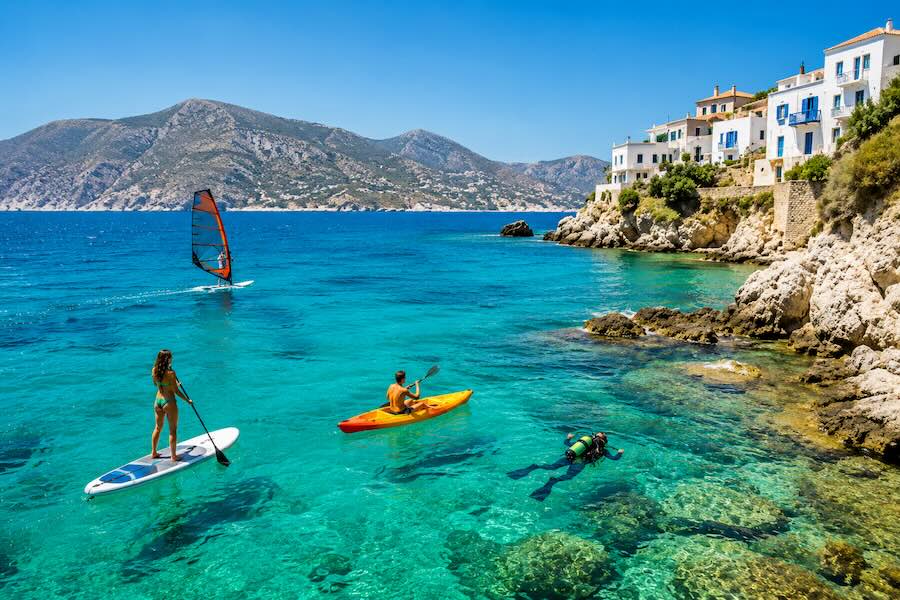
Greece has long held the attention of water sports enthusiasts, and the geography explains why. Thousands of islands and islets, long stretches of coastline, clear Mediterranean water, and seasonal winds create remarkably varied conditions for sailing, diving, windsurfing, kayaking, and other adventures at sea.
The experience changes dramatically depending on where you travel. One island might offer sheltered bays suited to beginners, while another faces the open Aegean with stronger winds and more demanding conditions. If getting onto — or beneath — the water is central to your Greek holiday, these five destinations deserve a place on the itinerary.
The Cyclades
The Cyclades scatter across the Aegean southeast of mainland Greece, creating a landscape of pale stone, brilliant blue water, volcanic formations, and beaches exposed to different wind conditions. That variety makes the island group particularly interesting for travelers who want more than one kind of water-based experience.
Santorini offers scuba diving in a distinctive volcanic environment, where underwater rock formations give divers a different perspective on the island’s dramatic geology. Mykonos also has established diving opportunities, alongside beaches where visitors can find activities ranging from snorkeling and kayaking to wind-driven sports.
Conditions and available activities vary by island, beach, season, and operator, so check locally before planning a day around a particular sport.
The Aegean Sea
For sailors, the Aegean is more than a backdrop. Open water, island passages, changing winds, and an extraordinary number of possible routes have made sailing part of the identity of the region.
The Aegean Rally, organized by the Hellenic Offshore Racing Club, has a history stretching back to the 1960s and remains closely associated with competitive offshore sailing in Greece. You do not need to race to appreciate the same landscape: charter sailing and organized excursions provide more accessible ways to experience the Aegean from the water.
Horefto and Pelion
Horefto sits on the eastern side of the Pelion peninsula, near Zagora, with a long beach facing the Aegean. Compared with Greece’s internationally famous island resorts, the setting can feel quieter and more connected to the mountainous landscape behind the coast.
The exposed shoreline can produce conditions suited to surfing and other wind- and wave-dependent activities. Weather matters here. Conditions can change quickly, so beginners should use qualified local instructors and everyone should check forecasts and sea conditions before entering the water.
Skiathos
Skiathos brings together two of Greece’s most recognizable textures: dense green pine forest and intensely blue sea. The Northern Sporades island has numerous beaches and bays, giving visitors plenty of opportunities to build time on the water into a wider island holiday.
Depending on the beach and season, activities can include kayaking, paddleboarding, water-skiing and other recreational water sports. Sheltered stretches of coastline can also make slower exploration by kayak or paddleboard especially appealing, allowing you to move away from busy beach areas and see the shore from a different angle.
Kos and Psalidi
Psalidi, on the eastern side of Kos near Kos Town, is a strong choice for travelers who want water sports without giving up easy access to hotels, restaurants, and the island’s other attractions.
The coastline is particularly associated with windsurfing and kitesurfing when conditions are suitable, while operators around Kos offer a broader mix of activities that can include diving, kayaking, water-skiing, and personal watercraft. Availability depends on the operator and season.
Choosing the Right Water Sport Destination
Start with the activity rather than simply choosing the most famous island. Divers may prioritize underwater visibility and interesting geology. Windsurfers and kitesurfers need reliable wind and suitable launch areas. Families may prefer sheltered beaches with established operators, while experienced sailors might be drawn toward longer routes through the Aegean.
Equipment should match your experience level and local conditions. Use reputable operators, wear the appropriate safety equipment, pay attention to weather and wind forecasts, and follow instructions from qualified guides. For activities such as scuba diving, choose properly accredited diving centers and confirm any health or certification requirements before booking.
Conclusion
Greece rewards travelers who move beyond the sun lounger. The Cyclades offer dramatic island scenery and diving, the Aegean opens up a world of sailing, Pelion brings waves against a mountainous coast, Skiathos combines water activities with pine-fringed beaches, and Kos offers an accessible base for wind sports and aquatic adventures. Choose according to your ability, travel season, and preferred pace, then let the coastline shape the rest of the trip.
FAQ
Where is the best place in Greece for water sports?
It depends on the activity. The Cyclades are versatile for diving and sailing, while destinations such as Kos are particularly attractive for wind-dependent sports when conditions are suitable.
Can beginners try water sports in Greece?
Yes. Many established destinations have operators offering lessons and equipment for beginners. Choose a reputable provider and make sure the conditions are appropriate for your experience level.
When is the best time for water sports in Greece?
Late spring through early autumn offers warm conditions for many activities, although the ideal period varies by sport and destination. Wind, waves, water temperature, and local weather should always be checked before booking.
Is Greece good for scuba diving?
Yes. Greece offers clear water, rocky underwater landscapes, reefs, caves, and numerous established diving destinations. Regulations and access can vary, so dive through an accredited local operator.
Do I need to bring my own equipment?
Usually not. Established water sports and diving centers commonly provide rental equipment, although experienced travelers may prefer to bring certain personal items depending on their activity.