
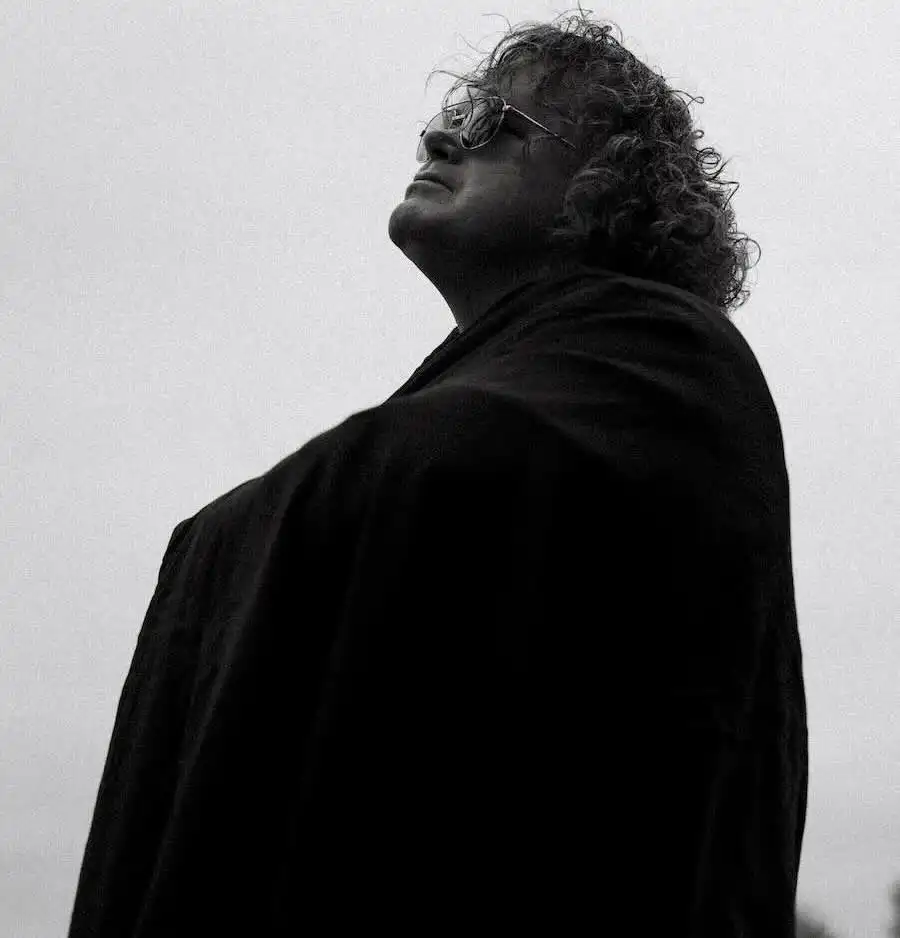
California-based artist Food for the Wyrm has released his debut album, A Wicked Huntsman — a dark, intoxicating folk record driven by punk ferocity, metal tension, and sweeping psychedelic drone. The eight-track collection is built around six core compositions, each represented by a flower native to the Irish countryside. These flowers serve as symbolic anchors for six traumatic life experiences: betrayal, loss, shame, cruelty, addiction, and ignorance. The result is a body of work that feels ritualistic, cathartic, and deeply intentional.
Recorded initially in the live room at Analogue Catalogue Studios in rural Ireland during the summer of 2024, the sessions featured “Irish” Tom on bodhrán and shruti box, and Frank Martian on electric guitar and synthesizer. The album was later refined with overdubs and final mixing at Castaway 7 Studios in Ventura, California. A Wicked Huntsman blends three original compositions with three re-imagined traditional songs and two folk covers, each reshaped through Beau’s distinctive lens. The thematic throughline is clear: bringing darkness into the light, transforming personal and inherited trauma into clarity, purpose, and artistic truth.
From Beau James Wilding to Food for the Wyrm
Food for the Wyrm isn’t a debut in the usual sense — it’s a rebirth. Behind the name is California singer-songwriter Beau James Wilding, who spent years building a following through more conventional acoustic solo work before shedding that approach entirely for something heavier and more confrontational. The name change reflects the shift: “we will all become food for the wyrm” is Wilding’s own framing for the record’s central obsession — mortality not as an abstract fear, but as the deadline that gives the search for clarity and purpose its urgency.
Standout moments include the seductive, twisted barroom anthem “The Unfortunate Rake,” and “The Lowlands of Holland,” a sorrow-soaked tale of a young bride mourning her husband lost at sea. Another highlight, “Lovers and Friends,” opens with a riveting instrumental passage before unfolding into a meditation on connection, longing, and desire.
“The Unfortunate Rake” carries weight beyond the album itself. The ballad traces back to 1700s England and Ireland, passed for centuries between soldiers, sailors, and drifters, with each generation bending its warning about vice and consequence to its own moment. Wilding doesn’t just cover it — he leans into that lineage of decay and warning, letting a song already three hundred years deep in reinvention take on one more form.
A Wicked Huntsman emerges as a bold, enthralling debut — one where Food for the Wyrm’s commanding vocals, ferocious acoustic guitar work, and layered organic instrumentation collide with emotional weight and narrative depth. It’s a striking introduction to an artist unafraid to confront shadow, myth, and memory head-on.
FAQ
Who is Food for the Wyrm?
The project name of California singer-songwriter Beau James Wilding, marking his shift from acoustic solo work into darker, heavier territory.
What is A Wicked Huntsman about?
An eight-track meditation on mortality and trauma, with six songs each tied to a flower native to Ireland representing betrayal, loss, shame, cruelty, addiction, and ignorance.
Where was the album recorded?
Live sessions at Analogue Catalogue Studios in rural Ireland, with overdubs and final mixing completed at Castaway 7 Studios in Ventura, California.
Conclusion
A Wicked Huntsman earns its weight honestly — not through spectacle, but through an artist willing to let three-hundred-year-old warnings and his own reinvention sit in the same eight tracks. It’s a debut that sounds like it already has history behind it.