



Wine is usually bought with one destination in mind: the glass. Yet a small part of the market operates differently. Rare bottles, cases and carefully documented collections can move through specialist auctions where provenance, storage history, producer and vintage can matter as much as the wine itself.
For collectors, wine auctions offer access to bottles that may be difficult to find through ordinary retail channels. For investors, they also create a secondary market where sought-after wines can change hands. That does not make wine a simple investment. Bottles require suitable storage, authentication costs money, auction fees reduce returns, and fashions can change.
How Wine Auctions Work
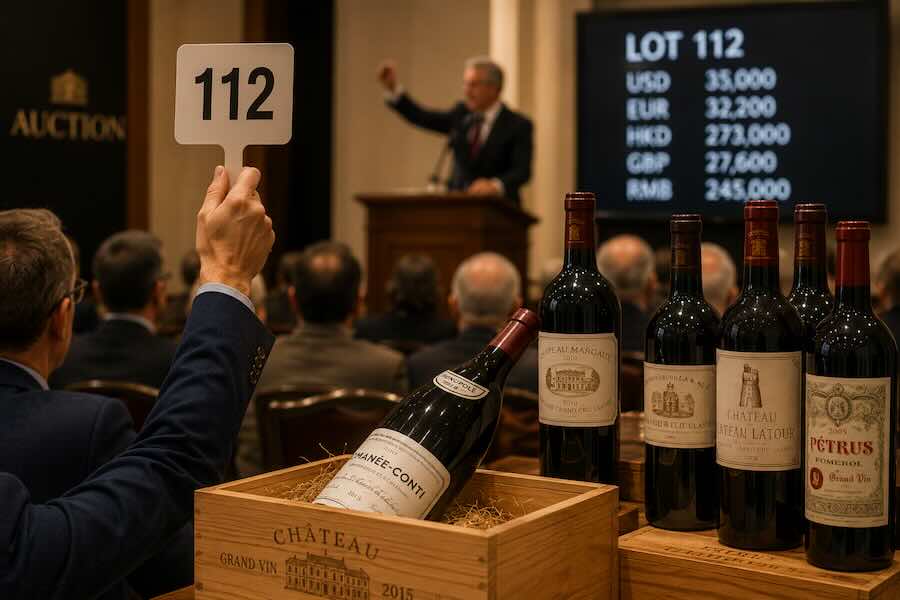
The basic structure resembles auctions for art, watches and other collectibles. An auction house publishes a catalogue containing individual bottles, cases or larger collections. Each lot receives an estimate, bidding opens, and competing buyers raise the price until the highest eligible bid wins.
The room is no longer necessarily a physical one. Online and hybrid auctions have made it possible for collectors to bid remotely, widening access to an international market.
The hammer price is only part of the calculation. Buyers should examine the auction house’s buyer’s premium, taxes, shipping, insurance and storage costs before deciding what they are prepared to bid.
Where Does Auction Wine Come From?
Auction wine broadly enters the market through two routes. Some sales offer wine connected directly with producers, while secondary-market auctions contain bottles consigned by private collectors, restaurants, businesses and established cellars.
The distinction matters because provenance is central to collectible wine. Buyers want to know where a bottle has been, how it has been stored and whether its condition is consistent with its age. Labels, corks, fill levels, original cases and documentation can all contribute to an assessment.
One of the historic producer-linked events is the Hospices de Beaune wine auction in Burgundy. Its history illustrates how deeply auctions are woven into certain parts of European wine culture.
What Wines Appear at Auction?
The image of a wine auction tends to involve an extraordinary Burgundy disappearing into a private cellar for an extraordinary price. At the upper end, that world certainly exists. The wider auction market, however, can be more varied.
Collectible Bordeaux and Burgundy remain important, alongside mature Champagne, German Riesling and recognised wines from regions including California, Italy and Australia. Age alone does not create value. Producer reputation, vintage quality, rarity, condition, provenance and demand all influence what bidders are willing to pay.
Online specialists such as WineBid have also made browsing the secondary market considerably easier. This can expose collectors to mature wines outside the trophy-bottle category, although every purchase still requires careful attention to condition and fees.
The Major International Auction Houses
Fine wine sits within a much larger collectibles market, and internationally recognised auction businesses continue to handle important cellars. Sotheby’s Wine conducts wine and spirits sales, while Christie’s maintains its own international wine and spirits department.
Asia also became an important centre for fine-wine auctions during the 21st century, particularly as demand for rare European bottles expanded among collectors in the region. The result is now a genuinely international marketplace rather than one centred exclusively on London or New York.
Hospices de Beaune: A Different Kind of Wine Auction
Few wine auctions carry the atmosphere of the Hospices de Beaune sale. Burgundy, late autumn, historic architecture and barrels from some of the world’s most closely watched vineyard land give the event a character far removed from clicking a bid button at home.
The Hospices traces its history to the Hôtel-Dieu established in Beaune in 1443. Over centuries, vineyard donations created an extraordinary wine estate connected to the institution. Its annual auction has subsequently become one of Burgundy’s best-known wine events, with charitable and healthcare connections remaining central to its identity.
Wine Is Not a Hands-Off Investment
A bottle may look beautifully passive while resting beneath cool cellar light, but maintaining its potential value requires work. Temperature, humidity, light exposure, vibration and storage history can affect condition. Insurance and secure professional storage may also become necessary as a collection grows.
There is another practical problem: liquidity. A valuable wine cannot necessarily be sold immediately at the price its owner expects. Auction commissions and other transaction costs can narrow returns, while demand for particular producers and vintages can move in either direction.
What to Check Before Bidding
Read the condition report rather than bidding from the producer name alone. Check provenance, storage history, bottle size, fill level, label and capsule condition, whether original packaging survives, and exactly what is included in the lot.
Then calculate the real purchase price. A winning bid can look attractive until the buyer’s premium, applicable taxes, delivery, insurance and future storage are added.
For newcomers, watching several auctions before bidding can be more useful than chasing a famous bottle immediately. It reveals how estimates behave once competition begins and how dramatically two apparently similar lots can differ because of provenance or condition.
Conclusion
Wine auctions occupy an unusual space between drinking culture, collecting and alternative investment. They can provide access to remarkable bottles and mature vintages, but the romance of a dusty cellar should never replace due diligence.
For someone genuinely interested in collecting, the strongest starting point is knowledge: learn the producers, understand provenance, study auction costs and arrange suitable storage before raising a paddle. And perhaps remember the quality that separates wine from most collectibles. If the market disappoints, a carefully chosen bottle can still be opened.
Frequently Asked Questions
Can anyone buy wine at an auction?
Generally, eligible buyers can register with an auction platform or auction house and bid, subject to its rules, age requirements and any regional restrictions concerning alcohol sales and shipping.
Does old wine automatically become valuable?
No. Age by itself does not guarantee value. Producer, vintage, rarity, provenance, condition and current collector demand are critical factors.
What is a buyer’s premium?
A buyer’s premium is a fee charged by the auction house on top of the winning bid. Buyers should include it, along with taxes and delivery or storage costs, when setting their maximum bid.
Is wine a guaranteed investment?
No. Collectible wine can rise or fall in value and carries storage, authenticity, condition, transaction and liquidity risks. Past auction prices do not guarantee future returns.