




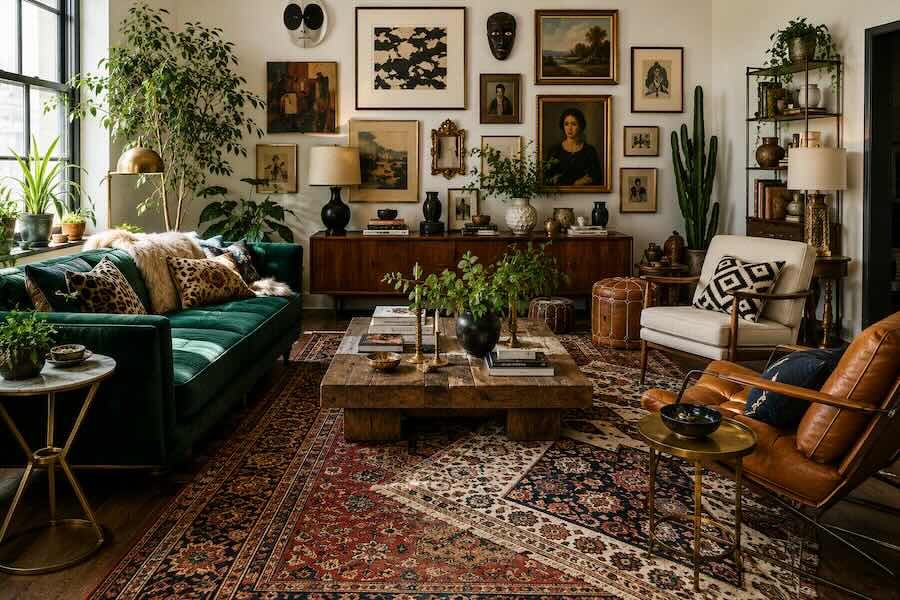
Eclectic interior design works best when a room feels collected rather than decorated in a single sweep. A sculptural lamp from one decade, a worn timber table from another, contemporary art and a deeply textured rug can occupy the same living room beautifully. The key is giving those different voices something in common.
That freedom is what makes eclectic style so appealing — and surprisingly difficult to execute. Without restraint, layers become clutter. With a clear palette, considered proportions and a few repeated visual cues, however, the room begins to feel personal rather than random.
What Is Eclectic Interior Design?
Eclectic design combines furniture, art, colors, materials and references from different periods or aesthetics rather than following one strict interior style. A mid-century chair might sit beside an antique table, while contemporary artwork hangs above a traditional sofa.
The important distinction is intention. Eclectic does not mean placing unrelated objects together simply because you like them. Successful rooms establish visual relationships through color, shape, scale, material or repetition. That underlying structure is what makes the individual pieces feel as though they belong together.
Start With a Controlled Color Palette
Before introducing patterns, unusual furniture and collected objects, establish a color framework. This gives the eye somewhere to rest and creates continuity between pieces that might otherwise compete.
A neutral foundation can be particularly useful for beginners. Warm white, cream, charcoal, sand or muted gray walls leave room for stronger color through furniture, textiles and artwork. Alternatively, a high-contrast black-and-white foundation can provide enough graphic structure to support more expressive additions.
You do not need to restrict the room to two colors. Instead, choose a small group of recurring tones and allow them to appear in different forms — perhaps rust in a rug, a painting and a ceramic object, or deep green across upholstery and plants. Repetition quietly connects the room.
Mix Patterns Without Creating Visual Noise
Pattern gives an eclectic living room movement. Florals, stripes, abstract motifs, checks and geometric designs can coexist, provided they are not all competing at the same scale.
Try pairing one large-scale pattern with smaller, quieter motifs. A broad geometric rug, for example, can sit beneath cushions carrying finer prints. Repeating one color across several patterns helps establish another visual connection.
Solid surfaces matter just as much. Plain upholstery, an unpatterned wall or a simple timber cabinet creates negative space around busier elements and prevents the room from becoming exhausting to look at.
Build Depth Through Texture
Some of the most convincing eclectic rooms rely more heavily on texture than color. Smooth leather against coarse linen, polished metal beside aged timber, glass near stone — these tactile contrasts make a space feel layered even when its palette remains restrained.
Rugs offer an easy starting point. A colorful woven design, including styles available from Miss Amara, can establish warmth beneath cleaner contemporary furniture. In larger rooms, carefully layering compatible rugs can create an informal, collected effect.
Continue the contrast vertically. Exposed brick, limewashed walls, timber shelving, linen curtains and tactile artwork can prevent every interesting surface from being concentrated at floor level.
Combine Furniture From Different Eras
A room furnished entirely from one collection rarely feels eclectic. Instead, look for pieces with different histories and silhouettes. A traditional coffee table might work with a clean-lined contemporary sofa, while a 1970s-inspired lounge chair adds another layer.
The pieces do not need to match, but their proportions should communicate. An enormous sofa beside a collection of delicate chairs can feel unbalanced unless another substantial object anchors the opposite side of the room.
Symmetry can still be useful, although it should not become rigid. Two lamps might balance a composition without being identical. Likewise, chairs can share similar visual weight while coming from completely different periods. This controlled imbalance is part of what gives an eclectic living room its character.
Search Vintage and Secondhand Stores
Rooms gain depth when everything does not look newly purchased. Vintage stores, antique markets and secondhand shops are particularly useful for mirrors, lamps, occasional tables, ceramics, frames and small furniture with distinctive forms.
Look beyond perfection. Scratched timber, softened leather and aged metal can introduce a patina that is difficult to reproduce with new objects. Buying secondhand can also extend the useful life of existing furniture rather than requiring every design change to begin with something new.
The practical rule is simple: buy because an object adds something specific to the room, not merely because it is unusual.
Use Art to Make the Room Personal
Art is one of the strongest tools available in an eclectic interior because it does not need to follow the furniture. Photography can sit beside illustration, an oil painting beside an abstract print, or an ornate antique frame beside a frameless contemporary piece.
A gallery wall makes this approach especially visible. Before hanging anything, arrange the pieces on the floor and test the composition. Consistent spacing can provide structure even when the artwork and frames vary dramatically.
Leave some walls quiet. When every surface becomes a gallery, individual pieces lose their impact.
Give the Room One Clear Focal Point
Even a highly layered room benefits from hierarchy. Decide where you want the eye to land first. It could be a fireplace, oversized artwork, an unusual sofa, a sculptural light fixture or a dramatic gallery wall.
Then allow the surrounding pieces to support rather than challenge it. If the focal point is intensely colorful, nearby furniture can become quieter. If an architectural fireplace already dominates the room, artwork may work better as a secondary layer.
Edit Before You Add More
The final stage of eclectic decorating is often subtraction. Stand at the entrance to the room and notice where your eye becomes stuck. If several objects demand attention at exactly the same intensity, remove one and reassess.
Empty space is not wasted space. It gives stronger furniture, art and materials room to register. A successful eclectic living room should reveal itself gradually rather than presenting every idea at once.
Conclusion
The most compelling eclectic interiors feel as though they developed naturally over years. Different periods meet, textures overlap and personal objects remain visible, yet a consistent visual rhythm holds everything together.
Start with color and proportion, introduce contrast through pattern and texture, then collect slowly. The result should not resemble a showroom. It should look unmistakably lived in — a room shaped by taste, memory and objects worth keeping.
Frequently Asked Questions
What is eclectic interior design?
Eclectic interior design intentionally combines elements from different periods, styles and influences while using recurring colors, materials, shapes or proportions to keep the room visually connected.
How do you make eclectic decor look cohesive?
Establish a limited color palette, repeat selected materials or colors throughout the room and balance statement pieces with quieter areas. Repetition provides structure without requiring everything to match.
Can you mix modern and vintage furniture?
Yes. Mixing modern and vintage furniture is central to many eclectic interiors. Pay attention to scale, visual weight and materials so that one piece does not accidentally overpower everything around it.
How many patterns can you use in an eclectic room?
There is no fixed number. What matters is variation in scale and enough solid surfaces to create visual breathing room. Repeating one or two colors across different patterns can help connect them.
How do you stop eclectic decor from looking cluttered?
Keep clear sightlines, leave some surfaces and walls relatively quiet, choose a primary focal point and edit accessories regularly. Not every object needs to be displayed at the same time.