




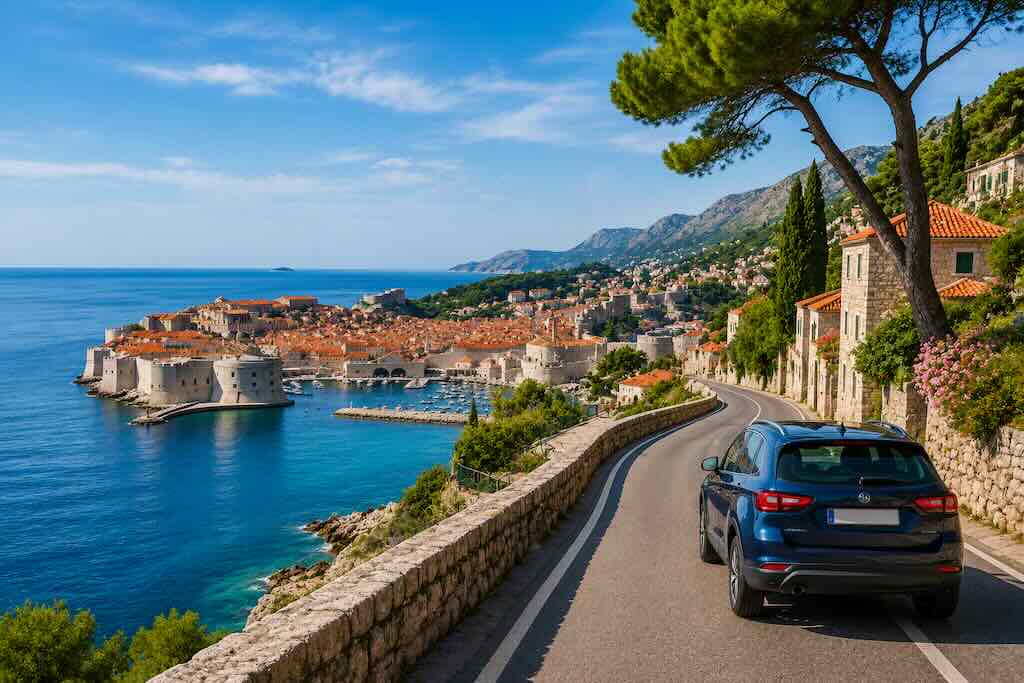
Croatia’s Adriatic coast can tempt you into an impossible itinerary. Roman stone in Pula, the long waterfront at Zadar, Šibenik’s pale lanes, Split’s palace walls and Dubrovnik’s terracotta roofs all appear close enough on a map to collect in a single week. They are. The question is whether you should.
Editor’s note: This itinerary has been updated for 2026 to remove outdated commercial car-rental and tour links, correct unrealistic driving times, reduce unnecessary hotel and restaurant recommendations, add current road-planning guidance, and turn the original high-speed route into a more practical six-day coastal journey.
A short Croatian road trip works best when you accept its limitations. Six days will not reveal the country. It can, however, create a vivid line through the Adriatic: Istrian stone, Roman ruins, contemporary waterfront architecture, medieval cities and increasingly southern light.
This route remains deliberately fast. If you prefer beaches, long lunches and mornings without luggage, remove at least two stops or extend the trip to eight or ten days.
Croatia Coast Road Trip: The 6-Day Route
- Day 1: Pula and Rovinj
- Day 2: Istria to Zadar
- Day 3: Zadar and Šibenik
- Day 4: Trogir and Split
- Day 5: Split to Dubrovnik
- Day 6: Dubrovnik
This version intentionally removes the original detour through Rijeka, Novalja and Zrće Beach. Those destinations can be worthwhile, but squeezing them into a six-day Pula-to-Dubrovnik drive creates too much time in transit and too little time in the places themselves.
If nightlife on Pag is the priority, build a separate northern Dalmatia itinerary around Zadar and Pag instead.
Day 1: Pula and Rovinj
Begin in Istria, where the Croatian coast already feels geographically and culturally distinct from Dalmatia farther south.
Pula Airport provides a convenient entry point when suitable seasonal flights are available. Check current schedules directly with Pula Airport before structuring the trip around a particular connection.
Pula’s defining monument is its Roman amphitheatre. Massive limestone arches rise close to the modern waterfront, creating an unusually direct encounter between the ancient city and the contemporary one.
Do not stop there. Walk through central Pula to the Temple of Augustus and the surviving Roman fabric around the old streets. Current cultural information and event listings are available through the Pula Tourist Board.
Add Rovinj, but Give It Time
Rovinj deserves more than the original itinerary’s quick coffee stop.
The old town rises from the Adriatic in a dense composition of stone façades, shutters and narrow passages, with the Church of St Euphemia above the rooftops. Walk uphill without worrying about the fastest route. The lanes are part of the experience.
The official Istria tourism portal is useful for current information across Rovinj, Pula and the wider peninsula.
Stay overnight in either Rovinj or Pula. Choosing one base is calmer than checking into accommodation twice on the first day.
Day 2: Istria to Zadar
This is the substantial driving day.
Do not rely on a fixed journey time printed in an itinerary. Summer traffic, roadworks, accidents and congestion around coastal destinations can change driving conditions significantly.
Before leaving, check the Croatian Automobile Club for current traffic, road conditions and disruptions. In late August 2026, HAK continued to warn of heavy traffic and possible delays on major routes connecting Croatia’s coast and interior, illustrating why a live check matters more than a static estimate.
Choose between efficiency and scenery. Faster roads can preserve more time for Zadar; slower coastal sections can make the drive itself part of the day. Trying to maximize both usually results in arriving tired.
Once in Zadar, park and walk.
Evening in Zadar
Zadar brings ancient stone and contemporary public art into the same compact peninsula.
The Roman Forum and Church of St Donatus establish the historic center. At the waterfront, the experience changes completely.
The Sea Organ turns the movement of water into sound through an architectural installation built into the promenade. Nearby, Greeting to the Sun adds another contemporary intervention at the edge of the Adriatic.
Current city information is available from the Zadar Tourist Board.
Stay through sunset if conditions cooperate. Zadar is one of those places where the final hour of daylight is not empty space between attractions. It is the attraction.
Day 3: Zadar to Šibenik
Leave Zadar after breakfast and continue south toward Šibenik.
The city’s historic core climbs away from the waterfront through stone stairs, passages and small squares. Its architectural centerpiece is the Cathedral of St James, part of the UNESCO World Heritage List.
Šibenik works because its major sights remain close enough to explore without repeatedly returning to the car. Walk the historic center, continue toward the fortresses if time and energy allow, then give the evening back to the waterfront.
Should You Add Krka National Park?
Krka National Park is close enough to tempt almost every Šibenik itinerary. On this particular six-day route, adding it means making a choice rather than simply squeezing in another stop.
If waterfalls and landscapes matter more than several hours in Šibenik, use part of the day for the park. Check opening information, entrances and tickets directly with Krka National Park.
If architecture and coastal cities are the priority, stay in Šibenik. Both are better options than rushing through each.
Day 4: Trogir and Split
Trogir and Split make one of the more natural combinations on this route.
Trogir’s historic center occupies a small island between the mainland and Čiovo. Its medieval street plan and concentration of Romanesque, Renaissance and Baroque architecture form another of Croatia’s UNESCO World Heritage sites.
Give it a morning rather than treating it as a photograph between parking lots. Walk the lanes, waterfront and squares, then continue toward Split.
Spend the Afternoon Inside Split’s Living Roman City
Split does not preserve Diocletian’s Palace behind museum doors. The ancient complex remains woven into the city, with homes, cafés, shops and passages occupying spaces shaped by Roman architecture.
Walk through the palace precinct, find the Peristyle and eventually emerge onto the Riva, where palms and café tables face the harbor.
The Split Tourist Board provides current information for monuments, events and practical city planning.
Stay overnight. Split becomes more atmospheric after day visitors begin disappearing and the limestone streets lose some of their daytime heat.
Day 5: Split to Dubrovnik
The journey south is easier than it once was. The Pelješac Bridge, opened in 2022, created a continuous road connection between the previously separated sections of Croatian territory, removing the former necessity for through-traffic on this route to cross Bosnia and Herzegovina at Neum.
Still, resist publishing a rigid Split-to-Dubrovnik driving time into your day. Seasonal traffic and road conditions matter. Check HAK before leaving and build margin around arrival plans.
Once you reach Dubrovnik, leave the car parked if possible. The old city rewards walking, while driving and parking around the historic center can add unnecessary friction.
The official Dubrovnik tourism portal provides current visitor information for the city and surrounding region.
Day 6: Give Dubrovnik a Full Day
Dubrovnik deserves the one thing this itinerary has withheld from almost everywhere else: a full day without another destination waiting at the end of the road.
Walk the city walls when conditions are comfortable, then return to street level and move through the old town at a slower pace. Stradun provides the obvious axis, but Dubrovnik becomes more intimate on the steep side streets where stone steps disappear between buildings.
The Rector’s Palace adds political and cultural context to the architecture around it. Later, the cable car toward Mount Srđ can provide a wider view across the old city, coastline and islands when weather and operations permit.
Heat deserves consideration during summer. Walking exposed walls at midday can feel very different from the same route in the softer light of morning or later afternoon.
If beaches are becoming more important than monuments, Divine’s guide to the Caribbean’s standout beaches offers inspiration for a future trip, while Croatia itself has enough coastline to justify returning with a much slower itinerary.
Should You Add Croatia’s Islands?
The original itinerary suggested that island transfers inevitably consume most of a day. That is too broad.
Some Croatian islands can be reached efficiently, particularly from major coastal ports. The real problem here is not the ferry system. It is the pace of this specific itinerary.
Adding Hvar, Brač or another island to an already compressed Pula-to-Dubrovnik route means another timetable, another transfer and less time everywhere else.
If an island matters to you, remove a mainland destination. Check current routes and schedules directly through Jadrolinija before planning connections.
What About Plitvice Lakes?
Plitvice Lakes National Park is one of Croatia’s major natural landscapes, but it sits inland and does not fit gracefully into this six-day coastal line.
Adding it means deliberately rerouting and sacrificing time elsewhere. On a longer trip, that can make sense. On this one, save it for another journey or add extra days.
Current ticket, entrance and visitor information is available directly from Plitvice Lakes National Park.
Driving Croatia’s Adriatic Coast in 2026
A rental car makes this itinerary considerably easier, but freedom on paper does not remove traffic from the road.
During the summer season, congestion can occur on motorways, the Adriatic Road and approaches to major tourist destinations. Roadworks and temporary restrictions can also change journey times. Check HAK’s live traffic information each morning rather than relying solely on the route calculated when you booked the trip.
- Book the car early: Summer demand can reduce choice and increase prices.
- Check the rental terms: Confirm insurance, excess, additional-driver rules and any restrictions that apply to your itinerary.
- Research parking before arrival: Historic centers are easier when you already know where the car is going.
- Expect slower coastal driving: Scenic roads, congestion and local traffic can make distances take longer than expected.
- Take breaks: A road trip stops being enjoyable when every afternoon becomes a race toward the next hotel.
- Check live conditions: Accidents, roadworks and heavy seasonal traffic can change the sensible route on the day.
When Is the Best Time for This Croatia Road Trip?
Summer brings the warmest beach atmosphere and the busiest coastal cities. It also brings heavier traffic, stronger heat and greater pressure on accommodation.
Late spring and early autumn can provide a more comfortable balance for a road-focused itinerary, but weather and sea conditions vary from year to year. If swimming is central to the trip, check current local conditions rather than relying on a generic promise that the sea will always be warm enough in a particular month.
Whatever the season, pack for movement rather than elaborate outfits. Divine’s guide to travelling light can help keep a multi-stop itinerary manageable.
A Practical Pre-Trip Checklist
- Confirm flight schedules and car-rental opening hours.
- Check HAK for current road and traffic conditions.
- Reserve accommodation with realistic parking arrangements.
- Pre-book major attractions where required.
- Check ferry schedules only if adding an island.
- Carry water and allow extra time during hot summer driving days.
- Keep at least one evening free of driving.
- Remove a stop if the itinerary begins to feel like a transfer schedule.
Conclusion
Six days from Istria to Dubrovnik will always involve compromise. That is precisely why the route improves when a few destinations disappear.
Start among Pula’s Roman arches and Rovinj’s weathered stone. Follow the coast toward Zadar’s strange music at the waterline, then move through Šibenik and Trogir before entering the living remains of Diocletian’s Palace in Split. Finish in Dubrovnik, where walls the color of pale limestone rise above deep Adriatic blue.
You will miss places. Croatia is good at making that inevitable.
That simply gives you a reason to return.
Frequently Asked Questions
Is six days enough for Croatia’s Adriatic coast?
Six days is enough for a fast introduction, but not a comprehensive coastal trip. Limiting the route to Pula and Rovinj, Zadar, Šibenik, Trogir, Split and Dubrovnik makes it more realistic. Eight to ten days would provide a noticeably slower experience.
Do I need a car for this Croatia itinerary?
A car provides substantial flexibility between the smaller stops on this route. Public transport can connect many major destinations, but a vehicle makes a compressed multi-city itinerary easier. Check parking arrangements before entering historic centers.
Can I add Hvar or Brač?
Yes, but remove another destination or add extra days. Ferry connections do not automatically consume an entire day, but adding an island introduces another transfer and timetable. Use current Jadrolinija schedules when planning.
Should I visit Krka or Plitvice Lakes on this route?
Krka is the easier addition from the Šibenik area, although it still requires time that would otherwise be spent on the coast. Plitvice sits farther inland and is better added to a longer itinerary.
Does the drive from Split to Dubrovnik still cross Bosnia and Herzegovina?
The Pelješac Bridge created a continuous road connection through Croatian territory, so the former Neum border transit is no longer necessary for the standard domestic route between Split and Dubrovnik.
When should I check Croatian road conditions?
Check shortly before each significant drive. Traffic, accidents, roadworks and seasonal congestion can change quickly, and the Croatian Automobile Club provides current road information.
Is Dubrovnik worth two nights on a short road trip?
Yes. Two nights allow one largely uninterrupted day in the city rather than turning Dubrovnik into another arrival-and-departure stop. It also gives you more flexibility to explore early or later in the day when conditions may be more comfortable.