




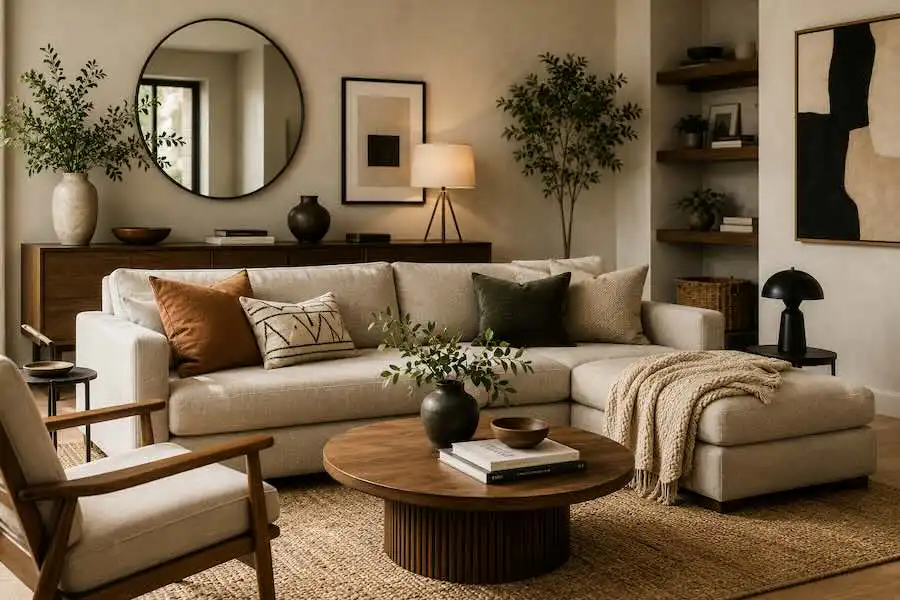
A home rarely needs a complete aesthetic reinvention. More often, it needs editing. The chair that feels too heavy, the wall color that changes strangely after sunset, or the collection of accessories competing for attention can tell you more about your decorating style than any trend forecast.
Finding the right décor is therefore less about choosing a label such as minimalist, traditional or mid-century modern. It is about noticing what makes a room feel comfortable, coherent and distinctly yours.
Start with rooms you instinctively like
Before buying anything, collect interiors that catch your attention. Save photographs from design publications, hotel rooms, restaurants, furniture stores and social platforms such as Pinterest and Instagram.
Do not worry about identifying the style immediately. Look for repetition instead. Perhaps nearly every image contains pale timber, linen, low furniture and warm white walls. Maybe you repeatedly save darker rooms with walnut, aged leather and pools of amber light.
Those patterns are more useful than deciding that you are simply a “Scandinavian” or “modern” person. They reveal the colors, materials, proportions and atmosphere you actually respond to.
Your existing home is already giving you clues
Walk through your rooms slowly. Which objects would you buy again today? Which ones are there simply because you already own them?
This distinction can quickly clarify what should stay. A worn timber table might still feel completely right while a relatively new sofa somehow dominates the room. An inherited lamp may bring character that a coordinated set of accessories never could.
There is no requirement for everything to belong to the same design period. Decorative oars or paddles, for example, might feel natural in a coastal or collected interior but forced in another space. Context changes the object.
Furniture condition matters too. Sagging cushions, damaged frames and uncomfortable seating can make an otherwise attractive room feel tired. Knowing the warning signs that tell you it is time to buy new furniture can help separate a styling problem from a piece that genuinely needs replacing.
Think in materials before trends
Texture quietly determines how a room feels. Linen diffuses light differently from velvet. Oak introduces warmth. Brushed metal can sharpen a soft palette, while wool and jute bring a tactile, grounded quality underfoot.
Try choosing a small material vocabulary for each room. You might combine pale wood, warm white fabric, ceramic and blackened metal. Elsewhere, walnut, leather, wool and brass could create something deeper and more intimate.
The room does not need to match perfectly. In fact, slight tension usually makes an interior more interesting. A contemporary lamp beside an old cabinet can feel far more personal than purchasing an entire furniture collection from one range.
Measure before falling in love with the sofa
A beautiful object can still be completely wrong for a room.
Before ordering substantial furniture, measure the available floor area, doorways, corridors and staircases. Then consider visual scale. A sofa may technically fit between two walls yet still overwhelm the architecture because its arms are too wide or its back is too high.
Use masking tape to mark the footprint of larger pieces on the floor. Live with those outlines for a day or two. Walk around them. open nearby doors and drawers. Notice whether natural pathways through the room still feel comfortable.
This simple exercise is considerably cheaper than discovering that the green sofa you loved online consumes half the living room once it arrives.
Let the room decide some of the palette
color never exists independently of light. A muted beige can appear almost grey in a north-facing room and considerably warmer under afternoon sun. Artificial lighting changes it again after dark.
That is why paint and fabric samples deserve time. Place them in different parts of the room and observe them during morning, afternoon and evening light before committing.
If choosing colors still feels difficult, begin with something already fixed in the space: flooring, stone, cabinetry or a favorite piece of furniture. Pull two or three complementary tones from it and allow those colors to establish the room’s visual rhythm.
A design quiz can help, but it should not decorate your house
Interior design quizzes can be useful when you cannot articulate what you like. Treat the result as vocabulary rather than instruction.
If a quiz identifies your taste as mid-century modern, for example, you do not suddenly need tapered legs on every piece of furniture. Instead, ask what attracted you to that result. Perhaps it was the restrained shapes, timber finishes or absence of decorative clutter. Those individual characteristics can be combined with pieces from entirely different periods.
Decorate slowly enough to notice what is missing
One of the easiest mistakes is trying to finish a room in a weekend. Empty corners begin to feel like problems, and objects get purchased simply to occupy them.
Leave some space unresolved. Live with the furniture you already have. Notice where you naturally put a book, where you need softer light, whether the room needs another seat or whether the supposedly empty wall actually looks better untouched.
A home assembled gradually tends to develop layers: something inherited, something found while traveling, a practical new purchase, an artwork you kept thinking about. The result feels collected rather than staged.
The practical rule: edit before you add
Before buying new décor, remove a few things from the room and see what happens. Clear one surface. Move a chair. Take down artwork that no longer feels right. Sometimes the missing ingredient is simply breathing room.
Then add deliberately. Choose objects because of their texture, usefulness, history or beauty rather than because an empty shelf appears to demand another accessory. When each piece has a reason to be there, different styles can coexist surprisingly well.
Conclusion
The best décor style is rarely discovered through a single purchase or perfectly defined aesthetic. It develops through observation. Pay attention to the rooms you save, the materials you touch, the furniture you repeatedly choose to sit in and the objects you would miss if they disappeared.
Build from those clues. Measure carefully, work with the light already entering your home and allow the interior to change slowly. A room does not need to look finished to feel right.
FAQ: Finding Your Interior Design Style
How do I know what interior design style I like?
Collect images of rooms you instinctively enjoy and look for recurring colors, furniture shapes, materials and lighting. Those common elements usually reveal more about your preferences than choosing a style label first.
Can I mix different decorating styles?
Yes. Mixing periods and styles can make a home feel more individual. Maintain continuity through repeated colors, materials or proportions so contrasting pieces still feel connected.
Should all the furniture in a room match?
No. Matching sets can create consistency, but they can also make a room feel overly uniform. Pieces with complementary scale, color and materials can work together without being from the same collection.
What should I buy first when redecorating?
Begin with the pieces that have the greatest practical and visual impact, such as a sofa, bed, dining table or rug. Once their proportions and palette are established, smaller lighting, textiles and accessories become easier to choose.