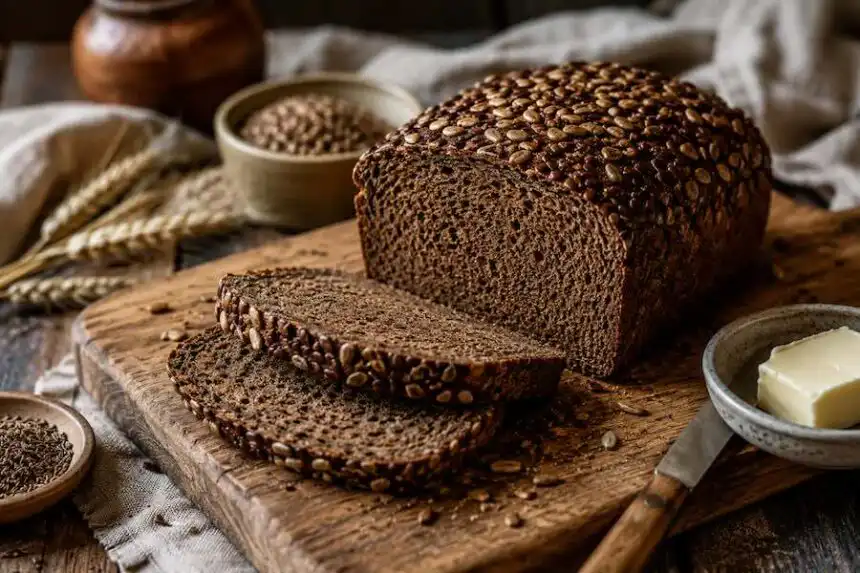
Rye bread has a particular kind of presence. Dark crust, earthy aroma, a faint sourness underneath. Slice into a good loaf on a cold morning and it feels entirely at home beside strong coffee, salted butter, sharp cheese, or smoked salmon.
There is history behind that character. Rye tolerates cooler growing conditions than wheat, which helped make it an important grain across parts of Northern and Eastern Europe. Travel through Scandinavia or Germany and the bakery shelves still tell the story: dense loaves, seeded crusts, dark crumb and breads designed to satisfy rather than disappear beneath their toppings.
Making one at home is slightly different from baking an airy wheat loaf. Rye behaves according to its own rules. Once you stop expecting it to feel like conventional bread dough, the process becomes considerably easier.
Start With Fermentation
Many traditional rye breads begin with a sourdough starter, and there is a practical reason beyond flavor. Fermentation works particularly well with rye, creating the acidity and distinctive depth associated with classic loaves.
You can use an established starter or make a sourdough starter at home. Starting from scratch takes several days, so this is one baking project that rewards planning rather than spontaneity.
Rye flour is also useful when maintaining sourdough because whole-grain flour provides plenty of nutrients for an active culture. King Arthur Baking offers a useful guide to sourdough fundamentals if fermentation is new territory.
Forget What Wheat Dough Taught You
The first encounter with high-rye dough can be disconcerting. It may feel sticky, heavy and closer to clay than the smooth, elastic dough associated with white bread.
That does not necessarily mean anything has gone wrong.
Rye contains gluten-forming proteins, but it does not build the strong elastic gluten network that wheat does. As the proportion of rye increases, vigorous kneading becomes less useful. A dough containing a modest amount of rye may still behave much like wheat dough; a predominantly rye loaf is another creature entirely.
Work with wet hands or a dough scraper when necessary, follow the hydration of the recipe, and resist repeatedly adding flour simply because the dough feels sticky. Trying to force rye into the texture of wheat bread can leave the finished loaf unnecessarily dry.
The Flour Changes the Loaf
Not every bag labeled rye flour produces the same bread. The degree of milling influences color, flavor and texture, while terminology can vary between countries and flour producers.
Lighter rye flours generally produce a milder loaf. Whole-grain rye retains more of the grain and brings deeper color and a fuller, more assertive flavor. Pumpernickel flour is typically a coarse whole-grain rye flour in the United States and works particularly well when you want a dense, dark result.
If an entirely rye-based loaf feels ambitious, begin with a blend of rye and bread flour. Wheat contributes structure while rye remains clearly present in the aroma and flavor. It is an approachable route into rye baking without immediately taking on the peculiarities of a 100-percent rye dough.
Seeds Change More Than the Appearance
A rye loaf scattered with seeds looks beautiful on a wooden board, but the attraction is not merely visual.
Caraway is the flavor many people associate immediately with deli-style rye. Fennel and anise bring sweeter aromatic notes, while sunflower, pumpkin, sesame and flax seeds can add texture and a toasted nuttiness. They can be folded through the dough, pressed into the surface, or used in both places.
There is no requirement for rye bread to contain seeds, though. Scandinavian and European rye traditions cover an enormous range of styles, from smooth sour loaves to grain-heavy breads dense enough to make a single thin slice feel substantial.
Let the Dough Set the Pace
Rye is not the place for impatient baking.
Fermentation time depends on the recipe, starter activity, dough temperature and proportion of rye. Rather than treating the clock as an absolute instruction, learn to watch the dough alongside the timing given in your recipe.
Higher-percentage rye breads can also show less dramatic expansion than fluffy wheat dough. That makes experience valuable: after several loaves, subtle changes in volume and surface texture become much easier to read.
Bake It Through, Then Leave It Alone
A dark crust makes judging doneness by color difficult. An instant-read thermometer can therefore be useful, although the appropriate internal temperature depends on the particular formula and loaf style. Follow the recipe rather than relying on one universal number.
Once baked, remove the loaf from its tin according to the recipe and cool it thoroughly on a rack. This is where restraint becomes particularly important.
Dense rye bread continues settling internally after it leaves the oven. Cutting too early can produce a gummy crumb even when the loaf has been properly baked. Some high-rye breads benefit from resting for many hours before slicing, and certain traditional loaves are better the following day.
The reward arrives later: thin, clean slices with a moist crumb and a flavor that can become richer after resting.
Build a Simple Rye Ritual
There is little need to complicate good rye bread once it reaches the table. Toast a slice until the edges become crisp and add salted butter. Pair a darker loaf with cream cheese, smoked salmon and dill. Try mature cheese, pickled vegetables or a sharp marmalade against the grain’s earthy bitterness.
Then bake another loaf.
That repetition is where rye starts making sense. You learn how sticky the dough should feel, how your starter behaves in a cold kitchen and how dark your preferred crust becomes. What initially seems like an awkward grain gradually becomes remarkably intuitive.
A Bread Worth Learning Slowly
Rye does not need to imitate soft white bread to be successful. Its appeal lies somewhere else entirely: a substantial crumb, restrained sweetness, fermented acidity and the deep grain flavor that makes a simple slice feel complete.
Start with a wheat-and-rye loaf if you are new to it. Move toward darker flour and higher rye percentages as your confidence grows. Eventually there are German-style breads, Scandinavian seeded loaves, deli rye, pumpernickel and countless regional variations waiting on the other side.
The secret is less about mastering a complicated technique than learning not to rush the grain.
FAQ: Baking Rye Bread at Home
Why is my rye dough so sticky?
Rye dough naturally behaves differently from wheat dough, particularly at higher rye percentages. Stickiness alone does not mean it needs considerably more flour. Follow the recipe’s hydration and use wet hands or a scraper when handling it.
Do I need sourdough starter to make rye bread?
No. There are rye breads made with commercial yeast, sourdough, or combinations of fermentation methods. A sourdough starter is particularly well suited to traditional high-rye breads and contributes characteristic acidity and flavor.
Which seeds taste good in rye bread?
Caraway is a classic choice, particularly for deli-style rye. Fennel, anise, sesame, sunflower, pumpkin and flax seeds can also work beautifully depending on the style of loaf.
Why is my rye bread gummy inside?
Possible causes include underbaking, incorrect hydration or slicing the loaf before the crumb has finished setting. Dense high-rye breads often need a much longer cooling and resting period than ordinary wheat bread.
Can beginners bake 100-percent rye bread?
Yes, but starting with a rye-and-wheat blend can make the learning curve gentler. Once you understand rye’s texture and fermentation behavior, moving toward predominantly or entirely rye loaves becomes easier.