




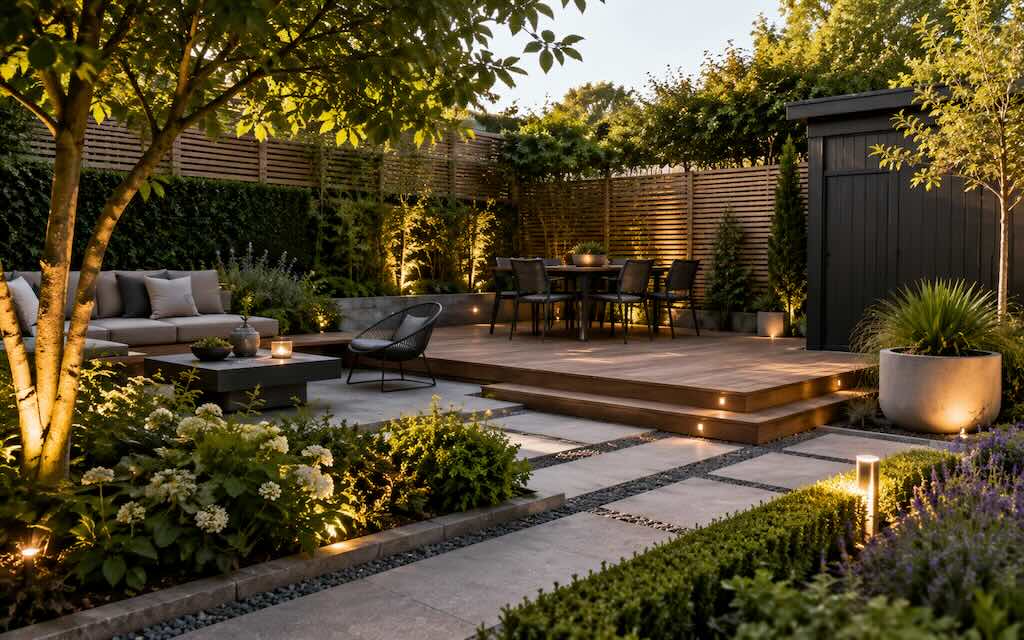
A garden can start feeling dated long before anything is technically wrong with it. The lawn is healthy, the fence still stands and the furniture still works, yet the space somehow feels flat.
Modernizing it does not require replacing everything. The strongest changes usually come from simplifying the layout, defining how different areas are used and paying closer attention to materials, planting, light and water. A few considered changes can make even a modest garden feel calmer and more intentional.
Editor’s note: This article has been updated for 2026 to replace outdated garden advice, add current guidance on water-efficient landscaping and wildlife-conscious lighting, and focus on practical improvements that work across different garden sizes and budgets.
1. Decide What the Garden Is Actually For
Before buying furniture, decking or plants, decide how you want to use the space.
Perhaps you need a table for long summer dinners. Maybe the priority is somewhere quiet to read, space for children to play or a small corner where herbs and vegetables can grow. A garden becomes easier to design when each area has a reason to exist.
You do not necessarily need walls or fencing between these zones. Changes in paving, planting, gravel or furniture orientation can create subtle boundaries while keeping the garden visually open.
This approach also helps control spending. Instead of filling every empty corner, invest in the parts of the garden you will actually use.
2. Rethink the Lawn
A lawn can provide a beautiful visual pause between planting beds, but it does not need to occupy every available metre.
If yours has a practical purpose, concentrate on keeping it healthy rather than pursuing an unnaturally flawless surface. Mowing appropriately for the grass and climate, improving compacted soil where necessary and adjusting watering to actual conditions can make a noticeable difference.
The EPA’s WaterSense landscaping guidance recommends designing landscapes around how they will actually be used, choosing plants for local conditions and improving soil and irrigation practices rather than simply applying more water.
You can also reconsider whether all of the existing lawn needs to remain. The Royal Horticultural Society suggests allowing areas of grass to grow longer as one simple way to support garden wildlife.
A crisp lawn beside looser planting can look distinctly contemporary while creating a garden with more life in it.
3. Create a Proper Outdoor Living Area
One of the most effective changes is giving outdoor furniture a clearly defined home.
Decking can work, but so can stone, brick, porcelain paving or gravel. The right choice depends on the architecture of the house, local climate, maintenance requirements and how the surface will be used.
Think about proportion before material. A tiny table floating in the middle of an oversized terrace can feel just as unresolved as furniture squeezed into a space that is too small.
Allow enough room to pull chairs away from the table and move around comfortably. Then soften the hard surface with pots, planting or a tree where conditions allow.
The result should feel like an outdoor room rather than furniture that has simply been placed outside.
4. Choose Less Garden Furniture, but Choose It Better
Outdoor furniture has an unusually strong visual presence because there is often nothing around it to disguise poor proportions or mismatched materials.
Start with what you genuinely use. For some gardens, that means a dining table and six chairs. For others, two comfortable lounge chairs positioned to catch the evening sun will be far more useful.
Keep the material palette restrained. Timber brings warmth, powder-coated metal creates a cleaner architectural line, and woven textures can soften hard paving. Cushions introduce color without committing the entire garden to a trend.
If you already own sturdy furniture, cleaning, repairing, refinishing or replacing tired cushions may be enough. Modernization does not automatically mean replacement.
5. Make Fencing Part of the Design
A tired boundary can visually age an otherwise attractive garden.
Before replacing a fence, check whether cleaning, repairing and repainting it would solve the problem. Dark brown, muted green, soft grey and near-black finishes can allow foliage to become more prominent, while natural timber creates a warmer effect.
Trellis can add another layer without making a small garden feel heavily enclosed. Climbers introduce movement and seasonal change, while hedging can soften hard boundaries further.
Check local planning rules before changing the height or position of boundary structures, particularly at the front of a property or beside a road.
6. Simplify the Planting Palette
Modern gardens do not have to be sparse. They often look calmer because repetition creates structure.
Instead of buying one of every plant that catches your attention, repeat a smaller selection through the garden. Combine plants with contrasting heights, leaf shapes and flowering periods, but give the composition enough repetition to feel connected.
Local growing conditions should lead the decision. Sun, shade, soil, rainfall and winter temperatures matter considerably more than whether a plant looked beautiful on social media.
The EPA recommends choosing plants suited to site conditions and using mulch appropriately to reduce evaporation, suppress weeds and moderate soil temperature.
If flowers are your priority, Divine’s guide to creating a beautiful summer flower garden offers more planting ideas.
7. Add Water Without Installing a Swimming Pool
Water changes the atmosphere of a garden almost immediately. Reflections shift with the sky, leaves move across the surface and even a small amount of water can introduce another texture among stone and planting.
A full swimming pool is expensive, space-intensive and unnecessary for most gardens. A small pond, contemporary water bowl or wildlife-friendly container pond can create a stronger focal point for considerably less intervention.
The Royal Horticultural Society’s wildlife pond guidance notes that even a mini pond in a container can benefit wildlife. Where wildlife can access the water, provide a shallow edge or another safe way for creatures to enter and leave.
That small detail makes water useful as habitat as well as decoration.
8. Use Outdoor Lighting Sparingly
Good garden lighting is less about making the entire space bright and more about deciding what should remain visible after sunset.
Start with safety. Illuminate steps, level changes and important paths. Then consider one or two features worth emphasizing, such as textured masonry, a sculptural tree or the edge of a seating area.
There is also an ecological reason to resist excessive illumination. The RHS advises that artificial garden lighting can disrupt wildlife, including insects, birds and bats. It recommends keeping lights low, directing them where needed, using warmer and lower-intensity illumination and switching unnecessary lighting off.
The contrast between a softly illuminated terrace and a darker garden beyond can also look considerably more atmospheric than a row of bright spotlights.
9. Introduce One Strong Focal Point
A garden rarely needs several sculptures competing for attention.
One carefully positioned object can be enough: a large ceramic vessel, a sculptural bench, a weathered piece of metalwork, an architectural planter or a single specimen tree.
Placement matters. Look through windows and doorways from inside the house and notice where your eye naturally lands. That view may be more important than what the object looks like from the middle of the lawn.
Leave some empty space around the focal point. It gives the object room to register rather than turning it into another piece of visual clutter.
10. Make Water Efficiency Part of the Upgrade
A contemporary garden should not only look considered. It should use resources intelligently.
Group plants with similar watering needs, improve soil where appropriate and check irrigation systems for leaks or poor coverage. If you use automatic irrigation, newer controls can respond to weather or soil moisture rather than watering blindly according to a fixed timer.
EPA WaterSense guidance on irrigation controllers explains how weather-based and soil-moisture systems can adjust watering more closely to actual landscape needs.
The exact solution depends on climate. In a dry region, drought-tolerant planting may be central to the design. In a wetter climate, drainage and rainwater management may matter more.
A Simple Weekend Garden Refresh
You do not need to complete every idea at once. If the garden needs improvement but the budget is limited, start with the changes that affect the largest visual areas.
- Clean first: Wash paving, remove damaged pots and clear anything that no longer serves a purpose.
- Repair boundaries: Fix loose fencing or trellis before considering replacement.
- Define one seating area: Arrange the furniture around how you actually use the garden.
- Edit the planting: Remove dead material, divide overcrowded plants where appropriate and repeat successful varieties.
- Add mulch: The right mulch can visually unify planting beds while helping soil retain moisture.
- Improve evening light: Illuminate necessary paths and one or two features rather than the entire garden.
- Add one focal point: A large planter, tree, water bowl or sculptural object can finish the composition.
Conclusion
A modern garden does not depend on expensive decking, a swimming pool or an entirely new landscape plan. It comes from clarity.
Give furniture somewhere intentional to sit. Repeat plants instead of collecting them randomly. Let materials relate to the house. Keep lighting warm and restrained. Decide where water is genuinely useful and leave enough open space for the garden to breathe.
Once the unnecessary elements disappear, the things that remain — green leaves, weathered timber, stone, water and evening light — tend to look better on their own.
Frequently Asked Questions
What is the cheapest way to modernize a garden?
Start by cleaning paving, repairing and repainting boundaries, pruning untidy planting and rearranging existing furniture. These changes can alter the appearance of a garden before you spend money on new materials.
How can I make a small garden look more modern?
Use a limited material and color palette, define one strong seating area, repeat a small number of plants and avoid filling every corner. Clear sightlines and visual repetition can make a compact garden feel calmer.
Do I need decking for a modern garden?
No. Timber decking is one option, but stone, brick, porcelain paving and gravel can work equally well. Choose according to the house, climate, maintenance requirements and how you intend to use the surface.
How can I modernize my garden without removing the lawn?
Give the lawn a clearer shape, improve its condition and use planting beds or paths to create stronger edges. You can also allow selected areas to grow longer if you want to introduce a softer, more wildlife-friendly contrast.
What type of outdoor lighting is best for a garden?
Use low, warm lighting where it is needed for paths, steps and seating areas. Direct fixtures downward, avoid unnecessary brightness and switch lights off when they are no longer needed to reduce disturbance to wildlife.