




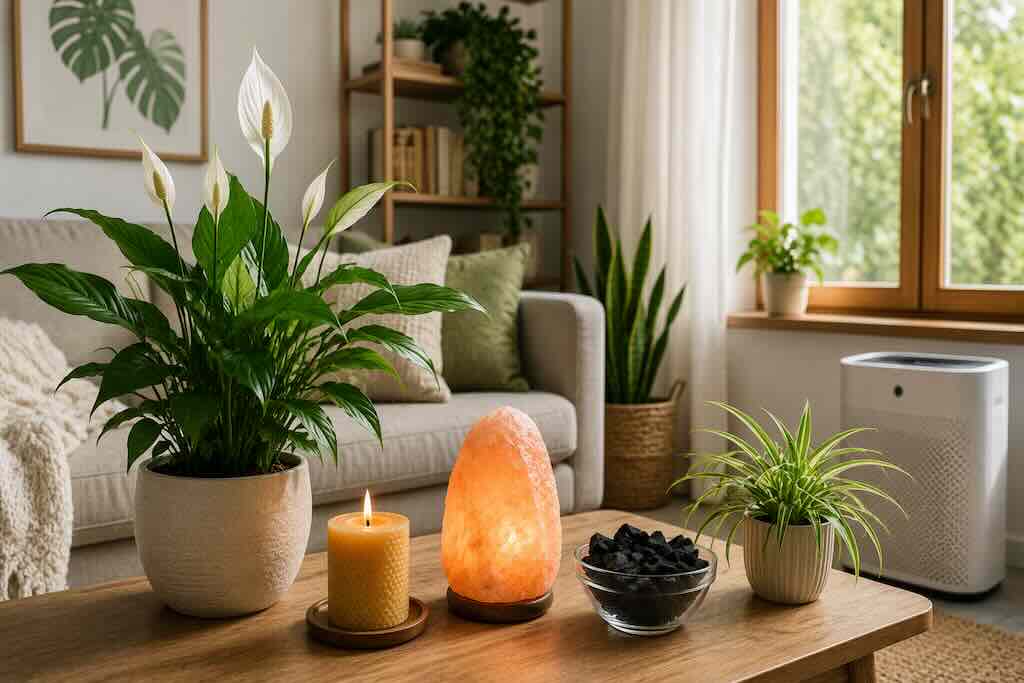
Indoor air can look perfectly clean while carrying particles, gases, moisture and pollutants released by everyday activities. Cooking dinner, lighting a candle, using a fireplace, spraying a cleaner or allowing damp areas to remain wet can all change the air inside a home.
Editor’s note: This article has been updated to remove inaccurate claims about beeswax candles, Himalayan salt lamps, activated charcoal and houseplants purifying indoor air, while adding current guidance on source control, ventilation, filtration, moisture and combustion safety.
Indoor air quality deserves attention because people spend substantial amounts of time inside. Some pollutants can also become more concentrated indoors. The U.S. Environmental Protection Agency notes that studies of several common organic pollutants found indoor levels roughly two to five times higher than outdoor levels under the conditions studied.
That does not mean outdoor air is always cleaner, nor does opening every window automatically solve the problem. Indoor air quality depends on the pollutants present, their sources, ventilation, outdoor conditions and the building itself.
The useful part is that many of the most effective interventions are surprisingly ordinary.
Start With the Source of the Pollution
Before buying something marketed as an air purifier, look for what is creating the pollution.
The EPA identifies three basic strategies for improving indoor air quality: source control, improved ventilation and air cleaning or filtration. Of these, eliminating or reducing individual pollution sources is usually the most effective starting point.
Sources vary from one home to another. They can include tobacco smoke, cooking emissions, fireplaces, candles, cleaning products, paints and solvents, excess moisture, mold, pesticides, furnishings and combustion appliances.
Walk through the home room by room. A persistent smell, visible dampness, soot around a fireplace or condensation that repeatedly collects on surfaces can provide clues that something deserves closer attention.
Use Ventilation Strategically
Fresh outdoor air can dilute pollutants generated indoors, making ventilation an important part of healthier indoor air. But ventilation should respond to conditions rather than becoming an automatic instruction to open every window.
If outdoor air quality is poor because of wildfire smoke, heavy traffic pollution or another local event, bringing large quantities of that air indoors may be counterproductive.
When outdoor conditions are suitable, opening windows and doors can increase air exchange. Mechanical ventilation and exhaust fans can be even more important in places where pollution is produced directly.
Use kitchen extraction while cooking when available, preferably a system vented outdoors. Bathroom exhaust can help remove moisture produced by showers and baths. Keep vents unobstructed and maintain ventilation equipment according to its instructions.
Reduce Particles From Cooking and Combustion
A fireplace may make a winter room glow amber, but fire is still combustion. The same principle applies to candles and some cooking activities.
The EPA lists cooking, candles, fireplaces, smoking and certain heaters among sources of indoor particulate matter. Reducing unnecessary combustion is therefore a more evidence-based approach than trying to neutralize the resulting pollution with decorative products.
Use exhaust ventilation while cooking and maintain fireplaces, chimneys and fuel-burning appliances properly. Never operate equipment indoors when it is designed exclusively for outdoor use.
Be Careful With the Beeswax Candle Myth
Beeswax candles are attractive. Their warm light can soften a room at night, and some people prefer their appearance or scent to conventional alternatives.
They should not, however, be treated as air-purification devices.
The popular claim that beeswax candles release ions that remove toxins from indoor air is not a reliable basis for improving air quality. Burning candles is itself a combustion activity, and the EPA includes candles among potential indoor sources of particulate matter.
If you enjoy candles, use them for atmosphere rather than pollution control. Burn them moderately, keep wicks maintained according to manufacturer instructions and provide appropriate ventilation.
Salt Lamps Do Not Detox a Room
A Himalayan salt lamp can cast beautiful peach-colored light across a bedside table. That aesthetic effect is real. Claims that the lamp pulls toxins from the surrounding air or substantially purifies a room are another matter.
There is no good reason to substitute a salt lamp for proven indoor-air strategies such as controlling pollution sources, improving ventilation and using appropriate filtration.
Keep the lamp if you like its light. Just let it remain a lamp.
Houseplants Are Beautiful, but They Are Not Air Cleaners
Few indoor-air myths are as persistent as the idea that a handful of houseplants can purify an entire home.
Plants can remove certain pollutants under controlled experimental conditions, but translating those laboratory findings into normal occupied rooms is problematic. The EPA states that there is currently no evidence that a reasonable number of houseplants removes significant quantities of pollutants in homes and offices.
Keep plants for greenery, texture and the pleasure of caring for something living. A rubber plant catching afternoon light can transform the atmosphere of a room visually. It simply should not replace ventilation or filtration.
There is another detail worth remembering: excessively wet potting soil can encourage microorganisms. Avoid routinely overwatering indoor plants, particularly in rooms already struggling with excess moisture.
Control Moisture Before Mold Gets Comfortable
Moisture management is one of the less glamorous parts of maintaining a healthy home, but it matters.
Leaks should be addressed rather than hidden behind furniture or repeatedly painted over. Use bathroom ventilation, investigate persistent condensation and dry water-damaged materials promptly when possible.
The goal is not to create an unnaturally dry home. It is to prevent prolonged damp conditions that allow mold and other biological contaminants to thrive.
Choose Cleaning Products With Indoor Air in Mind
A room smelling strongly of cleaning products is not necessarily a cleaner room from an air-quality perspective.
Follow product directions carefully, use ventilation when recommended and avoid mixing household cleaning chemicals. More product is not automatically more effective.
If a fragrance or spray repeatedly irritates your eyes, nose or throat, reconsider whether it needs to be part of your routine.
Use Filtration Where It Makes Sense
Filtration can complement source control and ventilation, particularly for airborne particles.
For homes with central HVAC systems, use filters compatible with the equipment and replace or clean them according to the manufacturer’s schedule. A filter that is too restrictive for a particular system can create its own performance problems, so specifications matter.
Portable air cleaners can also be useful in appropriate situations, but size and performance need to match the room. No portable device removes every indoor pollutant, and an air cleaner should not become an excuse to ignore an active pollution source.
Take Carbon Monoxide Seriously
Some indoor-air hazards cannot be seen or smelled.
Carbon monoxide is produced when fuels burn. Furnaces, fireplaces, gas appliances, generators and other combustion equipment can become sources under unsafe conditions.
The U.S. Centers for Disease Control and Prevention recommends installing battery-operated or battery-backup carbon monoxide detectors near sleeping areas and maintaining them according to manufacturer instructions.
Generators belong outdoors and well away from doors, windows and vents. Charcoal grills and portable outdoor gas stoves should never be used inside a home.
A Practical Indoor Air Checklist
- Identify and reduce obvious pollution sources.
- Use kitchen and bathroom exhaust ventilation appropriately.
- Ventilate with outdoor air when local conditions are suitable.
- Reduce unnecessary candle, incense and other indoor combustion.
- Maintain fireplaces, chimneys and fuel-burning appliances.
- Address leaks, dampness and persistent condensation.
- Use HVAC filters compatible with your system and maintain them regularly.
- Consider an appropriately sized portable air cleaner when filtration would be useful.
- Use cleaning products according to their labels and ventilate when directed.
- Install and maintain carbon monoxide alarms where appropriate.
Conclusion
Improving indoor air quality is less romantic than placing a glowing salt lamp beside a peace lily. It is also considerably more practical.
Start with what enters or is produced inside the home. Reduce the source where possible. Ventilate intelligently. Control moisture. Filter particles when appropriate. Maintain combustion equipment and keep carbon monoxide alarms working.
Plants can stay. Candles can still flicker across a dinner table. The difference is understanding what those objects actually do, rather than asking them to clean the air.
Frequently Asked Questions
Can houseplants purify indoor air?
Houseplants can affect pollutants in controlled laboratory settings, but the EPA says there is no evidence that a reasonable number of plants removes significant quantities of pollutants in ordinary homes and offices. Keep plants for their visual and personal benefits rather than relying on them as air cleaners.
Do beeswax candles clean the air?
There is not reliable evidence that beeswax candles function as meaningful household air purifiers. Candles involve combustion and can contribute particulate matter to indoor air.
Do Himalayan salt lamps remove toxins?
Salt lamps should not be relied upon to remove indoor pollutants. Treat them as decorative lighting rather than substitutes for source control, ventilation or filtration.
Should I open windows to improve indoor air?
Opening windows can increase ventilation when outdoor conditions are good. If outdoor pollution is high, however, bringing more outdoor air inside may not be appropriate. Consider local conditions first.
What is the best way to improve indoor air quality?
The EPA recommends focusing on source control, improved ventilation and air cleaning or filtration. Removing or reducing the pollution source is usually the strongest first step.
Does an air purifier replace ventilation?
No. Air cleaners can reduce certain airborne pollutants when correctly selected and maintained, but they do not remove every contaminant and cannot replace source control or appropriate ventilation.
Author: Freelance writer Jess Walter