



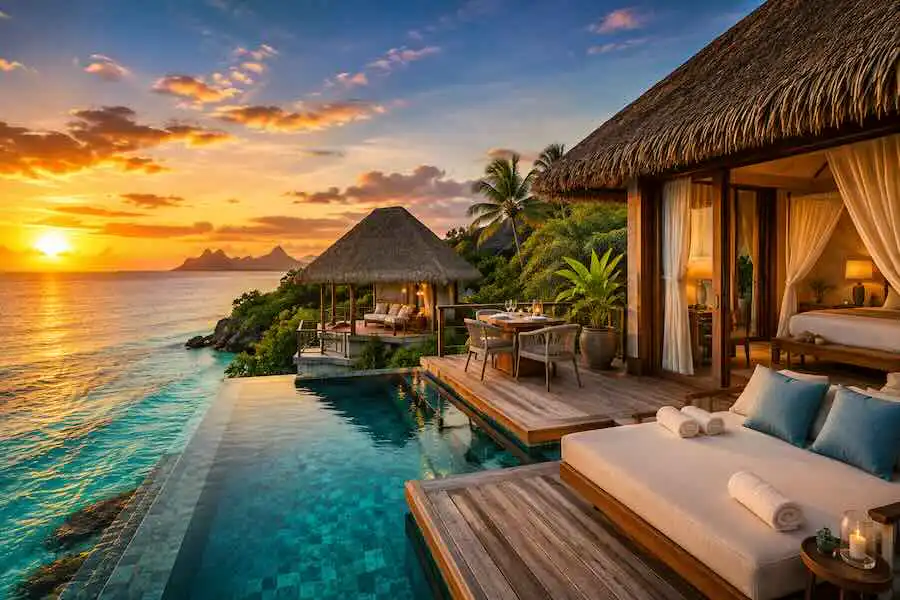
The new language of island luxury is quieter. A private deck above clear water. Breakfast carried in with the morning light. A long swim before anyone reaches for a phone. In 2026, the most memorable island escapes are increasingly defined not by excess, but by privacy, thoughtful design, exceptional landscapes, and experiences that create room to slow down.
From the luminous lagoons of the Maldives and French Polynesia to volcanic Caribbean coastlines and whitewashed Mediterranean islands, choosing the right retreat depends on the kind of escape you actually want. Romance, wellness, diving, family time, complete seclusion — each points toward a different shore.
Why Island Luxury Feels Different
Geography does much of the work. Water creates a natural boundary between ordinary routines and the place you’ve traveled to inhabit for a few days. The horizon becomes cleaner. Shoes become optional. Meals stretch later into the evening.
The best resorts understand this and resist filling every hour. Instead, they build an atmosphere around space: villas positioned for privacy, shaded terraces, outdoor showers, gardens that soften the architecture, and restaurants designed around the landscape rather than separated from it.
For broader destination inspiration, Travel + Leisure’s World’s Best Islands provides a useful starting point for comparing celebrated island destinations.
The Maldives: Privacy Above the Water
Few destinations have shaped the visual language of modern island luxury as strongly as the Maldives. Long timber walkways disappear across turquoise lagoons. Villas open directly onto the water. At night, there may be little beyond the sound of the sea and a dark horizon scattered with stars.
It remains an obvious choice for couples seeking privacy and luxury honeymoon inspiration, but the destination has become more varied. Depending on the property, travelers can prioritize diving, wellness, family facilities, surfing, marine conservation, or near-total seclusion.
The official Visit Maldives website is useful for understanding the country’s different atolls, activities, and travel logistics before narrowing down individual resorts.
French Polynesia: Lagoons With a Wilder Edge
Bora Bora delivers the postcard image — pale lagoons, overwater bungalows, dark volcanic peaks — but French Polynesia extends far beyond a single famous island. That makes it particularly appealing to travelers who want polished resort living without losing the feeling of being somewhere geographically extraordinary.
Days can move between snorkeling, lagoon excursions, quiet lunches and long stretches on a private terrace. Couples can build an intensely romantic itinerary, while more adventurous travelers can combine several islands for contrasting landscapes and experiences.
Tahiti Tourisme provides practical information for planning travel throughout the islands of French Polynesia.
The Caribbean: Luxury With Personality
The Caribbean offers something different: choice. One island might mean rainforest-covered mountains and volcanic beaches; another offers calm water, pale sand and low-rise resorts arranged along the coast.
St. Lucia brings dramatic landscapes and romantic hideaways, while Turks and Caicos is known for luminous water and expansive beaches. Other islands bring their own architecture, food, music and pace. Divine Magazine’s guide to standout Caribbean beaches offers additional inspiration for travelers deciding where to begin.
The Greek Islands: Design, Food and the Aegean
Island luxury doesn’t require palm trees. Across Greece, the visual vocabulary changes to sun-bleached stone, linen, blue water, terraces cut into hillsides and dinner tables glowing after sunset.
Santorini and Mykonos remain recognizable choices, but travelers willing to look beyond the most photographed islands can discover quieter landscapes and a different rhythm. Milos, for example, combines unusual coastal formations with a more relaxed atmosphere.
The official Visit Greece portal is a practical resource for comparing islands, regions and seasonal experiences.
Seychelles and Mauritius: Indian Ocean Landscapes
The Seychelles feels almost sculptural. Granite boulders meet pale sand beneath dense tropical vegetation, producing beaches that look distinctly different from the flat horizons associated with many tropical islands.
Mauritius offers another interpretation of Indian Ocean travel, mixing beaches and resort life with a larger island landscape that rewards exploration. Both can work well for travelers who want beautiful accommodation without spending every day inside the resort.
The Experiences Worth Traveling For
A spectacular villa can draw you to a resort, but experiences usually become the details you remember. That might mean swimming with marine life in clear water, eating dinner barefoot beside the sea, sailing at dusk or waking before sunrise for yoga on an open deck.
- Private villas: Look beyond square footage and consider privacy, orientation, outdoor space and direct access to the sea or beach.
- Dining: Strong island resorts increasingly connect menus to local ingredients, fishing traditions and regional cuisine rather than offering an interchangeable international menu.
- Wellness: Oceanfront treatment rooms, meditation, movement sessions and restorative spa programs can turn a beach holiday into a genuine retreat. The Global Wellness Institute provides research into the wider wellness-tourism sector.
- Adventure: Diving, snorkeling, hiking, sailing and wildlife encounters add texture to longer stays.
- Celebrations: Private islands naturally lend themselves to honeymoons, proposals, anniversaries and intimate destination weddings.
Conscious Luxury Matters
An island resort depends heavily on the environment surrounding it. Coral reefs, beaches, freshwater, energy use and waste management aren’t abstract sustainability issues when the entire guest experience is built around a fragile ecosystem.
That’s why travelers should look past vague environmental language. Ask what a property actually does. Does it reduce single-use plastics? Support local employment? Participate in reef or habitat restoration? Source food locally where practical? Publish measurable environmental targets?
Independent organizations such as EarthCheck and Green Globe can provide additional context when researching sustainability credentials. Divine Magazine’s coverage of changing travel trends also explores how expectations around the travel experience continue to shift.
How to Choose the Right Island Resort
Start with the experience rather than the room. A beautiful overwater villa won’t compensate for choosing a destination that doesn’t suit the way you like to travel.
- Decide on your pace: Choose between complete seclusion, an activity-rich resort, cultural exploration or a balance of all three.
- Calculate the real journey: International arrival may be followed by a domestic flight, seaplane, ferry or speedboat transfer. Those extra hours matter on a short holiday.
- Study the inclusions: Compare breakfast-only, half-board and all-inclusive rates carefully, particularly on remote islands where alternative restaurants may not exist.
- Check seasonality: Rainfall, wind, humidity, marine conditions and tropical storm seasons can affect both price and experience.
- Read recent guest feedback: Current reviews can reveal details that polished photography cannot, from renovation noise to transfer efficiency and service consistency.
Planning a Luxury Island Escape
For a straightforward resort stay, booking independently can be simple. Complex honeymoons, multi-island journeys and expensive milestone trips may justify working with a specialist travel advisor, particularly when transfers, private experiences and several properties need to align.
Virtuoso connects travelers with luxury travel advisors and properties, while Forbes Travel Guide offers another reference point for researching high-end hotels and resorts.
Conclusion: Choose the Feeling, Then the Island
The most successful island escape begins with a simple question: how do you want to feel when you arrive?
If the answer is completely alone, privacy should lead the search. If it’s restored, look closely at wellness and the natural setting. For adventure, prioritize reefs, trails and excursions. For romance, consider privacy, dining and the details that happen after sunset.
The villa matters. So does the view. Yet the real luxury is often less visible: silence, space, unhurried mornings and the rare feeling that there is nowhere else you need to be.
Frequently Asked Questions
When should I book a luxury island resort?
For high-demand periods and limited villa categories, planning several months ahead gives you more choice. Holiday periods and particularly sought-after properties may justify booking even earlier.
Are all-inclusive luxury resorts worth considering?
Yes, particularly on isolated islands where almost every meal and activity takes place at the resort. Compare exactly what the rate includes before assuming an all-inclusive package offers better value.
How can I assess a resort’s sustainability claims?
Look for measurable initiatives, transparent reporting and credible third-party certification rather than relying exclusively on marketing language. Marine protection, energy, water, waste, sourcing and local employment are useful areas to investigate.
Can luxury island resorts work for families?
Many can. Multi-bedroom villas, kids’ clubs, calm swimming areas and age-specific activities can make an island resort exceptionally convenient for families. Check individual property policies because some resorts are adults-only.
What should I pack?
Lightweight clothing, swimwear, sun protection, comfortable sandals and breathable evening pieces cover most island stays. Check the resort’s restaurant dress codes and any equipment requirements for planned activities before departure.
Can I work remotely from an island resort?
Potentially, but don’t assume reliable connectivity simply because a property is luxurious. Confirm Wi-Fi coverage, speed and workspace arrangements directly if remote work is essential to your stay.