


A memorial keepsake does not need to be elaborate to carry meaning. A photograph tucked into a book, a familiar line of poetry, or a small object connected to someone’s daily rituals can quietly bring their presence back into focus.
That personal connection matters. Contemporary thinking around grief recognizes the idea of a continuing bond: the emotional and symbolic relationship with someone can remain part of life after their death. A thoughtfully chosen keepsake can become one small expression of that connection.
For families planning a funeral, memorial service, or celebration of life, the most meaningful gifts tend to reflect the person rather than simply the occasion. Their faith, books, garden, handwriting, favorite music, photographs, colors, and small routines can all offer direction.
Prayer or Memorial Cards
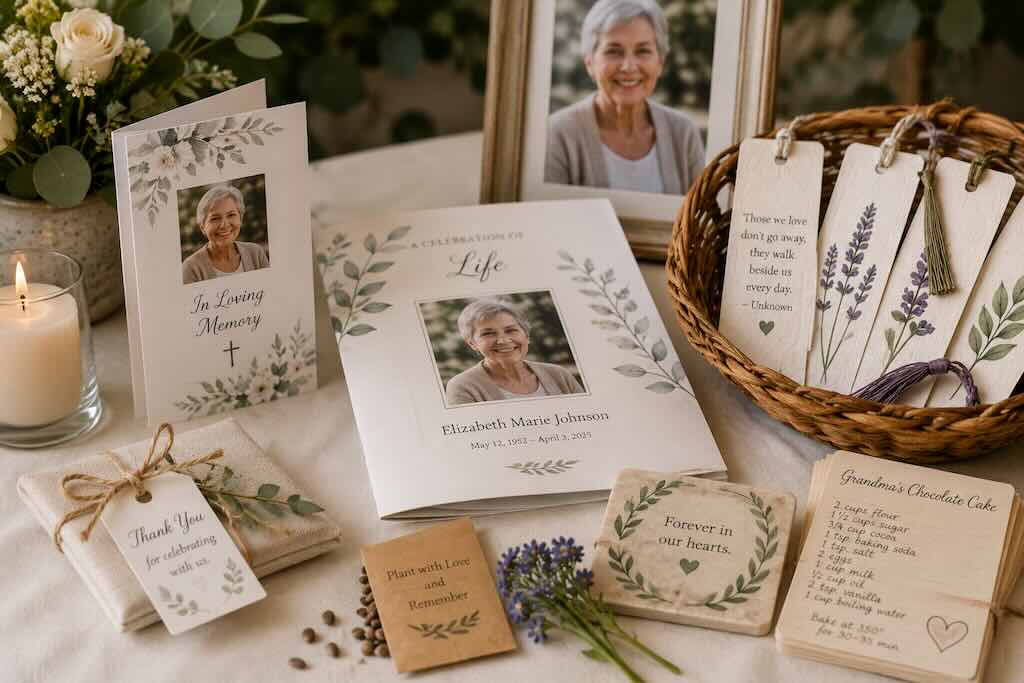
Small memorial cards remain one of the simplest keepsakes to give guests. Depending on the family‘s faith and traditions, they might contain a prayer, scripture passage, poem, quotation, photograph, or a few carefully chosen words about the person being remembered.
They do not necessarily need to be religious. A secular card could feature a landscape the person loved, a line from a favorite writer, or a brief memory. The important detail is that the card feels connected to the life being honored rather than assembled from a generic template.
A Funeral Program Worth Keeping
The order of service can serve two purposes: guiding guests through the ceremony and becoming a physical record of the day. A funeral program can include photographs, biographical details, readings, music, prayers, quotations, and information about the service itself.
Give particular attention to the photograph on the cover. Rather than automatically selecting the most formal portrait available, consider an image that family and friends immediately recognize: a familiar smile, a favorite place, or an unguarded moment that captures something of the person’s character.
Memorial Bookmarks
For someone who was rarely without a novel, newspaper, cookbook, or poetry collection, a bookmark feels especially natural. Memorial bookmarks are also recognized as practical personalized keepsakes and can incorporate photographs, significant dates, poems, or quotations.
The design can take cues from the person’s own bookshelf. Use a line from a writer they loved, colors associated with their home, or an illustration connected to a favorite story. Each time the bookmark appears between the pages of another book, the remembrance becomes part of an ordinary moment.
Seeds or Something to Plant
For gardeners and people closely connected with nature, seed packets can offer a gentler alternative to conventional funeral favors. Guests can take them home and grow flowers, herbs, or another plant associated with the person.
Personalized celebrations of life increasingly incorporate objects and activities connected with someone’s interests, including planting memorial trees or giving guests seeds to grow. Before choosing a variety, check whether it is appropriate for the climates and ecosystems where guests are likely to plant it.
A Favorite Recipe
Sometimes memory lives in the kitchen. If the person was known for Sunday dinners, a particular cake, holiday biscuits, or an intensely guarded family recipe, printing it onto a simple card can create an unusually intimate keepsake.
If you have the original handwritten recipe, consider reproducing the handwriting rather than typesetting it. The uneven letters, faded ink, and old corrections are part of the object. Guests receive something they can actually use, while a familiar dish continues to appear at tables years later.
Small Objects Connected to Their Life
A keepsake can also emerge from an interest that immediately calls the person to mind. A coaster might suit someone whose kitchen table was always surrounded by friends. A small packet of tea could recall an afternoon ritual. A pressed flower might reference their garden. For a musician, a photograph from a performance or a card carrying the title of a meaningful song may feel more appropriate.
There is no requirement for every memorial to follow the same formula. Guidance on personalizing funeral and memorial services similarly encourages families to draw on hobbies, passions, photographs, collections, music, readings, and other details from the person’s actual life.
How to Choose the Right Memorial Gift
Start with the person, not the product. Ask what they repeatedly returned to: the garden at dawn, stacks of crime novels, strong coffee, church on Sunday, old records, a particular coastline, or a recipe everybody requested. Those details usually provide better ideas than browsing pages of generic memorial merchandise.
It is also perfectly reasonable not to give guests anything. A funeral already carries emotional, practical, and financial demands. Photographs, shared stories, music, readings, and meaningful objects displayed during the service can create remembrance without adding another task. Research and clinical perspectives on bereavement emphasize that grief and meaning-making are highly individual rather than processes with one prescribed form.
Conclusion
The best memorial keepsakes are rarely the most expensive. They are the ones that make someone pause and remember a voice, a habit, a room, a story.
A prayer card may be right for one family; seeds, a recipe, or a bookmark may feel more truthful for another. Choose something that belongs naturally to the person’s story. That connection is what gives a small object its weight.
Frequently Asked Questions
Do you have to give memorial gifts at a funeral?
No. Memorial gifts are entirely optional. A meaningful service, photographs, music, readings, and time spent sharing memories can be more than enough.
What can be included on a memorial card?
A memorial card can include a photograph, name and dates, prayer, scripture passage, poem, quotation, or short personal message. Religious and secular designs can both be appropriate.
What makes a good personalized funeral keepsake?
Look for a genuine connection to the person being remembered. Their hobbies, faith, favorite books, garden, recipes, music, travels, colors, or everyday routines can provide a starting point.
Can a funeral program be a memorial keepsake?
Yes. Programs are often retained after a service, particularly when they contain photographs, biographical details, meaningful readings, poems, or other personal material.