




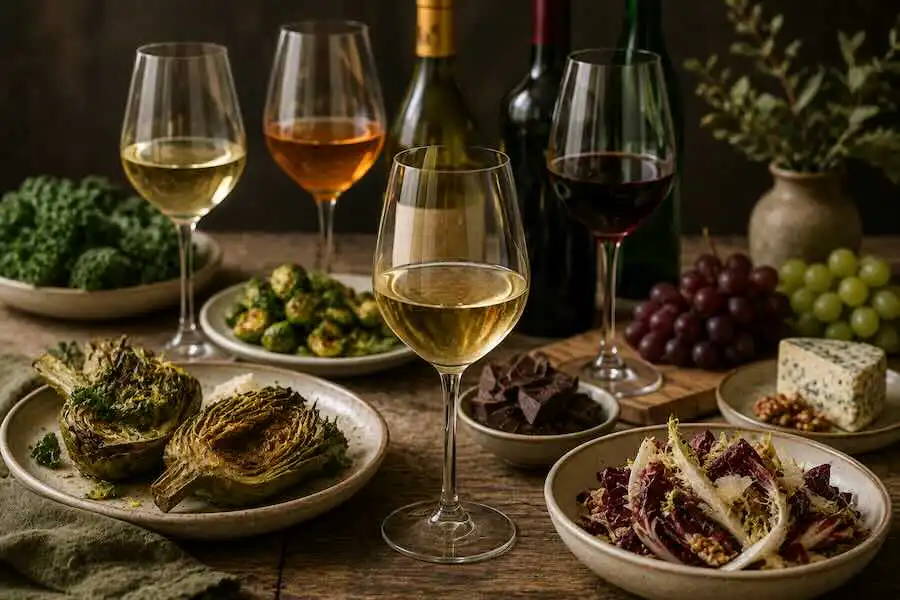
Bitter foods can be difficult to pair with wine, but the problem is rarely bitterness alone. The real question is what surrounds it: acidity, sweetness, salt, fat, char, herbs, or fruit. Get that balance right and ingredients such as radicchio, kale, artichokes, dark chocolate, and endive can produce some of the most interesting wine pairings at the table.
A useful starting point is simple. Look toward crisp whites, low-tannin reds, gently sweet wines, and textured orange wines rather than aggressively tannic bottles. Muscadet, Aligoté, Grüner Veltliner, Gamay, light Pinot Noir, and skin-contact whites all give you different ways to work with bitterness instead of fighting it.
How Bitterness Changes a Wine Pairing
Bitterness can make another bitter or astringent sensation feel more pronounced. That is why a young, heavily tannic red can become awkward beside intensely bitter greens: instead of creating contrast, the combination can leave the palate feeling dry and severe.
Before opening a bottle, taste the finished dish. Is its bitterness fresh and leafy, like endive? Charred and smoky? Nutty? Cocoa-driven? Does the recipe contain lemon, vinegar, cheese, fruit, or something sweet? Those details should guide the pairing more than the bitter ingredient in isolation.
Use Acidity to Keep Bitter Foods Fresh
Bright acidity is one of the most dependable tools for pairing wine with bitter vegetables. A fresh white can sharpen a dish while cleansing the palate between bites, particularly when the recipe also contains olive oil, cheese, or another rich component.
Muscadet works beautifully when you want the food to remain firmly in the foreground. Aligoté brings a similarly lean, energetic character, while Grüner Veltliner adds a little more personality through green fruit, citrus, and peppery notes.
With chicory, endive, or radicchio, Sauvignon Blanc can make sense when the dish itself has a distinctly herbal character. Instead of trying to disguise those green flavors, the wine echoes them.
Why Neutral Whites Can Be So Useful
Not every pairing needs aromatic fireworks. Sometimes a restrained wine is exactly what a complicated vegetable needs.
Muscadet and Aligoté are particularly useful because their freshness and relatively understated fruit can support bitter ingredients without competing with them. This becomes valuable with dishes built around artichokes, Brussels sprouts, kale, or endive, where an intensely perfumed wine may introduce one flavor too many.
Preparation matters here. Roasting adds sweetness. Grilling adds smoke and char. Lemon introduces acidity. Nuts add richness and their own subtle bitterness. The same vegetable can therefore call for a completely different bottle depending on how it reaches the plate.
Match Herbal Wines With Bitter Greens
There is another route: rather than creating contrast, match similar flavors. Herbaceous wines can sit naturally beside leafy bitterness because both occupy a similar green, savory register.
- Sauvignon Blanc: Try it with chicory, endive, asparagus, or sharply dressed green salads.
- Grüner Veltliner: Its citrus, green-fruit, and pepper character works especially well with roasted or grilled vegetables.
- Friulano: Its subtle savory and almond-like character can sit comfortably beside bitter leaves and nuts.
- Aligoté: A useful choice when lemon, vinegar, or salty cheese is already bringing plenty of personality to the dish.
Choose Low-Tannin Reds
Red wine is not off the table. The trick is avoiding excessive tannin when the food already carries substantial bitterness.
Gamay is an obvious place to begin. Its bright fruit and relatively gentle structure make Beaujolais a flexible partner for roasted radicchio, mushrooms, charred vegetables, and dishes where bitterness is softened by fruit or cheese. Light Pinot Noir can perform a similar role.
Poulsard and lighter expressions of Trousseau can also be interesting when you want a red with delicacy rather than weight. Barbera brings another useful element: vivid acidity. Serve lighter reds slightly cool and they can feel remarkably fresh beside vegetable-driven dishes.
Orange Wine Brings Texture to the Table
Skin-contact white wine occupies an intriguing middle ground. It can have the freshness associated with white wine alongside tannin, savory depth, and flavors reminiscent of citrus peel, dried fruit, herbs, or tea.
That combination can be excellent with bitter foods because the wine does not simply neutralize the dish. It engages with it. Ribolla Gialla, skin-contact Pinot Grigio, Rkatsiteli, and other amber wines can work particularly well with roasted artichokes, grilled radicchio, Brussels sprouts, walnuts, and herb-heavy dishes.
If you are new to orange wine, begin with a fresher, less aggressively tannic example. Skin-contact wines vary enormously, so there is no single orange-wine profile that suits every plate.
What Wine Goes With Dark Chocolate?
Dark chocolate creates a different kind of pairing problem. Cocoa brings bitterness, but the dessert may also contain considerable sweetness, fat, vanilla, nuts, salt, or fruit. Here, the wine generally needs enough richness and sweetness to avoid tasting thin or sour beside the chocolate.
Port is a classic option. Banyuls and Pedro Ximénez can also provide the sweetness and concentration required by darker chocolate. Amarone offers a different approach, using dried-fruit richness, warmth, and intensity rather than behaving like a conventional dessert wine.
The darker and less sweet the chocolate becomes, the more carefully you need to test the combination. A young Cabernet Sauvignon with very dark chocolate, for example, can create an aggressive collision of tannin and bitterness.
If you’re planning a broader tasting menu, our guide to wine and cheese tasting parties offers another useful framework for building pairings in sequence.
When Sweet Wine Is the Better Answer
Sometimes contrast wins. A little sweetness can soften perceived bitterness, which is why off-dry Riesling can be surprisingly effective with bitter greens when a dish also contains spice, citrus, or fruit.
Sauternes and Tokaji can make compelling partners for combinations such as endive and blue cheese, where bitterness, salt, richness, and sweetness meet on the same plate. The goal is not simply to choose a sweet bottle. The wine still needs enough acidity to keep the pairing alive.
A Simple Bitter Food and Wine Pairing Guide
| Food | Wine to Try | Why It Works |
|---|---|---|
| Grilled artichoke | Muscadet or orange wine | Freshness and restrained fruit keep the pairing clean |
| Radicchio | Grüner Veltliner or Gamay | Fresh acidity works against the vegetable’s bitter edge |
| Kale salad | Aligoté or Sauvignon Blanc | Citrus and herbal notes complement green flavors |
| Brussels sprouts | Friulano or light Beaujolais | Savory character meets roasted, nutty flavors |
| Endive and blue cheese | Sauternes | Sweetness contrasts bitterness and salt |
| Dark chocolate | Port, Banyuls, or Amarone | Concentration prevents the wine from disappearing beside cocoa |
Build the Pairing Around the Finished Dish
The most useful rule is also the easiest to forget: you are pairing wine with a dish, not an ingredient list. Raw radicchio dressed with lemon and olive oil is different from radicchio grilled until its edges caramelize. Kale with citrus behaves differently from kale served with pecorino and white beans.
If you’re cooking outdoors, preparation can become as influential as the vegetable itself. Our summer grilling guide explores the equipment side of creating those smoky, charred flavors.
When uncertain, pour a small taste before serving the bottle to everyone. Take a bite, then a sip. If the wine suddenly feels harsher, more tannic, or strangely hollow, change direction. If both food and wine become clearer and more expressive, you’ve found the balance.
Conclusion: Balance Bitterness Instead of Hiding It
The best wine pairings for bitter foods do not try to erase bitterness. They give it context. Crisp acidity can bring freshness, restrained fruit can leave room for vegetables, gentle sweetness can soften sharper edges, and low-tannin reds can provide depth without turning the combination dry.
Start with Muscadet, Aligoté, Grüner Veltliner, Gamay, or a lighter Pinot Noir. Move toward orange wine when the dish becomes roasted, nutty, herbal, or deeply savory. For dark chocolate and bitter-sweet combinations, richer and sweeter wines become more convincing. Then taste. Your palate remains the final judge.
FAQ: Wine Pairings for Bitter Foods
Why can bitter foods make wine taste harsh?
Bitterness in food can make tannic or otherwise astringent wines feel more severe. This is why softer reds and fresh whites are often easier partners for strongly bitter ingredients.
What wine is best with bitter vegetables?
Crisp whites such as Muscadet, Aligoté, Sauvignon Blanc, and Grüner Veltliner are good starting points. The best choice depends on how the vegetable is cooked and what other ingredients appear in the dish.
Can you drink red wine with bitter foods?
Yes. Look for lighter reds with restrained tannins and good freshness, including Gamay and light Pinot Noir. Barbera can also work when its acidity suits the rest of the dish.
Is orange wine good with bitter vegetables?
It can be excellent. Skin-contact wines often bring citrus-peel, tea, herbal, and savory characteristics that complement roasted or grilled bitter vegetables particularly well.
What wine pairs with dark chocolate?
Port, Banyuls, Pedro Ximénez, and other concentrated sweet wines are natural choices. Amarone can also work when its dried-fruit richness matches the intensity of the chocolate.