




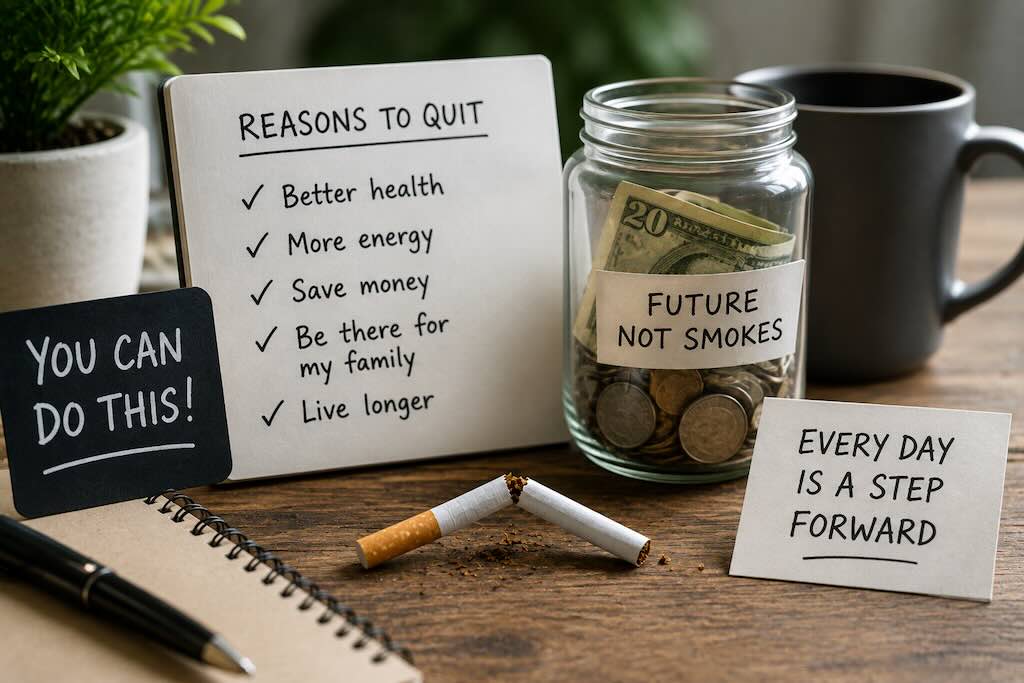
Quitting smoking is rarely just a matter of deciding not to light another cigarette. Nicotine creates physical dependence, while smoking itself becomes stitched into ordinary moments: morning coffee, work breaks, driving, stress, drinks with friends. A successful quit attempt works on both sides of that equation.
The encouraging part is that you do not have to rely on willpower alone. Evidence-based stop-smoking treatments, professional support and a realistic plan can make cravings and withdrawal easier to manage. The aim is simple: build enough support around yourself that cigarettes gradually lose their place in your day.
1. Choose a quit date and make a plan
Start with a specific date rather than an open-ended promise to quit someday. The CDC recommends creating a quit plan that considers withdrawal symptoms, smoking triggers and appropriate cessation treatments.
Some people stop completely on their quit date, while others prefer to reduce their cigarette consumption beforehand. If you choose gradual reduction, treat it as a route toward stopping rather than the destination. Simply smoking fewer cigarettes without ultimately quitting does not remove the health risks associated with smoking.
2. Tell people you trust
Let friends, family members or colleagues know what you are doing. Be specific about what would help. You might ask smokers around you not to offer cigarettes, request that smoking happens away from you, or have someone available to call when a difficult craving arrives.
Support does not have to stop with people you know. A doctor, pharmacist, smoking-cessation adviser or quitline can provide practical guidance and help you explore treatments suited to your circumstances.
3. Consider proven stop-smoking treatments
Quitting can produce cravings, irritability, restlessness, difficulty concentrating and changes in sleep. These are symptoms of nicotine withdrawal rather than evidence that you need to return to smoking.
Nicotine replacement therapy can reduce withdrawal symptoms without exposing you to the toxic substances produced by burning tobacco. Depending on where you live and your medical circumstances, other stop-smoking medicines may also be available. NHS guidance on stop-smoking products explains options including nicotine patches, gum and other treatments.
Speak with a healthcare professional about the most appropriate option, particularly if you have medical conditions, take other medicines, are pregnant or have questions about treatment safety.
4. Prepare distractions for cravings
A craving can feel commanding when it arrives, but it passes. Have several small actions ready before you need them: walk outside, drink water, chew sugar-free gum, brush your teeth, message someone, play a game or change rooms.
Physical activity can be particularly useful because it changes both your surroundings and your focus. Even a short walk creates distance between the craving and the familiar ritual of reaching for a cigarette.
5. Learn your smoking triggers
Look closely at when cigarettes appear in your routine. Coffee? Driving? Alcohol? Stress? After meals? Phone calls? Work breaks? Social situations?
Once the pattern is visible, replace the ritual rather than leaving an empty space. If coffee and cigarettes are closely connected, temporarily change your morning routine. If you smoke while talking on the phone, keep your hands occupied. If work breaks are difficult, walk somewhere different rather than joining the usual smoking group.
The NHS guide to smoking triggers and cravings recommends identifying these associations in advance and changing routines where necessary.
6. Keep your reasons for quitting visible
Fear does not need to be your primary source of motivation. A more sustainable approach is to write down what becoming smoke-free gives you personally. Perhaps it is easier breathing, improved fitness, more money, freedom from cigarette breaks or simply no longer organizing part of your day around nicotine.
Keep that list somewhere visible. During a strong craving, a concrete reason can be more useful than a vague instruction to stay disciplined.
7. Pay attention to coffee and alcohol
Drinks can become surprisingly powerful smoking cues. If coffee has always accompanied your first cigarette, temporarily changing what you drink or where you drink it can help disrupt the association.
Alcohol deserves particular attention during the early stages of quitting because it can make resisting established smoking habits more difficult. Consider drinking less or choosing alcohol-free options while your new routine settles into place.
8. Make the savings tangible
Smoking has a recurring financial cost that can become almost invisible because it is paid in small increments. Turn that expense into something you can see.
Transfer the amount you would normally spend on cigarettes into a separate account or savings pot every week. Watching the figure rise provides another measure of progress. Use some of it for something meaningful: dinner, music, a weekend away or an item you have wanted for months.
What to do if you smoke again
One cigarette does not have to erase the work you have already done. Instead, look at what happened. Where were you? Who were you with? What were you feeling? That moment can expose a trigger your original plan did not adequately cover.
Then adjust the plan and continue. If you have returned to regular smoking, consider choosing another quit date and seeking additional professional support rather than abandoning the attempt entirely.
Conclusion
Quitting smoking is easier to approach as a practical process rather than a test of character. Set a date. Understand your triggers. Prepare for cravings. Use evidence-based treatments when appropriate and bring other people into the process.
Most importantly, keep the destination clear. Cutting down can be a useful stage for some smokers, but becoming smoke-free is where the substantial health benefits lie. Your routines can change, even the ones that once felt automatic.
FAQ
Is it better to quit smoking gradually or all at once?
Different approaches can work for different people. If you reduce gradually, establish a clear path toward quitting completely rather than simply maintaining a lower level of smoking. A healthcare professional or cessation adviser can help you choose an appropriate strategy.
How long does nicotine withdrawal last?
Withdrawal can begin within hours of the last cigarette and is often strongest during the first week. NHS guidance says symptoms last around three to four weeks on average, although individual experiences vary.
Can nicotine replacement therapy help?
Yes. Nicotine replacement products such as patches, gum and lozenges can help manage cravings and withdrawal. A doctor, pharmacist or stop-smoking service can advise you on suitable products and combinations.
What should I do when a cigarette craving hits?
Change what you are doing and give the craving time to pass. Walking, drinking water, chewing sugar-free gum, deep breathing or contacting someone supportive can interrupt the familiar smoking routine.