



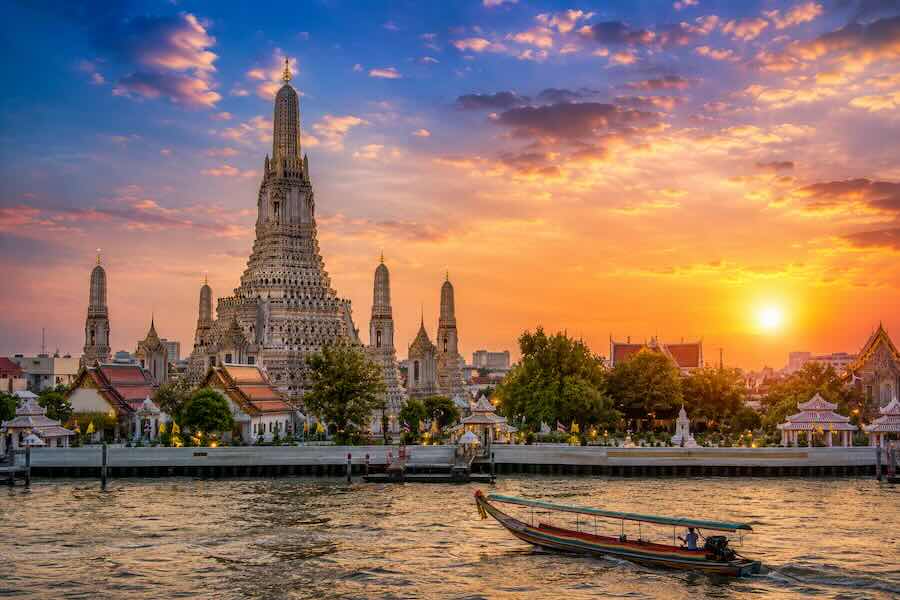
Thailand can change character within a single journey. Bangkok glows beneath temple roofs and elevated trains; farther south, limestone cliffs rise from warm water, while northern landscapes shift toward mountains, forests and quieter historic towns. That contrast is part of what keeps the country among Asia’s most compelling destinations.
Some familiar facts about Thailand are genuinely surprising. Others have been repeated online for so long that they are now outdated. With Thailand welcoming more than 32.9 million international visitors in 2025, it is worth taking a fresh look at the country through its geography, culture, wildlife and traditions.
Thailand Was Once Known Internationally as Siam
The country’s official name is the Kingdom of Thailand. Internationally, it was previously known as Siam, a name that still appears across Thai history, architecture and popular culture.
Thailand sits at the heart of mainland Southeast Asia, sharing borders with Myanmar, Laos, Cambodia and Malaysia. Its geography stretches between the Andaman Sea and the Gulf of Thailand, creating dramatically different coastal landscapes on either side of the country.
Bangkok Has an Extraordinary Ceremonial Name
Bangkok is known locally as Krung Thep Maha Nakhon, but its complete ceremonial name is considerably longer. The elaborate name has become one of those details travellers frequently encounter when discovering the city’s history.
The capital itself has grown into one of the world’s major tourism cities. In 2025, Bangkok recorded 30.3 million international arrivals according to figures highlighted by the Tourism Authority of Thailand.
More Than 71 Million People Live in Thailand
Older travel articles frequently place Thailand’s population at around 69 million. That figure is now dated. World Bank data puts the country’s 2025 population at approximately 71.6 million.
The population is spread across dense metropolitan areas, provincial cities, agricultural regions, mountain communities and islands, which helps explain why travelling through Thailand can feel like moving through several different countries within one border.
Thailand Avoided Formal European Colonization
One of Thailand’s most distinctive historical facts is that it avoided formal colonization by a European power while neighbouring territories came under British and French control.
That history was more complicated than simply resisting invasion. Siamese rulers used diplomacy, modernization, territorial concessions and the country’s position between British and French colonial interests to preserve sovereignty.
Buddhism Shapes Much of Thailand’s Cultural Landscape
Theravada Buddhism has a deep presence in Thai life. National Statistical Office data has placed Buddhists at more than 90 percent of the population, although Thailand is also home to Muslim, Christian and other religious communities.
That Buddhist heritage is visible everywhere from small neighbourhood temples to monumental religious sites. Wat Muang in Ang Thong province is home to an enormous seated Buddha image that rises above the surrounding countryside.
Songkran Is More Than a Giant Water Fight
Images of Songkran often show streets filled with water, buckets and brightly coloured water guns. Yet the traditional Thai New Year carries considerably deeper cultural meaning.
Celebrated around mid-April, Songkran is associated with family reunions, paying respect to older relatives and ancestors, Buddhist traditions and symbolic cleansing. UNESCO inscribed Songkran in Thailand on its Representative List of the Intangible Cultural Heritage of Humanity in 2023.
Thailand Has Remarkable Wildlife
Thailand’s landscapes support extraordinary biodiversity. Among its smallest residents is Kitti’s hog-nosed bat, often called the bumblebee bat and widely regarded as one of the world’s smallest mammals.
At the opposite end of the scale, whale sharks inhabit waters around Thailand. These enormous, patterned animals are the world’s largest fish and can occasionally be encountered around Thai diving destinations.
Elephants Remain Deeply Connected to Thai Culture
Elephants have occupied an important place in Thai history, religion, labour and royal symbolism. Today, the relationship between tourism and elephants is being examined much more carefully as travellers become increasingly conscious of animal welfare.
For visitors, that makes research important. Look for experiences centred on observation and genuine welfare rather than performances or activities that require unnatural behaviour from the animals.
Siamese Cats Really Do Come From Thailand
The connection is right there in the old name. Cats resembling the modern Siamese appear in historic Thai manuscripts, and the breed’s ancestry is closely associated with the former Kingdom of Siam.
In Thailand, traditional cats have carried cultural associations with fortune and status for generations. Their pale coats, dark extremities and striking eyes later made Siamese cats one of the most recognizable breeds internationally.
Lopburi Is Famous for Its Monkeys
The historic city of Lopburi has become famous for macaques living around its ancient monuments. The relationship between the animals and the city has produced one of Thailand’s more unusual tourist images: monkeys gathering around temples and streets in large numbers.
The city’s association with monkeys has also inspired the well-known Monkey Buffet Festival, during which food is arranged for the macaques. It is a curious collision of tourism, local tradition and urban wildlife.
Thai Is a Tonal Language
Thai is the country’s official language and uses its own distinctive script. It is tonal, meaning the pitch used when pronouncing a syllable can change its meaning.
Travellers do not need to master Thai before arriving, particularly in established tourism areas, but learning a few basic expressions can make everyday encounters warmer. Even a simple greeting or thank-you can change the texture of an interaction.
Thailand’s Food Is Part of Its Living Heritage
Thai food is not simply an attraction encountered in restaurants. Markets, street stalls, family kitchens and regional cooking traditions make food part of everyday cultural life.
In 2024, UNESCO added Tomyum Kung to its Representative List of the Intangible Cultural Heritage of Humanity. The recognition places the famous hot-and-sour dish within a broader story of ingredients, knowledge and culinary practice.
Traditional Thai Massage Has UNESCO Recognition Too
Nuad Thai, traditional Thai massage, was inscribed on UNESCO’s Representative List in 2019. Its history combines physical practice with knowledge passed between generations.
It is another reminder that some experiences marketed internationally as symbols of Thailand have much deeper roots inside the country’s living culture.
Thailand’s Tourism Numbers Have Changed Dramatically
Older versions of Thailand travel guides sometimes claim that around six million international visitors arrive each year. That figure no longer reflects the scale of Thai tourism.
Thailand welcomed more than 35 million international visitors in 2024. In 2025, the Tourism Authority of Thailand reported more than 32.9 million arrivals. By June 2, 2026, the country had already received more than 14 million international visitors.
The country’s current tourism strategy is also shifting toward what authorities describe as “Value over Volume,” with greater attention being placed on meaningful experiences, sustainability and benefits for local communities.
Why Thailand Still Rewards Curious Travellers
Thailand is easy to reduce to familiar postcards: turquoise water, gold temples, tuk-tuks, night markets and bowls of fragrant noodles. The reality is considerably richer.
Move slowly and the details begin to appear. Incense curls through temple courtyards. Morning markets wake before the heat settles over the streets. Forest meets limestone, old wooden houses sit beside glass towers, and recipes carry histories that stretch far beyond the plate.
That is perhaps the most useful fact to know before visiting Thailand: there is no single version of it. Bangkok, Chiang Mai, Isan, the Andaman coast and the southern islands each offer a different rhythm. Give yourself enough time to notice the difference.
Frequently Asked Questions About Thailand
What was Thailand previously called?
Thailand was internationally known as Siam before adopting Thailand as its modern name.
What is the capital of Thailand?
Bangkok is Thailand’s capital and largest metropolitan centre. Thai speakers commonly refer to the city as Krung Thep Maha Nakhon.
When is Songkran celebrated?
Songkran, the traditional Thai New Year festival, takes place in mid-April. Celebrations are particularly associated with April 13–15, although events can extend beyond those dates in some locations.
How many people visit Thailand?
Thailand receives tens of millions of international visitors in a typical recent year. More than 32.9 million international arrivals were recorded in 2025.
Is Thailand only a beach destination?
No. Thailand combines islands and beaches with major cities, historic sites, mountains, national parks, temples, food culture and rural communities. The experience varies considerably by region.