




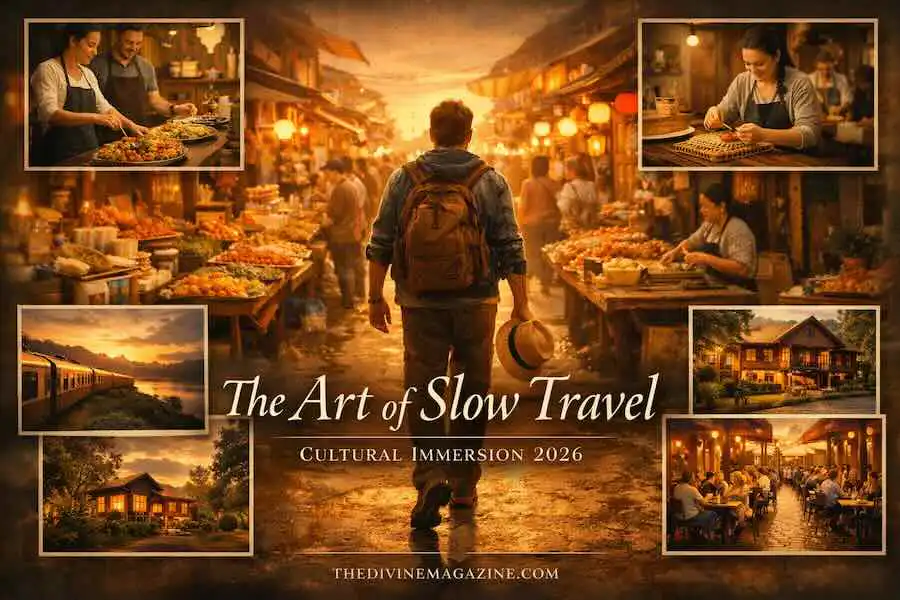
Travel can be one of the most transformative experiences of your life – but only if you allow it to be more than a checklist of photo spots. In a world where social media often dictates where to go, what to see, and even how long to stay, it’s easy to skim the surface of a destination without ever really connecting with it. Slow travel offers an alternative: a way of moving through the world that prioritises depth over speed, presence over performance, and genuine connection over curated moments.
Instead of racing from landmark to landmark, slow travel invites you to linger – to notice the details, learn the rhythms of a place, and build real relationships with the people who live there. It’s a mindset as much as a method: travelling with intention, curiosity, and respect. Whether you’re exploring a nearby city or crossing continents, embracing slow travel can completely change the way you experience the world.
If you’re ready to move beyond fast tourism and start travelling in a way that feels more meaningful, this guide will walk you through the core principles of slow travel and how to weave them into your next journey.
Shop and eat locally
One of the simplest and most powerful ways to practise slow travel is through food and shopping. Choosing locally owned cafés, markets, and restaurants over global chains allows you to experience a destination through its flavours, stories, and traditions. A morning coffee at a neighbourhood café or a meal at a family-run restaurant often reveals more about a place than any guidebook.
Local markets are especially rich spaces for connection. You can see what’s in season, learn how ingredients are used, and interact with the people who grow or prepare the food. For inspiration on how food and culture intersect around the world, you can explore resources like Slow Food, which champions regional food traditions and sustainable eating.
The same principle applies to shopping. Instead of spending your time in international high street stores, seek out independent boutiques, artisan workshops, and craft studios. A handwoven textile, a piece of pottery, or a locally made print carries the story of the place and the person who created it – and often lasts far longer than a mass-produced souvenir.
Stay longer in fewer places
Fast travel is about maximising the number of destinations. Slow travel is about maximising the quality of your experience. Rather than squeezing five cities into a four-day trip, consider choosing one or two places and giving yourself time to settle in. When you stay longer, you start to recognise familiar faces, find favourite spots, and understand the subtle shifts in a neighbourhood throughout the day.
Spending more time in fewer places also reduces the stress of constant packing, checking in, and moving around. It creates space for unplanned moments – a spontaneous conversation, a local festival you didn’t know about, or a quiet afternoon in a park. For ideas on destinations that reward slower exploration, sites like Lonely Planet and National Geographic Travel often highlight regions where culture, nature, and community are deeply intertwined.
Choose local and characterful accommodation
Where you stay shapes how you experience a destination. Large international hotels can be comfortable, but they often create a buffer between you and local life. Opting for smaller guesthouses, boutique hotels, eco-lodges, or locally hosted stays can bring you much closer to the everyday reality of a place.
Many independent accommodations are deeply rooted in their communities – they hire local staff, source local products, and can recommend places that don’t appear on mainstream travel lists. Platforms and organisations that focus on responsible stays, such as Responsible Travel or The International Ecotourism Society, offer guidance on finding options that align with both sustainability and authenticity.
Travel more sustainably
Sustainability is at the heart of slow travel. Moving more slowly often means travelling more lightly on the planet. Choosing trains over short-haul flights where possible, using public transport, walking, or renting a bicycle can significantly reduce your environmental impact while giving you a more intimate sense of place.
Many destinations now offer detailed information on low-impact ways to explore their regions. Organisations like Green Traveller and initiatives highlighted by UN Tourism provide practical tips on making more conscious choices, from transport to accommodation and activities.
Seek genuine human connection
At its core, slow travel is about people. It’s about listening more than you speak, asking questions with curiosity, and being open to perspectives that differ from your own. A conversation with a shop owner, a shared meal at a small restaurant, or a guided walk with someone who has lived in the area for decades can leave a deeper impression than any famous viewpoint.
Look for experiences that are led by locals and rooted in their own stories – such as neighbourhood walking tours, cooking classes, craft workshops, or community-led cultural projects. Many cities now have independent tour collectives and cultural centres that prioritise ethical storytelling and fair pay for local guides.
Travel with intention, not just itinerary
Slow travel doesn’t mean you can’t plan – it means you plan with intention. Instead of building an itinerary around “must-see” lists, ask yourself what you want to feel, learn, or understand on this trip. Do you want to explore a city’s creative scene, understand its history more deeply, or reconnect with nature?
When your choices are guided by intention rather than obligation, your days naturally become more spacious. You leave room for detours, pauses, and discoveries that no algorithm could have predicted. Over time, travel becomes less about collecting destinations and more about collecting perspectives.
Conclusion
Slow travel is more than a trend – it’s a quiet shift in how we move through the world. By choosing to stay longer, support local businesses, travel more sustainably, and prioritise real human connection, you transform your trips into something deeper and more enduring. The memories you bring hem aren’t just of places you’ve seen, but of lives, stories, and moments you’ve shared.
The next time you plan a journey, resist the urge to fit everything in. Instead, choose a few places, give them your time and attention, and let them unfold at their own pace. When you travel slowly, you don’t just visit a destination – you build a relationship with it.
FAQ: Slow Travel
1. Is slow travel more expensive?
Not necessarily. While staying longer can sometimes mean higher accommodation costs, you often save money by taking fewer flights, using public transport, cooking occasionally, and avoiding expensive tourist traps. Many travellers find that a slower pace balances out – or even reduces – their overall budget.
2. Does slow travel work for families?
Yes. A calmer pace can be especially beneficial for families. Children often respond well to routine and familiarity, which is easier to create when you stay in one place for longer. It also reduces the stress of constant packing, transfers, and tight schedules.
3. How do I find authentic local activities?
Look for community-led tours, independent guides, cultural centres, and small businesses that offer workshops or experiences. Many cities have local tourism boards and cultural organisations that highlight events, markets, and initiatives created by residents. Reading local blogs or magazines can also reveal experiences beyond the typical tourist circuit.
4. Is slow travel better for the environment?
In most cases, yes. Fewer flights, longer stays, and a focus on local transport and businesses generally mean a lower carbon footprint and a more positive impact on the communities you visit. Combining slow travel with conscious choices – such as avoiding over-touristed areas in peak season – can make your trips significantly more sustainable.
5. How do I start slow travelling?
Begin with one simple shift: choose fewer destinations and give yourself more time in each. From there, prioritise local stays, independent food spots, and experiences that involve learning from residents rather than just observing them. Most importantly, allow space in your schedule – slow travel starts when you stop trying to fill every hour.