




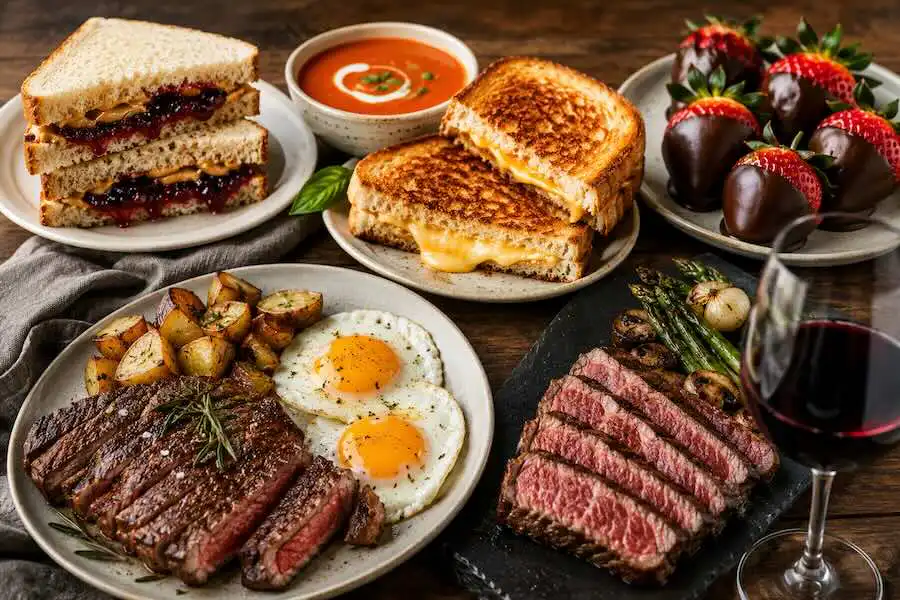
Some foods simply make more sense together. A spoonful of tomato soup after a crisp bite of grilled cheese. Strawberries under a thin shell of dark chocolate. Peanut butter meeting bright, fruity jelly between two slices of bread. The pleasure comes from contrast: salt against sweetness, acidity against fat, softness against crunch.
That balance helps explain why certain food pairings survive changing restaurant trends and crowded social feeds. They are familiar without becoming dull, and simple enough to recreate at home. In 2026, when food culture moves quickly between nostalgia and experimentation, these combinations still offer something reassuring.
There is room for discovery, too. Imported snacks and regional flavors can introduce combinations that are less familiar. A curated Japan candy box, for instance, can bring together sweet, salty and savory flavors in ways that move beyond the usual supermarket selection.
Peanut Butter and Jelly: Sweet Meets Salty
Few American food pairings carry as much nostalgia as peanut butter and jelly. It is inexpensive, quick to assemble and built around a remarkably effective contrast.
Peanut butter brings roasted flavor, salt and a dense, creamy texture. Jelly or jam cuts through that richness with sweetness and fruit acidity. Bread softens both elements and turns them into something that feels more substantial than either ingredient alone.
The basic formula also leaves plenty of space for variation. Tart raspberry preserves create a different balance from sweet grape jelly, while crunchy peanut butter adds texture. Whole-grain bread makes the combination nuttier; toasted sourdough gives it sharper edges and a crisp finish.
Tomato Soup and Grilled Cheese: Warmth and Crunch
There is something deeply satisfying about dipping toasted bread into tomato soup. The sandwich arrives crisp and buttery, its center molten with cheese. The soup is warm, smooth and acidic enough to cut through every rich bite.
That contrast is what makes tomato soup and grilled cheese such an enduring cold-weather meal. Texture matters as much as flavor: crisp bread meets liquid soup, while melted cheese connects the two with fat and salt.
Small changes can make the familiar combination more interesting. Sourdough brings tang and structure. Mature cheddar adds sharper flavor, while smoked cheese creates a darker edge. Roasting tomatoes before blending them into soup can add sweetness and concentration without changing the essential character of the dish.
Chocolate and Strawberries: Bitterness Meets Freshness
Chocolate-covered strawberries work because neither ingredient completely disappears. Bite through the chocolate and there is a clean snap before the cool, juicy berry underneath. Richness gives way to acidity and freshness.
Dark chocolate creates one of the strongest contrasts because its bitterness reins in the natural sweetness of ripe strawberries. Milk chocolate produces a softer, sweeter result, while white chocolate shifts the pairing toward creamy vanilla notes.
The combination also proves that presentation does not need to become complicated. Good strawberries and properly melted chocolate require little decoration. Served chilled on a simple plate, they already have color, gloss and texture.
Steak and Eggs: Rich, Savory and Substantial
Steak and eggs sit at the heavier end of the pairing spectrum. Both ingredients are rich and savory, but their textures are distinctly different. A properly seared steak brings a browned crust and firm bite, while a soft egg introduces a silky yolk that can function almost like a sauce.
The combination is particularly flexible. Add crisp potatoes for texture, bitter greens for contrast or a bright herb sauce to cut through the richness. It can work at breakfast, brunch or dinner without requiring an elaborate supporting cast.
What to Pair With Wagyu Steak
Highly marbled beef requires a slightly different approach. With Wagyu, the steak itself is already intensely rich, so piling equally heavy flavors onto the plate can quickly overwhelm it.
When considering what to serve alongside the distinctive richness of Wagyu steak, simplicity is useful. Roasted or lightly charred vegetables, potatoes prepared without excessive cream, mushrooms or a crisp salad can provide contrast while allowing the beef to remain central.
Wine can work on the same principle. Cabernet Sauvignon, Syrah and Malbec can bring tannin, acidity and dark-fruit character alongside beef, although the ideal bottle depends on the cut, preparation and individual palate. A pairing should sharpen the experience rather than compete for attention.
Why Great Food Pairings Work
The strongest combinations often involve contrast or complement. Salt can temper sweetness. Acidity can refresh the palate after fatty food. Something crisp can make something creamy feel more interesting simply because the textures alternate.
Aroma matters as well. Ingredients can share or complement aromatic compounds even when they appear very different on the plate. Resources such as Foodpairing® examine ingredients through aroma profiles, while publications such as Eater offer a wider view of how chefs, restaurants and food cultures continue to reinterpret familiar combinations.
Still, food does not exist purely as chemistry. Memory changes perception. A grilled cheese sandwich eaten on a rainy afternoon may be satisfying partly because of salt, fat and acidity, and partly because it recalls another kitchen, another winter, another table.
How to Build Better Pairings at Home
Start with the dominant characteristic of the main ingredient. If it is rich, introduce acidity or freshness. If it is sweet, consider salt, bitterness or gentle heat. If everything on the plate is soft, add something crisp.
Keep the first experiments simple. Change one component rather than five. Swap grape jelly for raspberry preserves, add smoked cheese to a grilled sandwich or serve steak with peppery greens instead of another heavy side. That makes it easier to understand what actually improved the combination.
Conclusion
The best food pairings rarely need complicated explanations at the table. They work in the first bite. Sweet meets salty, crisp meets soft, richness meets acidity, and each ingredient makes the other more noticeable.
That is why combinations such as PB&J, grilled cheese and tomato soup, strawberries and chocolate, and steak with eggs continue to endure. The same principle can guide a simple dinner with slow-cooked beef or an expensive cut of Wagyu: build around balance, then stop before the plate becomes too busy.
FAQ
What makes certain food pairings taste so good?
Successful pairings frequently balance flavor, aroma and texture. Sweetness can contrast with salt, acidity can cut through fat, and crisp ingredients can provide relief from creamy or soft textures. Familiarity and personal memories can influence how satisfying a combination feels too.
Are classic food pairings still relevant in 2026?
Yes. Familiar combinations remain useful foundations because they can be adapted easily. Different breads, cheeses, condiments, spices and international ingredients can change the character of a classic pairing without losing the contrast that made it work in the first place.
What drinks pair well with Wagyu steak?
Structured red wines such as Cabernet Sauvignon, Syrah and Malbec can complement rich beef. Sake and Japanese whisky can offer different profiles, while sparkling water or tea can provide a non-alcoholic counterpoint. The best choice depends on the cut and preparation.
How can I create my own food pairings?
Choose one ingredient as the starting point and identify its strongest qualities: sweet, salty, fatty, acidic, bitter, spicy, soft or crisp. Then introduce an ingredient that either complements or contrasts with those characteristics. Simple experiments can lead to combinations that feel entirely personal, whether you are building a dessert board or making your own savory snacks.