




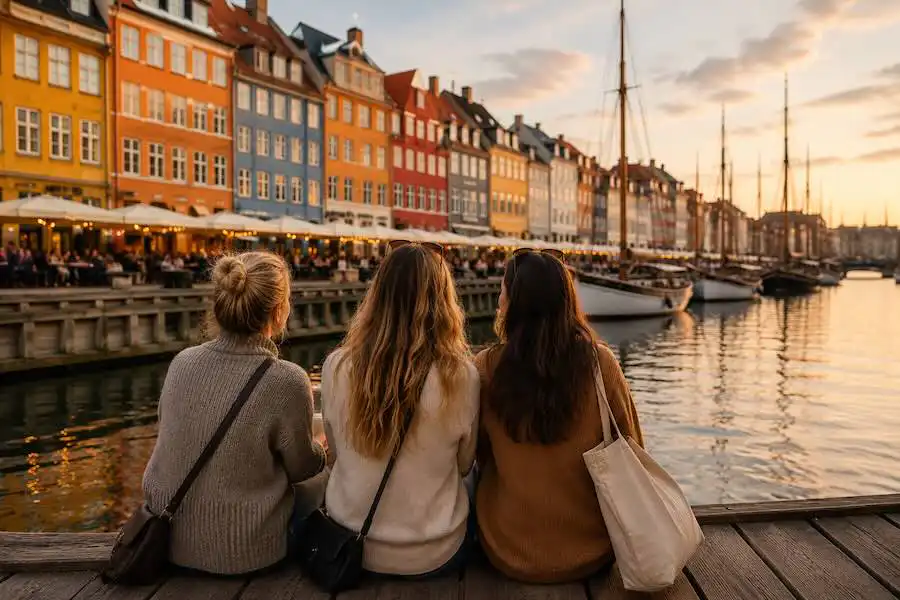
Copenhagen does girls’ trips differently. Mornings begin over cardamom buns and strong coffee, afternoons drift between galleries and canals, and evenings stretch from candlelit wine bars into late-night dance floors. Everything feels considered, yet rarely formal.
Denmark’s capital is compact enough for a long weekend but layered enough to reward an extra day or two. Design, food, art and nightlife sit within cycling distance of one another, with the painted façades of Nyhavn and the quiet edges of the harbour filling the spaces between.
Before your girls’ trip to Copenhagen
Copenhagen is remarkably easy to navigate, but a little planning leaves more room for long lunches and spontaneous detours.
- Currency: Denmark uses the Danish krone (DKK). Cards and contactless payments are widely used, so there is little reason to carry large amounts of cash.
- Language: Danish is the official language, although English is widely spoken.
- Entry requirements: Passport and visa rules depend on your nationality and circumstances. Check the latest information through the Ministry of Foreign Affairs of Denmark before travelling.
- Getting around: Copenhagen’s metro, buses, trains and harbour buses make exploring without a car straightforward. Walking and cycling are equally natural ways to experience the centre.
- City passes: If museums and major attractions dominate your itinerary, compare individual admission prices with the Copenhagen Card. The Discover version currently includes 80+ attractions and public transport across the Capital Region, including journeys to and from Copenhagen Airport.
1. Build a weekend around Copenhagen’s food scene
Food is reason enough to come to Copenhagen. The city’s dining culture moves comfortably between polished tasting menus, tiny bakeries, natural-wine bars and kitchens where vegetables, seafood and fermentation do much of the talking.
For a special dinner, browse the current Michelin Guide selection for Copenhagen before the trip. Reservations at the most sought-after restaurants can disappear quickly, so this is one part of the weekend worth arranging early.
Not every meal needs to become an event, though. Leave space for bakeries, coffee shops and whatever catches your attention while walking through Vesterbro or Nørrebro. Some of Copenhagen’s best moments arrive without a reservation.
2. Spend an afternoon and evening at Tivoli Gardens
There is something wonderfully unserious about putting adulthood aside for a few hours and heading into Tivoli Gardens. The historic amusement park sits beside Copenhagen Central Station, yet inside the gates the mood shifts: flower beds, glowing lamps, old façades, roller coasters and music fill the frame.
The park currently has more than 29 rides, ranging from gentle classics to the looping Demon and the 63-metre Golden Tower. But you do not need to spend the afternoon chasing adrenaline. Tivoli also hosts restaurants, performances, concerts and seasonal events.
Tivoli operates seasonally, so check the official Tivoli Gardens opening calendar before building it into your itinerary. Entrance and ride access are also sold separately or together, depending on the ticket.
3. Go museum hopping
Copenhagen’s museums suit the pace of a friends’ weekend particularly well. Spend an hour beneath glass ceilings and palms, stop for coffee, then cross the city for Danish furniture, sculpture or centuries of art.
- Glyptoteket: Ancient sculpture meets French and Danish art inside one of Copenhagen’s most atmospheric museum spaces, complete with a winter garden beneath a glass dome.
- SMK – National Gallery of Denmark: Denmark’s national gallery spans centuries of Danish and international art.
- Thorvaldsens Museum: A distinctive museum dedicated to sculptor Bertel Thorvaldsen, set close to Christiansborg Palace.
- The National Museum of Denmark: The place to trace Danish history through archaeology, cultural objects and collections extending far beyond Denmark.
- Designmuseum Danmark: Furniture, craft and industrial design provide a deeper look at the visual language Denmark has exported around the world.
4. Walk Copenhagen rather than rushing through it
The pleasure of Copenhagen is often found between attractions. Walk along the harbour when the light turns silver. Cross into Christianshavn, wander the side streets around the centre or take a canal boat and watch copper spires, houseboats and contemporary architecture slide past at water level.
Nyhavn is undeniably touristy, but it remains worth seeing. Go early, when the canal is quieter and the painted houses catch the morning light, then continue rather than spending the entire day there.
5. Shop beyond Strøget
Strøget cuts through central Copenhagen with an easy mix of international names, Danish brands and side streets worth slipping into. It is useful as a starting point, but the more interesting shopping often begins once you move away from the main pedestrian route.
Look for Scandinavian fashion, ceramics, glassware, interiors and vintage pieces rather than filling an afternoon with stores you can find at home. Copenhagen’s design culture is particularly satisfying when it becomes something tactile: cool stoneware, brushed metal, linen, wool and beautifully restrained packaging.
6. Make room for Copenhagen after dark
The evening does not need to begin with a nightclub. Copenhagen is particularly good at the hours before midnight: low-lit wine bars, compact cocktail rooms, tables spilling onto pavements and conversations that quietly turn into another round.
If dancing is the plan, Culture Box remains one of Copenhagen’s established electronic-music venues. For something slower, Nørrebro and Vesterbro are good areas to explore for wine bars, cocktails and smaller late-night spaces.
Because venues change and opening hours move, use the official Visit Copenhagen nightlife guide to check what is currently open before heading out.
A simple three-day Copenhagen girls’ trip
Friday: Check in, walk through the centre and Nyhavn, then book a long dinner followed by cocktails or wine.
Saturday: Start slowly with coffee and pastries, spend the late morning at a museum, shop through the afternoon and head to Tivoli as daylight begins to soften. Stay for dinner, rides or an evening performance.
Sunday: Brunch, a harbour walk or canal tour, one final gallery and enough unplanned time to return to the neighbourhood you liked most.
Why Copenhagen works so well for a girls’ trip
Copenhagen does not demand a packed itinerary. That is part of its appeal. The city gives you enough structure for a memorable weekend without making every hour feel scheduled.
Come for the restaurants, museums and design. Stay attentive to the smaller scenes: bicycles ticking over cobblestones, coffee beside a rain-streaked window, the harbour turning gold at dusk and four friends deciding that dinner can wait another half-hour.
FAQ: Planning a girls’ trip to Copenhagen
How many days do you need in Copenhagen?
Three days works well for a first visit. It gives you enough time for museums, restaurants, shopping, Tivoli and the waterfront without compressing the trip into a checklist. Four days creates space for slower mornings or a day trip.
Is Copenhagen easy to explore without a car?
Yes. The centre is highly walkable, while trains, buses, the metro and harbour buses connect areas farther apart. Cycling is another option if everyone in your group is comfortable riding in an urban environment.
Is the Copenhagen Card worth buying?
It depends on your itinerary. The Copenhagen Card Discover currently includes admission to more than 80 attractions plus public transport throughout the Capital Region. Add up the individual prices of the places you genuinely plan to visit before buying rather than assuming a city pass will automatically save money.
What is the best area to stay in for a girls’ weekend?
Indre By is convenient for a first visit and puts many major sights within walking distance. Vesterbro works well for restaurants and nightlife, while Nørrebro has a more neighbourhood-led mix of cafés, bars and independent shops.
Do you need cash in Copenhagen?
Cards and contactless payments are widely used throughout Copenhagen. Keeping a small amount of Danish kroner can still be useful, but carrying substantial cash is generally unnecessary.