




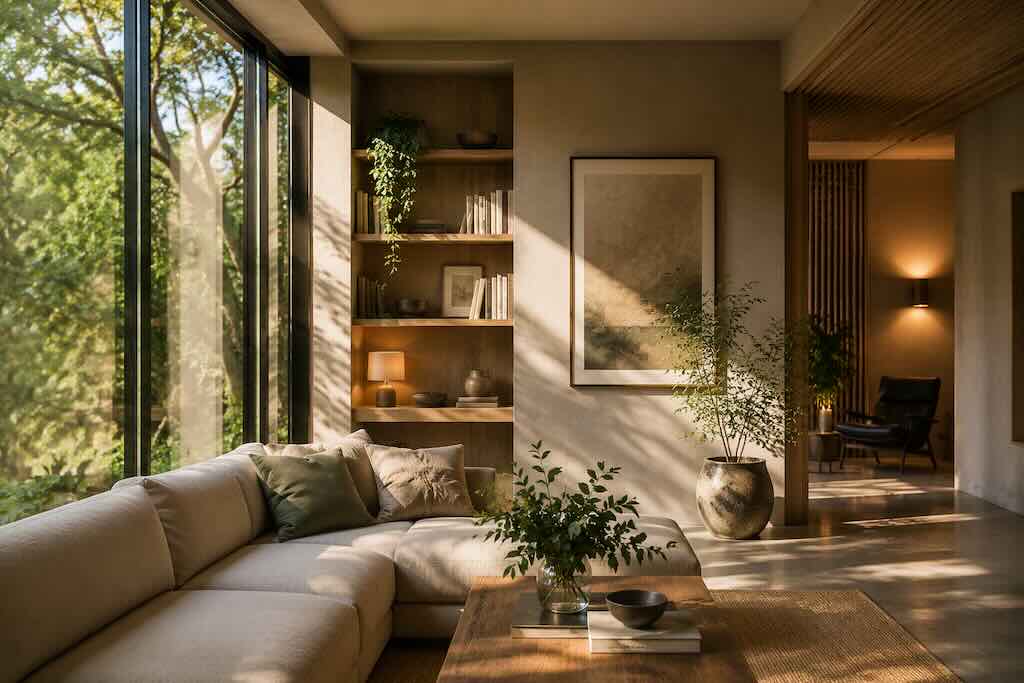
A room can change how you feel before you consciously notice why. Morning light falls across the floor, traffic hums beyond a thin window, a low ceiling makes a room feel enclosed, or a quiet corner offers somewhere to retreat. Architecture is not a treatment for mental illness, but the spaces where we live and work can influence comfort, stress, sleep and well-being.
Editor’s note: This article has been updated to replace outdated and unreliable sources, remove unsupported claims about architecture and mood, and reflect current research on daylight, noise, nature, privacy and the built environment.
That distinction matters. The original idea that a building directly determines whether someone feels happy, sad or irritable is too simple. Mental health is shaped by many interacting biological, psychological, social and environmental factors. Still, housing conditions and the wider built environment are part of that picture.
The World Health Organization identifies factors including noise, indoor air quality, temperature, crowding and access to green space as housing-related conditions that can affect health and well-being. The interesting question, then, is not whether architecture secretly controls your emotions. It is how thoughtful design can make everyday spaces more comfortable and supportive.
Architecture and Mental Health: What Does the Research Say?
The relationship between buildings and psychological well-being has become an active area of research spanning architecture, environmental psychology, public health and neuroscience. Sometimes described under terms such as neuroarchitecture or evidence-based design, the field examines how characteristics of physical environments interact with human behavior and physiological responses.
The evidence needs careful interpretation. A systematic review of built-environment interventions found that strong causal evidence for improvements in adult mental health remained limited. More recent research continues to investigate factors such as lighting, thermal comfort, air quality and noise, but the relationship between a room and the person occupying it is rarely reducible to one design feature.
There is stronger reason to pay attention to specific environmental stressors. The WHO notes that poor-quality housing can contribute to stress and mental-health problems, while excessive environmental noise is associated with sleep disturbance, annoyance and other adverse health effects.
Natural Light Matters, but Bigger Windows Aren’t Always Better
Daylight is one of the clearest connections between building design and human biology. Light helps regulate the circadian system that coordinates our daily sleep-wake rhythm.
The World Health Organization’s healthy housing guidance identifies adequate natural and artificial lighting as a health consideration and notes the relationship between natural light exposure, sleep-cycle regulation and mood.
Research in residential environments also suggests that greater access to effective daytime light can influence circadian timing and sleep. One residential crossover study reported changes in sleep timing, regularity and positive affect when participants experienced different daylight conditions, although the study was small and industry-sponsored.
That does not mean every home needs enormous panes of glass. Orientation, climate, glare, overheating, privacy and nighttime light all matter. Good daylight design is about getting useful natural light where and when it is needed while retaining shade and control.
Noise Can Change How a Space Feels
A beautiful apartment beside a constantly busy road may tell two very different stories depending on whether the windows are open or closed. Sound is invisible architecture.
The WHO’s guidance on environmental noise links excessive noise exposure with annoyance, sleep disturbance and several other health effects. This makes acoustics particularly relevant in bedrooms, home offices and spaces intended for recovery or concentration.
Reducing unwanted sound does not necessarily require rebuilding a house. Heavy curtains, rugs, upholstered furniture, bookshelves and thoughtful room zoning can soften acoustics. More substantial problems may call for improved glazing, insulation or professional acoustic treatment.
Create Space for Quiet
The original version of this article suggested creating technology-free “quiet zones,” and the underlying idea remains useful. What needed changing was the unsupported architectural prescription attached to it.
A restorative space does not require an arched ceiling or a particular table. It can simply be a chair near a window, a reading corner away from the television or a bedroom where work devices remain outside the immediate sleeping area.
What matters is function. If every surface in a home competes for attention, carving out one visually quieter area can create a clearer transition between activity and rest.
Privacy and Control Matter Too
One overlooked feature of good architecture is the ability to choose. Open space can encourage conversation and connection, while enclosed areas offer privacy and retreat. A well-designed home can accommodate both rather than forcing every activity into the same visual and acoustic field.
This principle also appears in research on therapeutic environments. A 2024 systematic literature review examining adult mental-health facilities identified factors including personal space, environmental control, daylight, flexible communal areas and homelike surroundings as relevant design considerations, while emphasizing that stronger research is still needed.
A private home is obviously different from a healthcare facility. Still, the underlying design question translates well: can the person occupying a space adjust it to suit what they need at that moment?
Bring Nature Into View
A window facing trees, a timber surface catching afternoon light, plants beside a desk or a small garden outside the kitchen can soften the boundary between indoors and outdoors.
Research into natural and urban environments has found associations between exposure to natural surroundings and lower stress or arousal, although the science is more nuanced than simply adding houseplants and expecting an improvement in mental health. A systematic review examining neurobiological responses to built and natural environments highlights the continuing interest in how exposure to nature may interact with stress and brain function.
In practice, access can be modest. Prioritize a view outdoors when positioning a desk. Let daylight reach frequently occupied rooms. Use natural materials where they suit the space. If possible, make a balcony, courtyard or garden somewhere people actually want to sit rather than something designed only to be seen.
Art Can Give a Room Identity
Homes do not need to resemble galleries, but completely impersonal interiors can feel strangely temporary. Art, photographs, books, textiles and objects collected over time give rooms visual memory.
Choose pieces because they create a response rather than because they fit a prescribed wellness aesthetic. A large photograph may bring depth to a narrow hallway. A painting can introduce color into an otherwise restrained room. Handmade ceramics add texture to a clean kitchen shelf.
There is no universal artwork that makes people happier. Personal meaning is precisely what makes this part of interior design different from technical considerations such as ventilation, acoustics or daylight.
Don’t Forget Air, Temperature and Physical Comfort
Mood-focused design conversations often become preoccupied with color and decoration while overlooking basic environmental quality. A beautiful room that is excessively hot, damp, noisy or poorly ventilated is still an uncomfortable room.
The WHO Housing and Health Guidelines examine housing conditions including indoor temperatures, crowding, accessibility, air quality and environmental noise. These fundamentals deserve attention before decorative wellness trends.
That might mean repairing dampness, improving ventilation, controlling glare, adding effective shading or addressing persistent noise. Architecture at its most useful is often less dramatic than social media suggests.
A Practical Room-by-Room Check
Stand in the rooms where you spend the most time and notice what happens before changing anything. Where does daylight arrive in the morning? Is there glare on your screen in the afternoon? Can traffic be heard from the bedroom? Is there somewhere private to read or decompress? Does the room become uncomfortably hot? Can you see greenery from the places where you naturally sit?
Those observations are more useful than following a rigid design formula. Some problems can be addressed by moving furniture or changing curtains. Others involve the building itself and may require an architect, interior designer, acoustic specialist or another qualified professional.
Conclusion
Architecture does not dictate your emotional state, and unexplained changes in mood should never automatically be blamed on a room. But our surroundings can introduce comfort or friction into daily life through light, noise, temperature, privacy, air quality and access to nature.
Good design responds to those realities quietly. Morning light where you need it. Shade where you don’t. A window that closes out traffic. A corner that feels private. Materials and objects that make a home feel inhabited rather than staged.
If mood changes are persistent, severe or interfering with everyday life, consider speaking with a qualified healthcare professional rather than assuming changes to your home will resolve them.
Frequently Asked Questions
Can architecture affect mental health?
The built environment can influence factors associated with well-being, including noise exposure, sleep, privacy, thermal comfort and access to daylight or green space. Mental health is complex, however, and architecture should not be treated as a single cause or cure.
Does natural light improve mood?
Daytime light plays an important role in circadian regulation, and research has linked daylight conditions with sleep and aspects of well-being. More light is not automatically better; glare, heat and timing also matter.
What home design features can support well-being?
Useful priorities include comfortable daylight, manageable noise, good ventilation, appropriate temperatures, privacy, flexible spaces and access to outdoor views or nature where possible.
What is neuroarchitecture?
Neuroarchitecture is a developing interdisciplinary area examining how built environments interact with the brain, behavior and physiological responses. Some findings are promising, but many broad claims associated with the term remain more certain than the research itself.
Can interior design cure anxiety or depression?
No. A supportive environment may improve comfort and reduce particular environmental stressors, but interior design is not a substitute for appropriate mental-health care.